Freshly Printed - allow 7 days lead
Couldn't load pickup availability
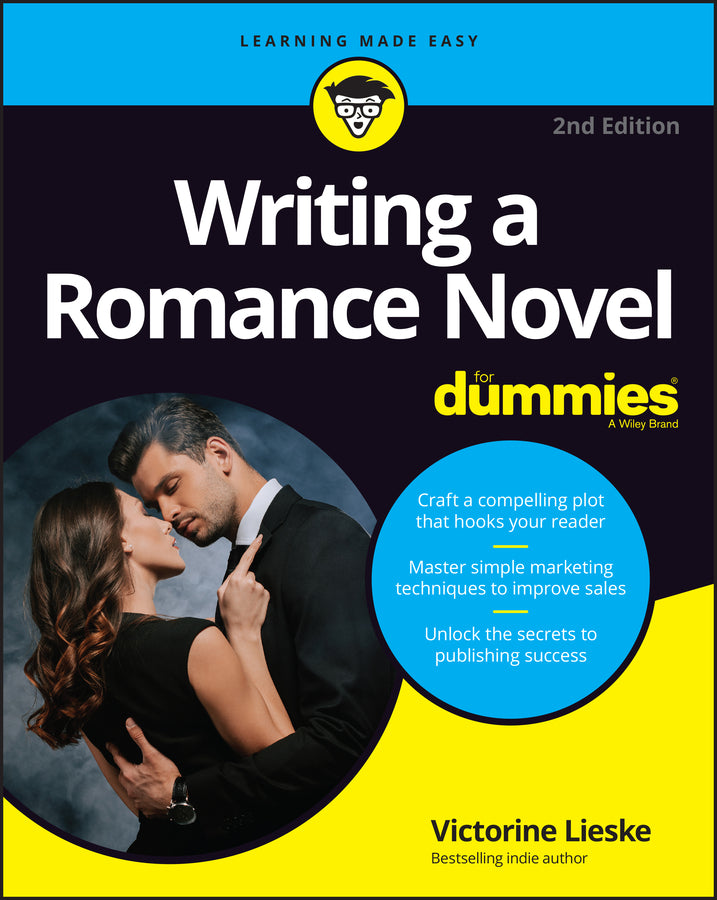
Writing a Romance Novel For Dummies
Victorine Lieske (Author), Leslie Wainger (Author)
9781119989035, Wiley
Paperback / softback, published 9 March 2023
384 pages
22.9 x 18.8 x 2.8 cm, 0.431 kg
Get your romance (writing) on! Writing a Romance Novel For Dummies is the only reference aspiring writers need to get their careers off to the right start. Fully updated to reflect the industry's latest trends and secrets, this book helps you understand what makes a great novel, so you can hone your craft and write books people want to read. We break down the romance subgenres, give you expert tips on plotting and pacing, and walk you through the process of finding an agent and getting published in today’s competitive market—or self-publishing like many six-figure authors are doing. For aspiring writers longing to find success in the industry, Writing a Romance Novel For Dummies is easy to read, highly informative, and a must-have! This Dummies guide is perfect for beginning writers who want advice on writing and publishing a successful romance novel. It’s also a great reference for accomplished writers looking to level up their romance game.
Introduction 1 About This Book 2 Foolish Assumptions 2 Icons Used in This Book 3 Beyond the Book 3 Where to Go from Here 4 Part 1: Welcome to the World of Romance Writing 5 Chapter 1: Romance Writing at a Glance 7 Tuning in to the Market 8 Defining a romance 8 Subdividing romances into genres 9 Practicing Your Craft 10 Everything starts with characterization 11 It’s all about emotional tension 11 Plotting, pacing, and point of view 12 Choosing Indie Publishing or Traditional Publishing 13 Exploring the pros and cons of each 13 Choosing your path 13 Best Practices of Indie Publishing 14 Working with editors and graphic designers 14 Marketing and selling your book 15 Submitting Your Manuscript 15 Choosing the right publisher 15 Putting together a selling submission 15 Chapter 2: Romancing the Marketplace: Identifying Your Options 17 Knowing Your Reader 18 Meeting the romance reader 18 Meeting the romance reader’s expectations 19 Starting from Square One: Reading 20 Drawing up a reading list 20 Reading like a writer 21 Getting to Know Your Genre 22 Historical versus contemporary 22 Mainstream versus category 25 Subgenres and niche markets 28 Related women’s fiction markets 35 Choosing Your Subgenre 37 What do you like to read? 38 How do you fit into the market? 39 Chapter 3: Setting Up for Writing Success 43 Finding the Perfect Time to Write 44 Making time to pursue your dream 44 Creating your writing routine 46 Building a Writer’s Tool Kit 48 Sharpening up your office supplies: More than just pencils 49 Stocking the shelves: Your home library 49 Booking it: Accurate financial records 50 Accessing Resources for the Would-Be Writer 51 Joining writers’ organizations — romance-related and otherwise 51 Going where the writers are: Conferences and more 52 Taking advantage of courses and critique groups 52 Online resources 54 Part 2: Laying the Foundation: The Building Blocks of a Great Romance 57 Chapter 4: Creating Compelling Main Characters: Alpha Males and Fiery Females 59 Depending on Your Characters 60 The Key to Every Romance Is the Heroine 61 Drawing the reader into your story 61 Making your heroine feel real 61 Introducing imperfection 63 Naming your heroine 64 Creating Your Hero 66 Heroes are for loving 67 Holding out for a hero: Alphas and others 69 Looking for love in all the wrong places 74 Hello, my name is 74 Keepin’ It Real: Secondary Characters 76 Remembering their roles 76 Avoiding stereotypes 77 Speaking up 77 Naming the baby (and everyone else) 78 Factoring in the future 78 Laying Concrete Strategies for Creating Characters 78 Chapter 5: Crucial Ingredients for Every Plot: Conflict, Climax, and Resolution 81 You Can’t Have a Novel without a Plot 82 Where do ideas come from? 82 Letting your characters drive the plot 85 Suspense: Every Story Has It 86 Using romance to create suspense 87 Other ways of creating twists and turns 88 Making Sense Matters 89 Creating Emotional Conflict and Tension 91 Emotional versus intellectual conflict 91 Internal versus external conflict 95 Personal versus situational conflict 95 Handling Conflict Effectively 96 Keeping them together 96 Letting conflict complicate your plot 97 Taking two steps forward and one step back 98 Using sexual tension to deepen conflict 100 Dreaming of love 101 Saving “I love you” for the right moment 102 And They Lived Happily Ever After 103 Making your reader believe 104 Dark moment: Where all is lost 105 Climax: Timing is everything 105 Resolution: Endings made easy 106 Epilogue 107 Chapter 6: Setting the Scene 109 Deciding Where Your Story Takes Place 110 Following the lead of your characters and plot 110 Joining the real world or living in your imagination 112 Keeping your setting in check 113 Telling Time 114 Using Your Setting to the Fullest 115 Illuminating your characters 115 Making your setting a character 119 Chapter 7: Outlining versus Discovery Writing 121 Identifying What Kind of Writer You Are 121 Outlining methods 122 Discovery writing methods 123 Outlining: Mapping Out Your Story 124 What can an outline do for you? 124 What belongs in an outline? 125 Using your outline effectively 126 Listening to your creativity 127 Discovery Writing: Letting Your Story Unfold 127 Letting the characters guide you 128 Plotting as you go 129 Getting stuck in the rewriting trap 132 Part 3: Putting Pen to Paper 133 Chapter 8: Finding Your Own Voice 135 Speaking Up for Yourself 135 Revealing where readers hear your voice 136 Making the language your own 138 Choosing your words wisely 139 Mixing what you say with what your characters know 140 Putting the Show in Show and Tell 141 Knowing what you need to say, and then saying it 141 Speaking metaphorically 142 Describing your characters 143 Making every word count 143 Talking too much 143 Telling It Like It Is 144 Keeping your writing clear 144 Moving right along 145 Chapter 9: Letting Your Characters Speak 149 Giving Your Characters Voices 150 Making every character unique (and real) 150 Giving every character a consistent voice 153 Meeting the secondary-character challenge 153 Writing Great Dialogue 154 Using dialect and accents effectively 155 Keepin’ it cool: A word about slang 156 Using dialogue to convey information naturally 157 Putting dialogue on paper 158 Choosing and Using Point of View 160 What are they thinking? 160 Knowing whose voice to use 162 Internal monologues and how to use them 165 Chapter 10: Pacing: The Secrets of Writing a Page-Turning Romance 169 Pacing Doesn’t Mean Racing 170 Pacing and Plotting: Two Halves of a Whole 170 Knowing what readers care about 171 It’s not only what happens, it’s when and where 174 Knowing what to tell and what to leave out 177 Avoiding the Dreaded Sagging Middle 178 Recognizing a sagging middle 178 Stopping the sag before it starts 179 Dealing with it 180 Show It, Don’t (Always) Tell It 181 Harnessing the power of dialogue 181 Telling it like it is: Using narrative effectively 183 Finding the balance between showing and telling 185 Prose That Goes and Prose That Slows 186 Chapter 11: Taking It All Off: Writing Love Scenes 189 Comparing Sex and Romance 189 Knowing Where and When 190 Creating sexual tension 190 Deciding when the time’s right 192 Using love scenes to increase the tension 193 Using love scenes to support your pacing 195 Writing the Scene 196 Knowing your market 196 It’s not what they do, it’s how you describe it 197 Part 4: Putting It All Together: Mechanics Count, Too 201 Chapter 12: Starting and Stopping 203 Mastering the Winning Beginning 203 How to hook your reader 204 How to bore your reader 206 The cute meet: Necessary or not? 207 Putting Theory into Practice 209 Finding your starting point 209 Backtracking to the background 211 Opening lines that work 214 Constructing Can’t-Miss Chapters 216 Viewing every chapter as a new beginning 217 Leave ’em wanting more: Effective chapter endings 218 Keeping transitions fresh 221 Moving from Scene to Scene 222 Stringing scenes together 222 Seeing scene endings as mini-chapter endings 223 Intercutting scenes 223 Chapter 13: Getting Your Story Straight: Doing Research 225 Getting It Right: Priority Number One 226 Making Research Work for You 226 Figuring out what you need to know 227 Avoiding information overload 229 Getting Down to Business 230 Timing is everything 231 Organizing like a pro 231 Finding the Facts 233 Surfing the Net: Great information (and misinformation) 233 Supporting your local library and bookstore 235 Developing a nose for news 237 Taking time to stop, look, and listen 238 Traveling for fun and profit 238 Talking to experts 239 Getting Permissions 240 Determining when permission is necessary 240 Filling out the paperwork 242 Chapter 14: Neatness Counts — and So Does Grammar 243 Knowing the Importance of Good Writing 244 Finding good references 244 Using grammar and spell-check programs 245 Taking a course 246 Asking a friend 246 Making a Point with Punctuation 246 Comma placement 246 Using ellipses and em dashes 247 Talking about Dialogue and Narrative 249 Making Thoughtful and Relevant Word Choices 250 Don’t choose a fancy word when a simple one will do 250 Don’t use incorrect synonyms 251 Watch for repeated words 251 Formatting for Success 252 Setting your margins 253 Using the right fonts and spacing 253 Breaking your story into paragraphs 253 Avoiding common formatting mistakes 254 Formatting with indie publishing in mind 255 Checking Your Work One Last Time 256 Part 5: Traditional Or Indie Publishing — Which Is Best for You? 257 Chapter 15: Choosing Your Publishing Path 259 Weighing Your Options 260 Knowing the pros and cons of how you publish 260 Changing course 261 Staying on top of a quickly changing landscape 262 Comparing and Contrasting the Paths 263 Traditional publishing 263 Indie publishing 269 Becoming a Hybrid Author: The Best of Both Worlds 271 Chapter 16: Finding Success in Indie Publishing 273 Defining Your Success 274 Creating a Professional Product 275 Judging a book by its cover 275 Writing a tagline (it’s all in the hook) 277 Writing blurbs 278 Building your website 279 Creating Your Launch Team 279 Sending out ARCs 280 Finding helpful services 280 Forming Your Launch Plan 281 Networking 283 Boosting your sales 284 Building Momentum 285 Building a newsletter 285 Giving away a reader magnet 287 Purchasing an ISBN 288 Registering your copyright 289 Obtaining a Library of Congress Control Number 290 After You Publish 291 Doing market research 291 Paying for ads 291 Understanding the power of free 292 Chapter 17: Selling Your Manuscript: Traditional Publishing 295 Submitting Made Simple 296 Doing your research 296 Writing a successful query letter 297 Deciding Whether You Need an Agent 299 Understanding an agent’s job 299 Finding an agent 300 Sizing Up the Contract 303 Coming up with questions 303 Reading (and rereading) the fine print 306 Getting help 307 Strategies for a Win-Win Negotiation 307 Working with Your Editor 309 Making the relationship work 309 Revising your book one last time 310 Line editing set straight 310 Chapter 18: Handling Rejection 313 What the Rejection Letter Is Really Saying 313 Regarding rejections 314 Revising and resubmitting 315 Understanding the Revision Process 316 Addressing editor queries 316 Using an incremental approach 317 Being timely 318 When great minds don’t think alike 318 Handling the resubmission process 319 Identifying Common Issues 320 Your heroine isn’t as sympathetic as she needs to be 320 Your pacing is erratic 320 Your hero’s too strong/arrogant/tough 321 Your plot lacks the necessary complexity 321 Your characters’ motivations aren’t clear 322 Your characters seem more like types than real people 323 Maximizing Your Chance of Success 323 Keeping a positive attitude 323 Dealing with rejection, emotionally and professionally 324 Dealing with bad reviews 326 Part 6: The Part of Tens 329 Chapter 19: Ten Tropes Every Editor Knows — and Why They Still Work 331 Marriage of Convenience 332 Stranded with a Stranger 332 Runaway Bride 333 Secret Baby 333 Second-Chance Romance 333 Back from the Dead 334 Mistaken Identity 334 Woman in Jeopardy 334 The Dad Next Door 335 Even Sketchier Setups 335 Chapter 20: Ten Tips for Coming Up with a Successful Title 337 Speak the Reader’s Language 337 Know the Long and the Short of It 338 Try Single-Word Titles 338 Match Title and Tone Perfectly 339 Use Keywords 339 Consider Alliteration 340 Coin a Cliché 340 Name Names 340 Make Connections 340 Follow in Others’ Footsteps 341 Chapter 21: Ten Tips for Avoiding Common Writing Mistakes 343 Remember the Reader’s Expectations 343 Don’t Overwrite 344 Love It or Lose It 344 Let Your Characters Drive the Plot 344 Know That Effective Conflict Comes from Within 345 Make Sure You Have Enough Plot 345 Keep Your Story on Track 345 Keep Your Reader Interested 345 Don’t Forget the Details 346 Keep the Story Moving 346 Chapter 22: Ten Questions Every Romance Writer Needs to Ask Herself 347 Should I Write Romance Novels? 347 Why Can’t I Get Started? 348 What Can I Do When the Ideas Don’t Come? 348 How Can I Focus and Stay Positive When Things Go Wrong? 348 When Is It Research and When Is It a Waste of Time? 349 When Should I Publish or Submit My Manuscript? 349 Do I Need an Agent? 350 How Do I Handle a Friend’s Success? 350 When and How Do I Follow Up on My Book’s Status? 350 When Do I Let Go of a Book? 351 Chapter 23: Ten Ways to Beat Writer’s Block 353 Work Your Way Through It 353 Select a Different Scene 354 Look at the Last Scene You Wrote 354 Write a Scene That You Won’t Use 354 View the Scene from a Different Angle 355 Don’t Focus on Perfection 355 Stop in the Middle 355 Analyze Your Outline 355 Re-energize Your Creative Instincts 356 Start Another Project (If All Else Fails) 356 Index 357
Subject Areas: Education [JN]