Freshly Printed - allow 7 days lead
Couldn't load pickup availability
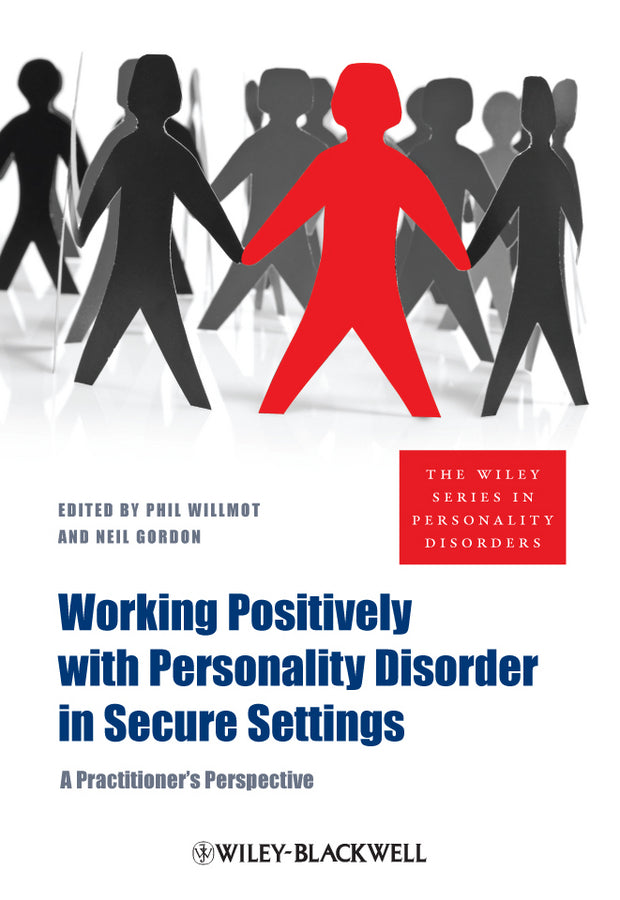
Working Positively with Personality Disorder in Secure Settings
A Practitioner's Perspective
‘This book provides a timely reminder of the progress that has been made in working positively and therapeutically with personality disordered people in secure mental health settings. The editors and contributors have done an excellent job in communicating issues that arise at the clinical coal-face. Highly recommended.’ ‘This book is essential reading for practitioners and service managers, researchers and even service users in facilities for people with personality disorder – in forensic mental health, prison and probation. Using the Personality Disorder Service at Rampton Hospital as its focus, this book examines every aspect of the organised therapeutic response to personality disordered offenders – from changing patterns in referrals and care pathways to evidence-based assessments and treatments; from therapeutic engagement and style to boundaries; from workforce planning and development to the service user experience. This is a treasure chest of essential guidance from those in a position to lead the way.’
—Professor Kevin Howells, Professor of Forensic Clinical Psychology, Institute of Mental Health and Nottingham University, UK
—Dr Caroline Logan, Greater Manchester West Mental Health NHS Foundation Trust and University of Manchester, UK
Phil Willmot (Author), Neil Gordon (Author)
9780470683798, Wiley
Paperback / softback, published 22 October 2010
288 pages
24.4 x 16.9 x 1.5 cm, 0.49 kg
Working Positively with Personality Disorder in Secure Settings provides a positive, compassionate and evidence-based guide to working with patients with personality disorders.
About the Editors and Contributors x Series Preface xiv Preface xvii Foreword xix Acknowledgements xx Introduction 1 Section 1: Context 11 Chapter 1 From ‘Anxious and Sad’ to ‘Risky and Bad’: Changing Patterns of Referrals to the Personality Disorder Service 13 Chapter 2 Trapped in the ‘Special Hospital’: The Problems Encountered in the Pathway to Medium Secure Units 22 Section 2: The Treatment Process 33 Chapter 3 What Works with Forensic Patients with Personality Disorder? Integrating the Literature on Personality Disorder, Correctional Programmes and Psychopathy 35 Chapter 4 Assessing Personality Disorder in Forensic Settings 49 Chapter 5 A Treatment Pathway for High Security Offenders with a Personality Disorder 66 Section 3: The Therapeutic Relationship 91 Chapter 6 Attachment Theory and the Therapeutic Relationship in the Treatment of Personality Disorder 93 Chapter 7 Therapeutic Style and Adapting Approaches to Therapy 115 Chapter 8 The Grey Areas of Boundary Issues When Working with Forensic Patients Who Have a Personality Disorder 127 Chapter 9 One Patient’s Therapeutic Journey 147 Section 4: Supporting and Developing the Therapeutic Workforce 157 Chapter 10 Therapists’ Experiences of Therapy 159 Chapter 11 Making Sense of Interpersonal Dynamics: A Schema Focused Approach 172 Chapter 12 The Importance of Systemic Workforce Development in High Secure Settings 188 Chapter 13 Establishing a Supervision Culture for Clinicians Working with Personality Disordered Offenders in a High Secure Hospital 200 Section 5: Outcomes 211 Chapter 14 An Individual Approach to Assessing Change 213 Chapter 15 Patient Experiences of Therapeutic and Anti-therapeutic Processes 232 Chapter 16 Looking to the Future 243 Index 247
Eddie Kane
Kath Lovell
Phil Willmot and Neil Gordon
Jenny Marshall and Phil Willmot
Amanda Tetley and Gopi Krishnan
Phil Willmot and Amanda Tetley
Phil Willmot
Sue Evershed
Louise Sainsbury
Kerry Beckley
Sue Evershed
‘James’ and Louise Sainsbury
Neil Gordon, Kerry Beckley and Graham Lowings
Kerry Beckley
Andrea Milligan and Neil Gordon
Andrea Daykin and Neil Gordon
Jason Davies
Phil Willmot
Neil Gordon and Phil Willmot
Subject Areas: Psychology [JM]