Freshly Printed - allow 7 days lead
Couldn't load pickup availability
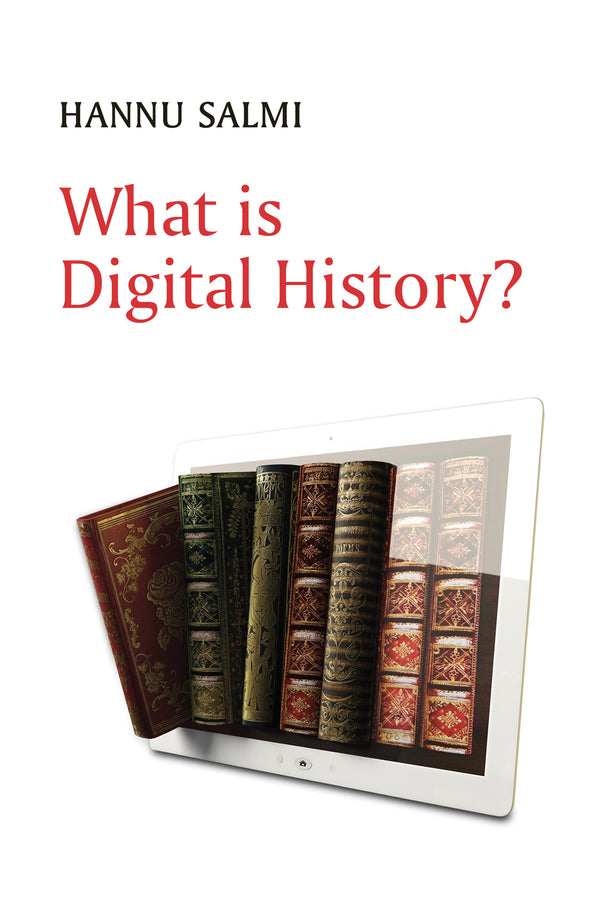
What is Digital History?
Hannu Salmi (Author)
9781509537020, Polity Press
Paperback / softback, published 16 October 2020
156 pages
21.3 x 14 x 1.3 cm, 0.181 kg
‘We are all “digital historians” now, and by interrogating the origins and content of this emerging discipline, Hannu Salmi charts an intellectual landscape we must all navigate. What is Digital History? provides a sure guide and a welcome companion.’ ‘I learned a great deal from this book. I appreciate its international coverage, and especially the range of examples described. It will be especially useful for introductory history courses where faculty seek to familiarize students with the breadth of online archives, and the scholarship that has been generated from them.’
Tim Hitchcock, Director of the Sussex Humanities Lab
Jo Guldi, Southern Methodist University
Digital history is an emerging field that draws on digital technology and computational methods. A global enterprise that invites scholars worldwide to join forces, it presents exciting and novel ways we might explore, understand and represent the past. Hannu Salmi provides the most compelling introduction to digital history to date. Beginning with an examination of the origins of the digital study of history, he goes on to discuss the question of how history exists in a digitized form. He introduces basic concepts and ideas in digital history, including databases and archives, interdisciplinarity and public engagement. Outlining the problems and methods in the study of big data, both textual and visual, particular attention is paid to the born-digital era: the contemporary age that exists primarily in digital form.
Introduction Notes 1 The Digital Past: Sources and Problems Digitization of cultural heritage Biases of the digital past Born-digital era Virality Toward the epistemology of the born digital Notes 2 Reading and Textuality in Digital History Reading as a research method Reading with machines Distant reading The challenge of big data Texts for historical research Distant reading techniques Notes 3 Mapping and Viewing History Maps as digital sources Maps as historical interpretations From visual evidence to distant viewing Sound and vision Visuality, textuality and metadata Notes 4 Interdisciplinarity: Challenges for Research Beyond disciplinarity Trading across borders Towards interdisciplinary practices Notes 5 Presenting the Past in the Digital Age Digital history for the public Visualizing data Presenting change over time Augmented and mixed realities Travelling in time Notes Conclusion Notes Further Reading Index
Subject Areas: History [HB]