Freshly Printed - allow 10 days lead
Couldn't load pickup availability
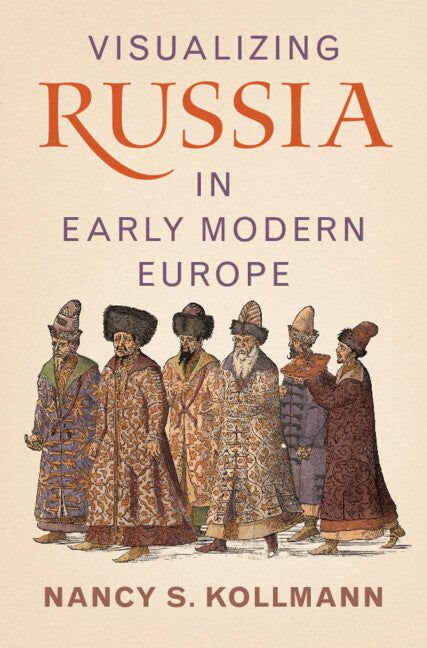
Visualizing Russia in Early Modern Europe
Illuminates the vibrant world of sixteenth-century print culture by examining the production and dissemination of visual images of Russia.
Nancy S. Kollmann (Author)
9781009418683, Cambridge University Press
Hardback, published 29 August 2024
342 pages
23.6 x 16 x 2 cm, 0.68 kg
'Kollmann expertly demonstrates writers' varying views of Muscovy and its steppes and borderland regions based on their preconceptions and their commitment to obtaining direct (or reliable eyewitness) information rather than relying on tropes … The impressive listing of the primary and secondary sources is the basis for Kollmann's solid conclusions … Recommended.' R. T. Ingoglia, Choice
In early modern Europe, the emergence and development of print culture proved a powerful new method for producing and disseminating knowledge of Russia through visual means. By examining the images of Russia found in travel accounts, pamphlets, maps and costume books, this study demonstrates how the visual shaped a dual understanding of these lands: Russia and Russians were portrayed as familiar, but the steppe and forest frontiers were seen as forbidding and exotic. As these images were reproduced and plagiarized in new formats, so too were their meanings – the idea of Russia was one which constantly shifted across genres, usages, and audiences. Nancy Kollmann examines the techniques harnessed by artists and publishers to suggest the authenticity of their publications, and explores in turn how these complex depictions of Russia contributed to Europeans' understanding of themselves.
Introduction: early modern print culture
Part I. Encountering Russia Visually: 1. Imagery in an ocularcentric century
2. Humanism encounters Russia
Part II. Sigismund von Herberstein: 3. Rerum Moscoviticarum Commentarii (1549) as humanist chorography
4. Herberstein's use of the visual
Part III. The Muscovy Company Maps Eurasia: 5. The Muscovy company as knowledge network
6. Map as chorography
7. Visuality explodes: Russians in turn of the century sources
8. Adam Olearius: eyewitness extraordinaire
9. Olearius: text and image order the world
Conclusion.
Subject Areas: European history [HBJD]