In Stock - dispatch within 48 hours
Couldn't load pickup availability
Virgil's Fourth Eclogue in the Italian Renaissance
This pioneering study reveals the central place held by Virgil's 'messianic' Eclogue in the art and literature of Renaissance Italy.
L. B. T. Houghton (Author)
9781108499927, Cambridge University Press
Hardback, published 19 September 2019
390 pages, 16 b/w illus.
23.5 x 15.7 x 3.4 cm, 0.71 kg
'This excellent volume will be a valuable guide and resource for scholars of Renaissance literature and of classical reception, and should be made available in every university library.' Syrithe Pugh, International Journal of the Classical Tradition
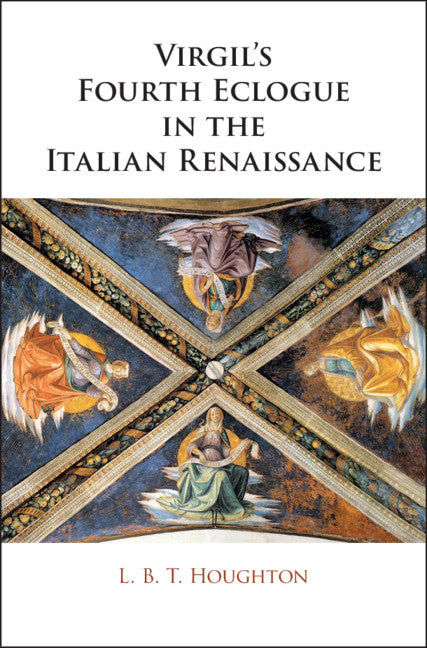
Virgil's fourth Eclogue is one of the most quoted, adapted and discussed works of classical literature. This study traces the fortunes of Eclogue 4 in the literature and art of the Italian Renaissance. It sheds new light on some of the most canonical works of Western art and literature, as well as introducing a large number of other, lesser-known items, some of which have not appeared in print since their original publication, while others are extant only in manuscript. Individual chapters are devoted to the uses made of the fourth Eclogue in the political panegyric of Medici Florence, the Venetian Republic and the Renaissance papacy, and to religious appropriations of the Virgilian text in the genres of epic and pastoral poetry. The book also investigates the appearance of quotations from the poem in fifteenth- and sixteenth-century fresco cycles representing the prophetic Sibyls in Italian churches.
Eclogue 4: text and translation
Part I. Prolegomena: 1. Introduction: noua progenies
2. A new age: the Virgilian Renaissance
Part II. Politics: 3. Florentine fantasies: Maro and the Medici
4. Maritime Maro: Virgil in Venice
5. Princely propaganda: the Italian states
6. Vatican vaticinations: the Papal Golden Age
Part III. Religion: 7. Poet and Christian? The Messianic Fourth Eclogue
8. tua dicere facta: the Messianic epic
9. A child is born: the Nativity eclogue
10. teste Sibylla: Virgil in church
Epilogue: time regained.
Subject Areas: History of ideas [JFCX], Western philosophy: Medieval & Renaissance, c 500 to c 1600 [HPCB], Literature & literary studies [D]