Freshly Printed - allow 7 days lead
Couldn't load pickup availability
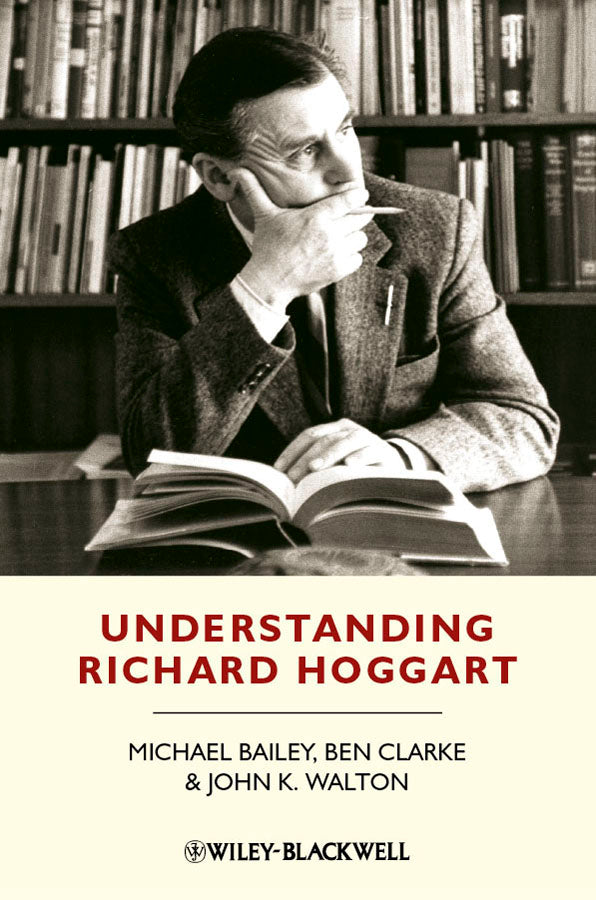
Understanding Richard Hoggart
A Pedagogy of Hope
"This is an engaging, informative and combative work. It is exactly what it says, a ‘critical introduction’ that moves way beyond plain description of Hoggart’s life and works, showing the relevance (but also, sometimes, the limitations) of his work and constantly contextualizing it within debates in both Cultural Studies and the wider political field. It is extremely well rooted in the various relevant literatures but also adds much knowledge from new sources, particularly those contained in the Hoggart Archive. In every sense, it is a good advert for, and defence of, studying the Humanities." “A fascinating and insightful analysis of a leading public intellectual, obsessive auto-biographer, founder of a new academic discipline and original cultural critic.” - James Curran, Goldsmiths, University of London “The authors of Understanding Richard Hoggart highlight, with rigor and respect, the continuing relevance of Hoggart's work to anyone with an interest in how the cultural landscape at once shapes, and is shaped by, our individual habits." - Lynsey Hanley, journalist and author of 'Estates: an Intimate History'
- Dave Russell, Leeds Metropolitan University
Michael Bailey (Author), Ben Clarke (Author), John K. Walton (Author)
9781405194945, Wiley
Paperback / softback, published 16 December 2011
232 pages
22.9 x 15.2 x 1 cm, 0.299 kg
Awarded 2013 PROSE Honorable Mention in Media & Cultural Studies
With the resurgent interest in his work today, this is a timely reevaluation of this foundational figure in Cultural Studies, a critical but friendly review of both Hoggart's work and reputation.
Foreword viii Acknowledgements x Introduction 1 1 Literature, Language, and Politics 16 The Uses of Literature 18 Hoggart in Context: Post-war Britain and the Leavises 21 The Language of ‘Theory’ 30 The Common Reader 34 Democratic Criticism 38 2 The Politics of Autobiography 49 Cultural Studies and Autobiography 51 Generic Conventions 54 Representing Working-Class Lives 59 Situating the Critic 66 3 Working-Class Intellectuals and Democratic Scholarship 73 Scholarship Boy 74 University Adult Education and the Varieties of Learning 76 The Grammar School and Working-Class Education 79 'Working-Class Intellectuals' and the 'Great Tradition' 85 4 Cultural Studies and the Uses of History 94 History and Cultural Studies 94 Locating Richard Hoggart 96 Richard Hoggart and the Emergence of Social History 102 Historians and Richard Hoggart 119 'Nostalgia', 'Romanticism', and 'Sentimentality': Recuperating Hoggart 122 5 Media, Culture, and Society 134 The BBC and Society 135 The Emergence of Commercial Broadcasting and Pilkington 138 Diversity, Authority, and Quality 145 The Limits and Possibilities of Broadcasting in the Twenty-First Century 154 6 Policy, Pedagogy, and Intellectuals 181 An International Servant 183 The Idea of University Adult Education 189 The Role of the Intellectual 194 Index 209
Subject Areas: Literature: history & criticism [DS]