Special Order - allow 2+ weeks lead
Couldn't load pickup availability
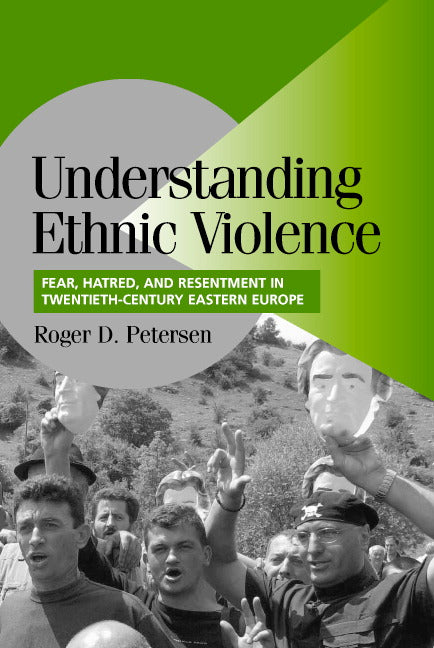
Understanding Ethnic Violence
Fear, Hatred, and Resentment in Twentieth-Century Eastern Europe
This 2002 book seeks to identify the motivations of perpetrators of ethnic violence, applying four models to conflicts in Eastern Europe.
Roger D. Petersen (Author)
9780521007740, Cambridge University Press
Paperback / softback, published 2 September 2002
314 pages, 4 b/w illus. 11 tables
22.8 x 15.2 x 2.3 cm, 0.432 kg
'… strongly recommended …'. Political Studies Review
This 2002 book seeks to identify the motivations of individual perpetrators of ethnic violence. The work develops four models, labeled Fear, Hatred, Resentment, and Rage, gleaned from existing social science literatures. The empirical chapters apply these four models to important events of ethnic conflict in Eastern Europe, from the 1905 Russian Revolution to the collapse of Yugoslavia in the 1990s. Each historical chapter generates questions about the timing and target of ethnic violence. The four models are then applied to the case, to learn which does the best job in explaining the observed patterns of ethnic conflict. The findings challenge conventional wisdom, in that the Resentment narrative, centered on a sense of unjust group status, provides the best fit for a variety of cases. While Fear, Hatred, and Rage do motivate hostile actions, Resentment pervasively appears to inflame ethnic animosity and drive outcomes in the timing and pattern of action.
1. Introduction
Part I. Theory: 2. An emotion-based theory of ethnic conflict
3. Resentment
4. Fear, hatred, and rage
Part II. Comparisons (The Baltic States in the Twentieth Century): 5. Baltic 1905
6. In the wake of Barbarossa
7. The reconstruction of independent states
8. Across the century
9. Czechoslovakia 1848–1998
10. Yugoslavia.
Subject Areas: Political economy [KCP], Regional studies [GTB]