Freshly Printed - allow 10 days lead
Couldn't load pickup availability
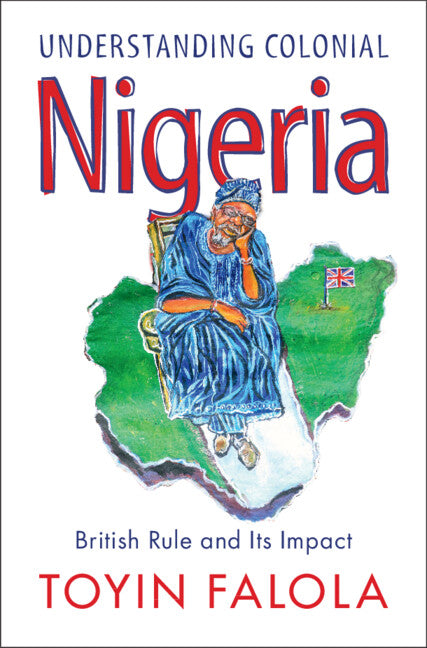
Understanding Colonial Nigeria
British Rule and Its Impact
Analysis of British rule in colonial Nigeria and what events led to the foundation of postcolonial Nigeria using neglected conversations.
Toyin Falola (Author)
9781009337182, Cambridge University Press
Hardback, published 28 November 2024
716 pages
23.5 x 15.9 x 4.2 cm, 1.12 kg
'Falola's Understanding Colonial Nigeria brings a freshness to the discourse on the colonial era of Nigeria's History, introducing new themes and expanding the methodology for engaging this crucial period of Nigerian History.' CBN Ogbogbo, University of Ibadan
In this landmark new history, Toyin Falola analyses the impact of Britain's colonization of Nigeria from the late nineteenth century to 1960, when the country regained independence. Falola covers major events in depth, from the initial conquest and denial of Indigenous sovereignty, to the emergence and functioning of the colonial state, and later nationalist movements, offering fascinating insights into labour and trade relations, regionalism and nationalism, and Nigeria's role during the First and Second World Wars. Understanding Colonial Nigeria assesses the economic, political, social, and cultural changes that culminated in the emergence of a coalition of diverse groups agitating for the end of colonial rule from the 1940s – from labor coalitions and politicians to youth groups and market women. From the country's borders and state structure, to the present conflicts, Falola powerfully reflects on the lasting consequences of British intervention in the affairs of Nigerian states and communities.
Part I. Introduction: 1. The colonial archives and alternative voices
2. Narrating colonial Nigeria
Part II. Conquest and Colonization: 3. Peoples and states in the nineteenth century
4. Prelude to colonization: trade and missions
5. Lagos and the Niger area
6. Conquest and reactions
7. Administrative experimentation, boundary formation, and colonial consolidation, 1900–1914
Part III. Colonial Societies: 8. The First World War and its aftermath
9. The interwar years
10. Indirect rule and the native administration
11. Administration of justice, legal system, and law enforcement
12. Colonial economy
13. Western education
14. Social changes
15. Women
16. Religions
17. Health and medicine
18. Cultures
19. Urbanization
20. Creativity and aesthetics
Part IV. Nationalism and Independence: 21. Reform movements before 1940
22. The Second World War and its aftermath
23. Trade unions and politics
24. Party politics and personalities
25. Constitutions and the emergence of federalism
26. Regionalism and politics in the 1950s
Part V. Conclusion: 27. Colonial legacies.
Subject Areas: Constitution: government & the state [JPHC]