Freshly Printed - allow 7 days lead
Couldn't load pickup availability
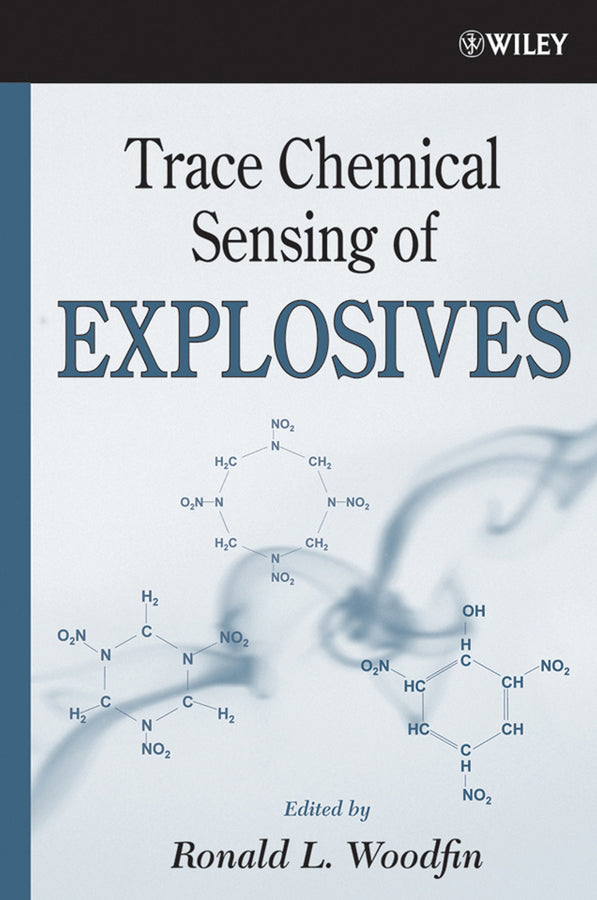
Trace Chemical Sensing of Explosives
Ronald L. Woodfin (Edited by)
9780471738398, Wiley
Hardback, published 12 January 2007
392 pages
24.1 x 16.3 x 2.5 cm, 0.699 kg
This timely book covers the most recent developments in the chemical detection of explosives in a variety of environments. Beginning with a broad view of the need for and the potential applications of chemical sensing, the book considers the issue of how to effectively include chemical sensing into systems designed to find hidden explosives devices. Offering a firsthand look at the latest technologies direct from those who are actively developing them, the book features: This book is an important reference for explosives engineers, systems engineers involved in the development of related devices, government agencies and NGOs involved in demining efforts, military and law enforcement specialists in mines and explosive ordinance disposal (EOD), as well as environmental scientists and chemists involved in explosives research. In addition to providing field workers with knowledge that will help them decide where and how to search for explosives using chemical sensors. It will provide them with an understanding of the potential and the limitations of chemical sensing in their search for and identification of dangerous devices.
Foreword. Preface. List of Contributors. PART I: FUNDAMENTAL CONSIDERATIONS. Chapter 1. Chemical Sensing. Chapter 2. What to Detect? Chapter 3. Dangerous Innovations. Chapter 4. Where Should We Look For Explosive Molecules? Chapter 5. Structure of Turbulent Chemical Plumes. PART II: FIELD EXPERIENCE. Chapter 6. Detection of Trace Explosive Signatures in the Marine Environment. Chapter 7. Explosives Detection Using Ultrasensitive Electronic Vapor Sensors: Field Experience. Chapter 8. Reflections on Hunting Mines By Aroma Sensing. PART III: EXAMPLE SENSING TECHNOLOGIES. Chapter 9. Explosives Detection Based on Amplifying Fluorescence Polymers. Chapter 10. Ion Mobility Spectrometry. Chapter 11. Mass Spectrometry For Security Screening of Explosives. Chapter 12. Explosive Vapor Detection Using Microcantilever Sensors. Chapter 13. Lab-On-A-Chip Detection of Explosives. Chapter 14. Nanoscale Sensing Assemblies Using Quantum Dot-Protein Bioconjugates. Chapter 15. Remote Sensing of Explosive Materials Using Differential Reflection Spectroscopy. PART IV: SUPPLEMENTARY MATERIAL. Appendix : Organizations Involved in Searching For Hidden Explosives. Definitions, Symbols and Abbreviations. Explosives Definitions. Bibliography. Index.
Subject Areas: Mechanical engineering & materials [TG]