Freshly Printed - allow 7 days lead
Couldn't load pickup availability
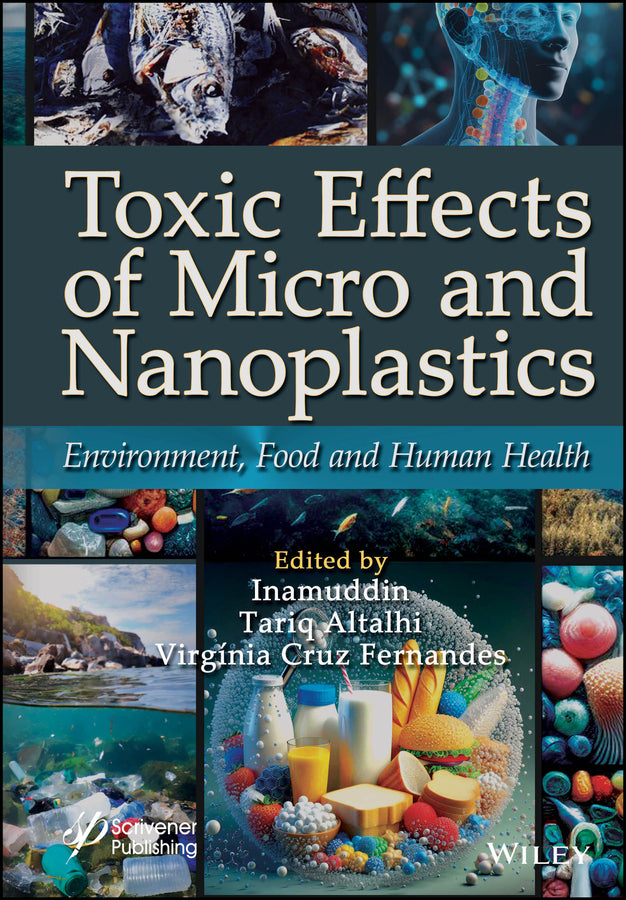
Toxic Effects of Micro- and Nanoplastics
Environment, Food and Human Health
(Edited by), Tariq Altalhi (Edited by), Virgínia Cruz Fernandes (Edited by)
9781394238125, Wiley
Hardback, published 12 June 2024
608 pages
25.4 x 17.8 x 3.6 cm, 1.379 kg
This book provides in-depth coverage of the sources, dispersion, life cycle assessment strategies, physico-chemical interactions, methods of analysis, toxicological investigation, and remediation strategies of micro and nanoplastics. Micro and nanoplastics are the degradation products of large plastic compounds. These degraded polymers enter into the natural environment, including air, water, and food, which leads to various significant threats to human health. The nature of these micro and nanoplastics is persistent and consequently accumulates in the exposed person’s body. Research into microplastics has shown that these particles accumulate in various human organs and impart detrimental effects on humans. To safeguard human health, analysis and remediation strategies are necessary. This book provides a comprehensive overview in 24 chapters on the source, distribution, life cycle assessment strategies, physico-chemical interactions, methods of analysis, toxicological investigation, and remediation strategies of micro and nanoplastics. Audience This book is a valuable resource for chemists and polymer scientists in various industries including plastics, fisheries, food and beverages, environmental sciences, agriculture, and medicine, as well as government policymakers.
Preface xix 1 Aging Process of Microplastics in the Environment 1 1.1 Introduction 1 1.2 Impact of MPs on the Environment 3 1.3 Pristine and Aged Microplastics 4 1.4 Influence of Aging Processes in the Properties of MPs 7 1.5 Simulation in the Laboratory of the Different Aging Effects 10 1.6 Conclusion 13 2 Life Cycle Assessment (LCA) of Bioplastics 21 2.1 Introduction 21 2.2 Purpose and Approach of this Chapter 24 2.3 Development of Life Cycle Assessments for Bioplastics 26 2.4 Discussion 47 2.5 Concluding Remarks 54 3 Micro- and Nanoplastics--An Invisible Threat to Human Health 61 3.1 Introduction 61 3.2 Routes of Exposure 62 3.3 Phenomenon of Microplastics in Nourishment and Nutrients 65 3.4 Impact of Microplastics and Nanoplastics on Mammalian Health 66 3.5 Nanoplastics and Microplastics: Effects on Environment and Marine Life 67 3.6 Conclusions 68 4 Microplastics and Nanoplastics and Related Chemicals: The Physical-Chemical Interactions 73 4.1 Introduction to Micro- and Nanoplastics 73 4.2 Sources and Distribution of Micro- and Nanoplastics 76 4.3 Ecological Impacts of Micro- and Nanoplastics 76 4.4 Food Contamination and Human Exposure to Micro- and Nanoplastics 78 4.5 Toxicological Effects of Micro- and Nanoplastics on Human Health 79 4.6 Conclusions and Recommendations for Mitigating the Toxic Effects of Micro- and Nanoplastics 82 5 Microplastics and Nanoplastics: Sources, Distribution, Behaviors, and Fate 87 5.1 Micro- and Nanoplastics: Principles and Sources 88 5.2 Micro- and Nanoplastic Behavior 89 5.3 Micro- and Nanoplastics’ Distribution and Fate: From Terrestrial and Aquatic Environments to the Human Body 95 5.4 The Effect of Abiotic and Biotic Factors on MNPs’ Behavior and Fate 100 5.5 Conclusions and Future Perspectives 101 6 Microplastics and Nanoplastics in Food 107 6.1 Introduction 107 6.2 Sources of Micro-Nanoplastics Affecting Food 109 6.3 Impact of Micro-Nanoplastics 114 6.4 Direct Impact on Human Health 114 6.5 Affecting the Food Chain 116 6.6 Detection of Micro-Nanoplastics in Food 116 6.7 Conclusion 118 7 Microplastics: Properties, Effect on the Environment and Removal Methods 125 7.1 An Insight Into Microplastics (MPs) 125 7.2 Microplastic Definitions 126 7.3 Properties of MPs 126 7.4 Primary and Secondary Microplastics 127 7.5 Microbeads 128 7.6 Impacts of MPs 128 7.7 Global Initiatives 133 7.7.1 United Nations Sustainable Development Goal (SDG 14) 133 7.8 Conclusion 134 8 Identification, Quantification, and Presence of Microplastics and Nanoplastics in Beverages Around the World 139 8.1 Introduction 139 8.2 Methodology 141 8.3 Results 142 8.4 Microplastic Concentrations in Beverages 148 8.5 Microplastic Characterization in Beverages 150 8.6 Human Exposure 155 8.7 Conclusions 156 9 Microplastics and Nanoplastics in Terrestrial Systems 163 9.1 Introduction 163 9.2 Micro/Nanoplastics in Soil 165 9.3 Micro/Nanoplastics in Plants 168 9.4 Micro/Nanoplastics in Terrestrial Organism 196 9.5 Conclusion 198 10 Microplastics in Cosmetics and Personal Care Products 215 10.1 Introduction 215 10.2 Methodology 218 10.3 Results 219 10.4 Characterization of Microplastics in PCPs and Cosmetics 220 10.5 Interaction Between Microplastics from PCPs and Other Substances 227 10.6 Toxicity of Microplastics from Personal Care Products and Cosmetics 228 10.7 Worldwide Bans on Microbeads in PCPs and Cosmetics 246 10.8 Conclusions 248 11 Study on Microplastic Content in Cosmetic Products and Their Detrimental Effect on Human Health 253 11.1 Introduction 253 11.2 Cosmetic Products in India 255 11.3 Source of Plastics and Microplastics 256 11.4 Uptake and Bio-Accumulation of Microplastics 257 11.5 Effect of Microplastic Exposure on Human Health 258 11.6 Alternatives of Microplastics in Cosmetic Products 260 11.7 Conclusions 262 12 Effects of Micro- and Nanoplastics on Human Genome 265 12.1 Introduction 265 12.2 Source of Micro- and Nanoplastics 266 12.3 Pathways Through Which Micro- and Nanoplastics Enter the Food Chain 270 12.4 Harmful Impacts of Micro- and Nanoplastics on Human Health 272 12.5 Impacts of Micro- and Nanoplastics on the Genome of Humans 274 12.6 Toxic Effects of Micro- and Nanoplastics 276 12.6.1 Several Toxic Effects of Nano- and Microplastics 277 12.7 Case Study on a Small Regional Place of India (Puducherry) 278 12.8 Conclusion 278 13 Harmful Effects of Plastics, Microplastics, and Nanoplastics 285 13.1 Introduction 285 13.2 Generation of MPs and NPs 286 13.3 Techniques for MP and NP Measurement 287 13.4 Various Methods for the Degradation of Plastics 289 13.5 Harmful Effects of Plastics, Microplastics, and Nanoplastics 290 13.6 Measures to Avoid the Further Extension of Harmful Effects of Plastics, Microplastics, and Nanoplastics 293 13.7 Conclusions 294 14 Hazardous Effects of Microplastics and Nanoplastics in Marine Environment 301 14.1 Introduction 301 14.2 Fate and Sources of Microplastics 304 14.3 Minimizing the Microplastics in the Environment 309 14.4 Severance of Microplastics from Water and Sediments 310 14.5 Marine Microbial Strains Associated in Degrading Microplastics 311 14.6 Work Done in our Laboratory 313 14.7 Conclusions 313 15 Human Toxicity of Nano- and Microplastics 321 15.1 Introduction 321 15.2 Basic Toxicology Concepts 322 15.3 Challenges and Opportunities for Evaluation of Toxicity in Humans 323 15.4 Toxicity Studies With Nano- and Microplastics 330 15.5 Toxicity of Nano- and Microplastic Reported in the Literature 332 15.6 Conclusions 337 16 Plastic-Related Chemicals: Occurrence in Environment and Ecotoxicological Impacts 347 16.1 Introduction 347 16.2 Plasticizers 349 16.3 Flame Retardants 358 16.4 Human Exposure to Flame Retardants 367 16.5 Conclusion 369 17 The Invisible Threat: Micronanoplastic Materials 375 17.1 Introduction 375 17.2 Microplastic and Toxic Chemicals 377 17.3 Organic Pollutants 378 17.4 Microplastic Toxic Chemical Interaction 382 17.5 Toxicity to Human 385 17.6 Toxicity to Environment 386 17.7 Impact of MiNaPs on Marine Environment and Terrestrial Habitat 387 17.8 Conclusion 388 18 Comparative Analysis of the Toxicity of Micro- and Nanoplastics along with Nanoparticles on the Ecosystem 399 18.1 Introduction 399 18.2 Literature Survey 402 18.3 Exposure to Ecosystem and Translocation 403 18.4 Challenges and Precautions 411 18.5 Conclusions 412 19 Methods for Micro- and Nanoplastic Analysis 415 19.1 Introduction 415 19.2 Micro- and Nanoplastics: Source, Occurrence, and Risks 417 19.3 Pre-Treatment of Micro- and Nanoplastic Samples 419 19.4 Methods for Characterization, Identification, and Quantification of Micro- and Nanoplastics 423 19.5 Conclusions 459 20 New Approaches for Micro(Nano)Plastics Analysis 471 20.1 Introduction 471 20.2 Global Plastic Production and Its Waste Generation 472 20.3 Sources and Health Effects of Micro- and Nanoplastics 473 20.4 Sample Collection Methods 475 20.5 Emerging Analytical Approaches 477 20.6 Single Analytical Methods 477 20.7 Hyphenated Analytical Techniques 481 20.8 Current Trends and Future Perspectives 483 20.9 Conclusions 484 21 Enzyme-Catalyzed Biodegradation of Micro- and Nanoplastics 493 21.1 Introduction 493 21.2 Degradation of Plastics 495 21.3 Enzyme-Based Degradation of Plastics 497 21.4 Conclusion 501 22 Remediation Strategies for Micro(Nano)Plastics 505 22.1 Introduction 505 22.2 Methods for the Removal of Micro(Nano)Plastics from the Environment 506 22.3 Comparison of Different Removal Methods 531 22.4 Prevention and Reduction of Microplastic Pollution 533 22.5 Conclusions 535 23 Removal of Microplastics and Nanoplastics From Water 541 23.1 Introduction 541 23.2 Sponge/Aerogel Materials to Remove MPs and NPs 542 23.3 Materials With Metals to Remove MPs and NPs 544 23.4 Biochar as Material to Remove the MPs and NPs 545 23.5 Additional Materials to Remove MPs and NPs 547 23.6 Conclusion 548 24 Microplastics and Nanoplastics in Aquatic Systems 553 24.1 Introduction 553 24.2 A Theoretical Assessment of MP and NP Migration and Fate Aquatic Environment 555 24.3 Pollution in Marine Environment 556 24.4 Toxicity Comparison of MPs and NPs 559 24.5 Regulatory Policy 569 24.6 Environmental Implication and Conclusion 569 Acknowledgments 570 References 571 Index 575
Sílvia D. Martinho, Virgínia Cruz Fernandes, Sónia A. Figueiredo and Cristina Delerue-Matos
A. L. Tecorralco-Bobadilla, A. Vázquez-Morillas, G. González-Cardoso and P. X. Sotelo-Navarro
Anamika Singh, Anjali Joseph, Thyagaraju Badanavalu Madaiah and Shinomol George Kunnel
Elsa Cherian, Lakshmi Mohan and Sony Elizebeth Manoj
Minoo Giyahchi and Hamid Moghimi
Asra Tariq and Ghaus Rizvi
Anirudh Pratap Singh Raman, Pallavi Jain and Prashant Singh
Lobato-Rocha Sheila Liliana Dafne, Cruz-Salas Arely Areanely, Rodríguez-Villa Aylin Geraldine, Tapia-Fuentes Jocelyn and Álvarez-Zeferino Juan Carlos
Nigina, V. Sajith and Baiju G. Nair
Ana Isabel Hernandez-Soriano, Carolina Martínez-Salvador, Juan Carlos Alvarez-Zeferino, Alethia Vázquez-Morillas and M. Azahara Mesa-Jurado
Venkatramana Losetty, Gosu Nageswara Reddy, C. Hazarathaiah Yadav and K. Sivakumar
Priyadarshi Mukherjee, Ananya Ghosal, Chayani Mukherjee, Ahana Bhaduri and Mukesh Singh
Niharika Kulshrestha and Anjani Kumar Rai
Smithi Vibha Toppo, Rakesh Gunasekhar, Revathi Ravind and Shinomol George Kunnel
Arely A. Cruz Salas, Maribel Velasco Perez, Ana Laura Tecorralco Bobadilla, Alethia Vázquez Morillas and Rosa María Espinosa Valdemar
Diana Rede, Cristina Delerue-Matos and Virgínia Cruz Fernandes
Anupama Rajput, Shagufta Jabin, Sadiqa Abbas and Prachika Rajput
Pooja Mohapatra, Lipsa Shubhadarshinee, Bigyan Ranjan Jali, Aruna Kumar Barick and Priyaranjan Mohapatra
Veronice Slusarski-Santana, Melissa Longen Panatto, Fernanda Rengel dos Passos, Keiti Lopes Maestre, Carina Contini Triques, Leila Denise Fiorentin-Ferrari and Mônica Lady Fiorese
elkamu Biyana Regasa
Masoud Salehipour, Shahla Rezaei, Ali Motaharian, Shokoufeh Nikpour, Mohammad Shaban and Mehdi Mogharabi-Manzari
Aylin Geraldine Rodríguez Villa, Sheila Liliana Dafne Lobato Rocha, Jocelyn Tapia Flores, Juan Carlos Álvarez Zeferino and Arely Areanely Cruz Salas
J.E. Castanheiro, P.A. Mourão and I. Cansado
Alsha Subash and Balasubramanian Kandasubramanian
Subject Areas: Chemistry [PN]