Freshly Printed - allow 7 days lead
Couldn't load pickup availability
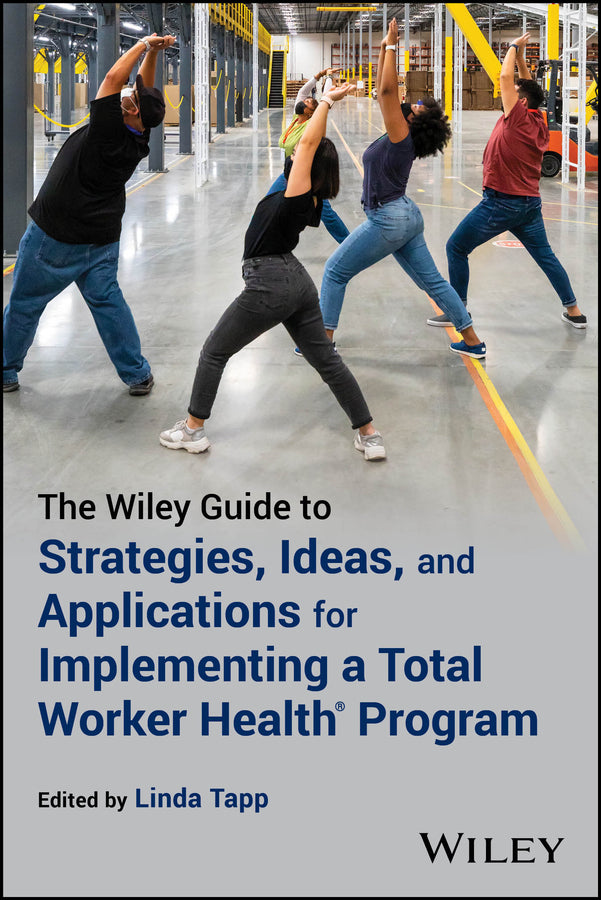
The Wiley Guide to Strategies, Ideas, and Applications for Implementing a Total Worker Health Program
Linda Tapp (Edited by)
9781394190539, Wiley
Paperback / softback, published 11 November 2024
464 pages
22.9 x 15.2 x 2.5 cm, 0.721 kg
Addresses safety and health hazards through a holistic, organization-wide approach to worker wellbeing The Wiley Guide to Strategies, Ideas, and Applications for Implementing a Total Worker Health® Program presents specific information and guidance for Total Worker Health (TWH) applications in a variety of industries as well as specific aspects of TWH. This book covers how existing safety and health activities can support and be integrated into TWH programs, exploring specific topics such as how TWH initiatives can benefit the construction industry, ways to borrow from successful safety committee operations, and the use of technology. The innovative ideas and techniques from diverse fields, and from existing safety and health programs, help readers maximize efforts and increase the chance of long-term success. Case studies are included throughout to elucidate key concepts and aid in reader comprehension. Written by safety, health, and wellness practitioners with real-world experience, this resource includes: The Wiley Guide is an essential resource for safety, health, and industrial hygiene practitioners in industry, public services, government, insurance, and consulting, as well as others with safety and health responsibilities such as occupational medicine professionals.
Preface xix Author Biographies xxiii 1 Total Worker Health®: Introduction and Overview 1 1.1 Introduction and Definitions 1 1.2 Five Elements of TWH 6 1.3 Hierarchy of Controls 9 1.4 Getting Started 11 1.5 Organizational Core Values 13 1.6 Identification of Metrics 14 1.7 Strategy 16 1.8 Tools for a Comprehensive Approach 19 1.9 Why Use the TWH Approach 20 1.10 Expanding OSH Practice 22 References 23 2 Risk Assessment for Total Worker Health® 27 2.1 Introduction 27 2.2 Fundamentals of Risk Assessment 29 2.2.1 Risk Identification 30 2.2.2 Risk Analysis 33 2.2.3 Risk Evaluation 34 2.3 General Risk Assessment Tools 36 2.3.1 Risk Identification Tools 36 2.3.2 Risk Analysis Tools 37 2.3.3 Risk Evaluation Tools 39 2.4 Tools Specific to TWH 39 2.5 Identifying the Top Risks to Worker Well-being in an Organization 41 2.6 Essential Elements of Applying TWH 42 2.7 Managing TWH Risk Through Hierarchy of Risk Treatment 46 2.8 TWH in Practice Focusing on Risk Management 49 2.8.1 TWH for Opioid and Abuse of Other Substances 49 2.8.2 Tobacco Use 50 2.8.3 Worker Burnout 51 2.8.4 Health Literacy 52 2.9 Conclusion 54 References 55 3 Connecting the Dots: ESG/Sustainability, Human Capital, and Total Worker Health® 59 3.1 Introduction 59 3.2 The Case for People, Human Capital, and Total Worker Health® 59 3.3 The Purpose of People 61 3.4 What is ESG and Sustainability-Related Risk? 62 3.5 The People, Employees, Workers, and Human Capital Connection 63 3.6 Integrating into the Business 65 3.7 More about the #TrueNorthTest 66 3.8 People and TWH Value Creation 68 3.9 Jacobs: One Million Lives 70 3.10 Where to Start the ESG, Sustainability, Human Capital, and TWH Journey? 71 3.11 Keys to Success: Integrating TWH, HC, ESG, and Sustainability 71 3.12 Mapping It Out 72 3.13 Risk Management and Covering Your Bases 74 3.14 Integrated Risk Management 75 3.15 Integrated Reporting, Materiality Assessment, and Decision-Making 76 3.16 Summary and Conclusion 79 References 81 4 Bringing Total Worker Health® into the Boardroom 85 4.1 Introduction 85 4.2 Human Capital Management 85 4.3 Board Structure and TWH 91 4.4 Vuca 92 4.5 Five Business Risks and TWH 93 4.6 The Business and Regulatory Environment Applied to TWH 94 4.6.1 ISO 45001:2018 – Occupational Health and Safety Management Systems – Requirements with Guidance for Use 98 4.7 What Safety and Health Professionals Need to Know About Corporate Governance 99 4.8 Advocating for TWH by Engaging the C-Suite 100 4.8.1 Concerns the CEO Must Evaluate 100 4.8.2 Questions Directors May Ask 101 4.8.3 ROI as Support 102 4.8.4 Topics Safety Professionals Can Bring into the Boardroom 103 4.9 Understanding What Business Leaders Care About 105 4.10 Becoming an Indispensable Partner Across the Organization 105 4.10.1 Materiality 106 4.11 Advancing TWH with CEOs and Boards of Directors 106 4.12 TWH and the Future 107 4.13 Bringing TWH into the Boardroom 108 References 109 5 Total Worker Health® and Insurance 111 5.1 Introduction 111 5.2 Types of Insurance 113 5.2.1 Workers’ Compensation Insurance 113 5.2.2 Transitional Duty 115 5.2.3 Implementing a Return-to-Work Program 116 5.2.4 Americans with Disabilities Act 117 5.3 Health Insurance 118 5.3.1 Employee Assistance Programs as Part of a Total Worker Health® Program 118 5.4 Evaluating Your Insurance Program 120 References 121 6 TWH in Safety and Human Factors Accident Investigations and Development of Safety Interventions and Strategies 123 6.1 Introduction to Total Worker Health®, Safety, and Human Factors/Ergonomics 123 6.2 Sample Domains Within HF/E: 124 6.3 TWH Applied to Accident/Incident Investigations 125 6.4 Life Cycle of an Accident Investigation – Outside of Litigation 128 References 132 7 Technology Interventions and Support for Total Worker Health® 135 7.1 Introduction 135 7.2 Technology as Part of a TWH Program 137 7.3 Health and Safety Applications (Apps) to Support TWH 140 7.3.1 Physical Health Management Platforms 141 7.3.2 Mental Health Management Platforms 142 7.3.3 Health-Related Communication and Employee Education Management Platforms 142 7.4 Wearable Technology for TWH 143 7.4.1 Wearable Stress Trackers 148 7.4.2 Smart Clothing and Personal Protective Equipment (PPE) 148 7.4.3 Exoskeletons 149 7.4.4 Roadblocks and Hurdles 151 7.5 The Role of Gamification 152 7.5.1 Using Personas, Game Mechanics, and Motivators in a TWH Program 154 7.5.1.1 Personas 154 7.5.1.2 Game Mechanics 154 7.5.1.3 Motivators 154 7.5.1.4 Storytelling 156 7.6 Conclusion 156 References 156 Endnote 162 8 Ergonomics, the Aging Workforce, and Total Worker Health® 163 8.1 Introduction to an Aging Population 163 8.2 Introduction to Workplace Ergonomics 166 8.2.1 Summary 167 8.3 Ergonomics Programs 167 8.3.1 Regulatory Environment and Program History 168 8.3.2 Why Ergonomics Efforts in Health and Safety Programs Fail 172 8.4 Ergonomics as a Leading Indicator for TWH 174 8.5 Ergonomics, Ageing, TWH, and Business Metric Alignment 175 8.6 Ergonomic Design for an Aging Workforce 178 8.6.1 Physical and Cognitive Design Considerations 178 8.7 TWH Implementation Guideline as a Framework for Improved Ergonomics 186 8.8 Designing for the Future 188 References 191 9 Mental Health and Total Worker Health® 193 9.1 Introduction 193 9.2 Understanding Mental Health 195 9.3 Reasons for Mental Health Conditions 197 9.4 The Advantages of Addressing Mental Health in the Workplace 198 9.5 Mental Health and Safety in the Workplace 200 9.5.1 Physical Harm 201 9.5.2 Injuries and Accidents 201 9.5.3 Chronic Health Conditions 202 9.5.4 Psychological Harm 202 9.5.5 Excessive Workload and Burnout 202 9.5.6 Lack of Psychological Safety 202 9.5.7 Job Insecurity 202 9.5.8 Discrimination and Prejudice 203 9.6 Burnout and the Toll of Toxic Workplaces 203 9.6.1 Toxicity in the Workplace 205 9.7 Rest 206 9.8 Approaches to Promote Mental Well-being in the Workplace 207 9.8.1 Establishing a Mental Health Policy 207 9.8.2 Offer Mental Health Training 207 9.8.3 Consider Collaborating with Mental Health Providers 208 9.8.4 Alternative Work Arrangements 208 9.8.5 Employee Assistance Programs 208 9.8.6 The Importance of Breaks 209 9.8.7 Promote Supportive Work Environments 209 9.8.8 Encourage Communication 209 9.8.9 Provide Mental Health Resources 209 9.8.10 Enable Adequate Rest 209 9.9 Cultivating Mental Health in the Workplace 210 9.9.1 Encouraging Support from Top Management 210 9.9.2 Encourage Employee Involvement 210 9.9.3 Acknowledge Mental Health Awareness Days 211 9.9.4 Incorporate into the Mission 211 9.9.5 Encourage Work–Life Balance 211 9.10 Future Directions in Mental Health and Total Worker Health 211 9.11 Assessing Mental Health Programs 212 9.11.1 Clearly Define Objectives 213 9.11.2 Seek Employee Feedback 213 9.11.3 Analyze Data and Metrics 213 9.11.4 Collaborate with Mental Health Experts 213 9.12 Conclusion: The Significance of Addressing Mental Health in the Workplace 213 References 214 10 Total Worker Health® for a Remote Workforce 217 10.1 Introduction 217 10.2 What Is Remote Working and Who Is a Remote Worker? 218 10.2.1 What Is Remote Working? 219 10.2.2 Who Is a Remote Worker? 219 10.3 Balancing the Equation 220 10.4 The Impact of Physical Isolation on the Remote Workforce 222 10.4.1 Organizational Isolation and Loss of Workplace Social Connectivity 222 10.4.1.1 Organizational Isolation 223 10.4.1.2 Loss of Workplace Social Connectivity 224 10.5 Impact on Workforce Performance and TWH 226 10.5.1 Gathering Information and Obtaining Assistance 226 10.5.2 Loss of Soft Information (Social Cues) Regarding Workload and Progress 227 10.5.3 Collaboration 228 10.5.4 Decision Making, Work Allocation, and Performance Evaluations 228 10.6 The Dual Edges of Remote Work 230 10.7 Alternatives to in-Person Conversations and Their Impact on Remote Workers TWH 230 10.7.1 Quality of Communication 231 10.7.1.1 Why Is the Quality of Communication So Important for Remote Workers? 231 10.7.1.2 In-Person Communication 232 10.7.1.3 The Impact of Virtual Meetings on the Quality of Communication 233 10.7.1.4 Eye Contact 234 10.7.1.5 The Impact of Email and Text on the Quality of Communication 235 10.7.2 The Willingness to Speak up or Contribute 236 10.7.2.1 Isolation 236 10.7.2.2 Speaking up and Not Being Heard 237 10.7.3 Meeting Fatigue 239 10.7.3.1 An Increase in Meetings in the Same Amount of Hours … Or More 239 10.7.3.2 Time Zone Challenges 240 10.7.3.3 Back-to-Back Meetings 241 10.7.3.4 The Impact of Screen-Based Communication Tools 242 10.8 Other Considerations 243 10.8.1 Burnout 243 10.8.1.1 What Is “Burnout”? 243 10.8.1.2 Prevalence of Burnout 243 10.8.1.3 Symptoms of Burnout 244 10.8.1.4 Burnout and the Remote Worker 244 10.8.1.5 Responsibility for Management and Control 245 10.8.2 Technology Issues 246 10.8.3 Longer Screen Time and a More Sedentary Lifestyle 247 10.8.3.1 Longer Screen Time 247 10.8.3.2 A More Sedentary Lifestyle 248 10.8.4 Impact of Isolation on TWH Programs 250 10.8.5 Impact of Isolation on TWH Program Training 251 10.9 Personal Adjustment to the “Remote Work” Style 252 10.9.1 Sharing the Workplace with Family 252 10.9.2 Location 253 10.9.3 Ergonomics 253 10.9.4 Inability to Disconnect 253 10.9.5 Compatibility 254 10.10 Solutions 255 10.10.1 Take Stock, Change, and Communicate 255 10.10.2 Is a Hybrid Working Model Right for the Organization? 256 10.10.2.1 Different Hybrid Working Models 256 10.10.2.2 Factors to Consider 257 10.10.3 Normalize Meeting Declines and Remote Workers Being Unavailable 258 10.10.4 Other Tangible Solutions 259 10.11 Conclusion 262 References 263 11 Safety Committee Involvement in Total Worker Health® (twh) 267 11.1 Introduction 267 11.2 What Does a Dynamic Safety Committee Look Like? 267 11.2.1 Clear Purpose 268 11.2.1.1 “Baking” with Purpose 268 11.2.2 Developing a Clear Purpose 269 11.2.2.1 Gather Information 269 11.2.2.2 Review, Discuss, and Decide 269 11.2.2.3 Refine and Share 269 11.2.3 Trust 270 11.2.4 Useful Communication 272 11.2.5 Follow-Through 273 11.2.6 Visibility 274 11.3 Types and Structure 275 11.3.1 Executive Safety Committee 275 11.3.2 Employee Safety Committee 276 11.3.3 Structure 277 11.3.4 Members 278 11.3.5 The Name 278 11.3.6 Bylaws 278 11.3.7 Budget 280 11.3.8 Meetings 280 11.3.9 Subcommittees 280 11.3.10 Action Item Log 281 11.3.11 Annual Training 281 11.4 Participation 281 11.4.1 The Complaint Spiral 282 11.4.1.1 Solutions to Prevent the Complaint Spiral 284 11.4.2 The Bad Actors 284 11.4.3 Develop Leaders 285 11.4.4 Perspective Shift 285 11.4.5 Deploy the Five Whys 286 11.4.5.1 Five Whys 286 11.4.6 Provide Training 287 11.5 Practical Tips within the TWH Framework 287 11.5.1 Defining Element 1: Demonstrate Leadership Commitment to Worker Safety and Health at All Levels of the Organization 287 11.5.1.1 Give EmSC a Budget 287 11.5.1.2 Provide a C-Suite Ally and Support the EmSC Mission 288 11.5.1.3 Provide a Welcome Package 288 11.5.1.4 Invest in Quality Safety and Health Training 289 11.5.1.5 Safety Day 289 11.5.2 Defining Element 2: Design Work to Eliminate or Reduce Safety and Health Hazards and Promote Worker Well-Being 290 11.5.2.1 Hazard Assessments Reviewed by EmSC 290 11.5.2.2 Flexible Work Schedules 290 11.5.2.3 Job Demands Analysis 291 11.5.3 Defining Element 3: Promote and Support Worker Engagement Throughout Program Design and Implementation 291 11.5.3.1 Safety Committee Member Involvement in OSH Department Activities 291 11.5.3.2 Healthy Workplace Participatory Program (HWPP) 292 11.5.3.3 EmSC Annual Training and Team-Building Session 292 11.5.4 Defining Element 4: Ensure Confidentiality and Privacy of Workers 293 11.5.4.1 Use the EmSC to Collect Safety Concerns 293 11.5.4.2 Safety Suggestion Box 293 11.5.4.3 EmSC Members Only Time 293 11.5.5 Defining Element 5: Integrate Relevant Systems to Advance Worker Well-Being 294 11.5.5.1 Employee Safety Surveys 294 11.6 Stretch and Flex Program Makeover … Mobility Program 295 11.6.1 Stretch and Flex Metric 295 11.7 Challenge Workplace Norms 296 11.7.1 Challenging Norms Metrics 297 11.8 Conclusion 297 References 297 12 Behavior Change Strategies and Tactics in Total Worker Health® Programs 301 12.1 Introduction 301 12.2 Introduction to Behavior Change Strategies 301 12.3 Assumptions of Behavior Change 302 12.4 Paths of Behavior Change: Motivational Interviewing 303 12.5 Motivational Interviewing Components 304 12.5.1 The Spirit of Motivational Interviewing 304 12.5.2 Oars 304 12.5.3 Communication Style 306 12.5.4 REDS Principles 307 12.5.4.1 Roll with Resistance 307 12.5.4.2 Express Empathy 307 12.5.4.3 Develop Discrepancy 308 12.5.4.4 Support Self-efficacy 308 12.6 The Process of Motivational Interviewing 309 12.7 Putting It All Together: A Motivational Interviewing Case Study 311 12.8 Learning from Related Fields 313 12.9 Summary 315 References 316 13 Total Worker Health® and Construction 319 13.1 Introduction 319 13.2 The Various Construction Risks That TWH Could Solve 320 13.2.1 Reputational Risk 321 13.2.2 Workforce Challenges 321 13.2.2.1 Aging Workforce 321 13.2.2.2 Physical Demands 322 13.2.2.3 Drug Addiction 322 13.2.2.4 Immigration Laws 324 13.2.3 Mental Challenges 326 13.2.4 Diversity Equity and Inclusion Challenges 328 13.3 Conclusion and Best Practices 329 13.3.1 Total Worker Health® – Solving the Legacy of Risk in the Construction Industry 329 13.3.1.1 Work Right NW 331 13.3.1.2 Turner Construction 332 13.3.1.3 Jordan Foster Construction 333 13.3.1.4 Nabholz Construction 335 13.4 The Future of Construction Depends on TWH 337 References 338 14 Total Worker Health® in the Transportation Industry 341 14.1 Industry Overview and Impact 341 14.2 Jobs and Risks 342 14.2.1 Road Transportation 342 14.2.1.1 Trucking 342 14.2.1.2 Couriers, Messengers, and Postal Workers 344 14.2.1.3 Transit and Ground Passenger/Scenic and Sightseeing 344 14.2.1.4 Warehousing and Storage 344 14.2.2 Air Transportation 345 14.2.2.1 Airlines 345 14.2.3 Rail Transportation 346 14.2.4 Maritime Transportation 347 14.2.4.1 Water 347 14.2.4.2 Harbor 348 14.3 Supporting Worker Safety, Health, and Well-Being in Transportation 348 14.3.1 Fatigue Management 348 14.3.2 Compounding Health Issues 352 14.4 Case Studies 353 14.4.1 Schneider National 354 14.4.2 J.B. Hunt 355 14.4.3 Health and Sustainability 356 14.4.4 Mental Health and Work Stress 356 14.4.5 Purolator 358 14.4.6 Amazon 359 14.4.7 Work Preparation and Conditioning 359 14.4.8 Ups 360 14.5 Driving Occupations 360 14.5.1 Acclimatization 361 14.5.1.1 Purolator 364 14.5.2 Technology and Automation 364 14.5.2.1 Amazon 365 14.5.2.2 Ups 366 14.5.2.3 FedEx 366 14.5.2.4 Shipyard and Rail Terminal Automation 367 14.6 The Path Forward – Considerations for Transportation Worker Health and Well-Being 367 References 369 15 Total Worker Health® and Manufacturing 375 15.1 Introduction 375 15.2 Impacts of Manufacturing 376 15.3 Environmental Factors 378 15.4 Interventions 380 15.4.1 Osha 380 15.4.2 Knowledge 380 15.4.3 Work Environment 382 15.5 Worker Benefits 384 15.6 Challenges 386 15.7 Strategies 388 15.7.1 Top Leaders 388 15.7.2 Working Committees 389 15.7.2.1 The Education/Training Committee 389 15.7.2.2 The Development Committee 390 15.7.2.3 The Engagement Committee 390 15.7.2.4 The Support Committee 391 15.7.2.5 The Technical Committee 392 15.8 Summary 392 References 393 16 Case Studies Related to Total Worker Health® 395 16.1 Introduction 395 16.2 Case Studies and Management Support 395 16.3 Lessons Learned 396 16.4 Case Studies and Lessons Learned in Learning and Development 397 16.5 Total Worker Health® Case Studies in This Book 398 16.5.1 Case Study Summary: L.L.Bean 398 16.5.1.1 About 398 16.5.1.2 Challenge 398 16.5.1.3 Solution 399 16.5.1.4 Outcome 399 16.5.2 Case Study Summary: L’Oréal 399 16.5.2.1 About 399 16.5.2.2 Challenge 400 16.5.2.3 Solution 400 16.5.2.4 Outcome 400 16.5.3 Case Study Summary: Mental Health Initiative at Jacobs 400 16.5.3.1 About 400 16.5.3.2 Challenge 401 16.5.3.3 Solution 401 16.5.3.4 Outcome 401 16.5.4 Case Study Summary: Turck 401 16.5.4.1 About 401 16.5.4.2 Challenge 401 16.5.4.3 Solution 402 16.5.4.4 Outcome 402 16.5.5 Case Study Summary: Children’s Hospital Colorado 402 16.5.5.1 About 402 16.5.5.2 Challenge 402 16.5.5.3 Solution 402 16.5.5.4 Outcome 403 16.5.6 Case Study Summary: Morrison Utility Services 403 16.5.6.1 About 403 16.5.6.2 Challenge 403 16.5.6.3 Solution 403 16.5.6.4 Outcome 404 16.5.7 Case Study Summary: Turner Construction 404 16.5.7.1 About 404 16.5.7.2 Challenge 404 16.5.7.3 Solution 404 16.5.7.4 Outcome 404 16.5.8 Case Study Summary: Schneider Transportation 405 16.5.8.1 About 405 16.5.8.2 Challenge 405 16.5.8.3 Solution 405 16.5.8.4 Outcome 405 16.6 Additional Case Study Summaries Related to Total Worker Health® 405 16.6.1 Case Study Summary: Trucks, Inc. 406 16.6.1.1 About 406 16.6.1.2 Challenge 406 16.6.1.3 Solution 406 16.6.1.4 Outcome 406 16.6.2 Case Study Summary: Waste Management, Inc. 407 16.6.2.1 About 407 16.6.2.2 Challenge 407 16.6.2.3 Solution 407 16.6.2.4 Outcome 407 16.6.3 Case Study Summary: Remote Worker Challenges 407 16.6.3.1 Remote Worker – “TC” 407 16.6.3.2 Challenge 408 16.6.3.3 Impact 408 16.6.3.4 Solutions 408 16.6.3.5 Outcome 408 16.6.4 Case Study Summary: White Construction Group (WCG) 409 16.6.4.1 About 409 16.6.4.2 Challenge 409 16.6.4.3 Solution 409 16.6.4.4 Outcome 409 16.6.5 Case Study Summary: 3M Manufacturing Plant 410 16.6.5.1 About 410 16.6.5.2 Challenge 410 16.6.5.3 Solution 410 16.6.5.4 Outcome 410 16.7 Additional Case Studies 410 References 411 17 Resources 413 17.1 Websites 413 17.2 NIOSH Worker Wellbeing Questionnaire (NIOSH WellBQ) 414 https://www.cdc.gov/niosh/twh/php/wellbq 414 17.3 Centers of Excellence for Total Worker Health® 415 17.4 Resources from Membership Organizations 416 17.5 Calculators 416 17.6 Recommended Books 419 Index 421
Deborah R. Roy
Pam Walaski
Kathy Seabrook
Fay Feeney
Christine Sullivan
Rosemarie Figueroa-Jacinto
Linda Tapp
Rachel Michael
Subena Colligan
Tanya M. Conole
Angela C. Ray
Devon Tapp
Tricia Kagerer
Alexi Carli
Monique Parker
Linda Tapp
Linda Tapp
Subject Areas: Chemistry [PN]