Freshly Printed - allow 7 days lead
Couldn't load pickup availability
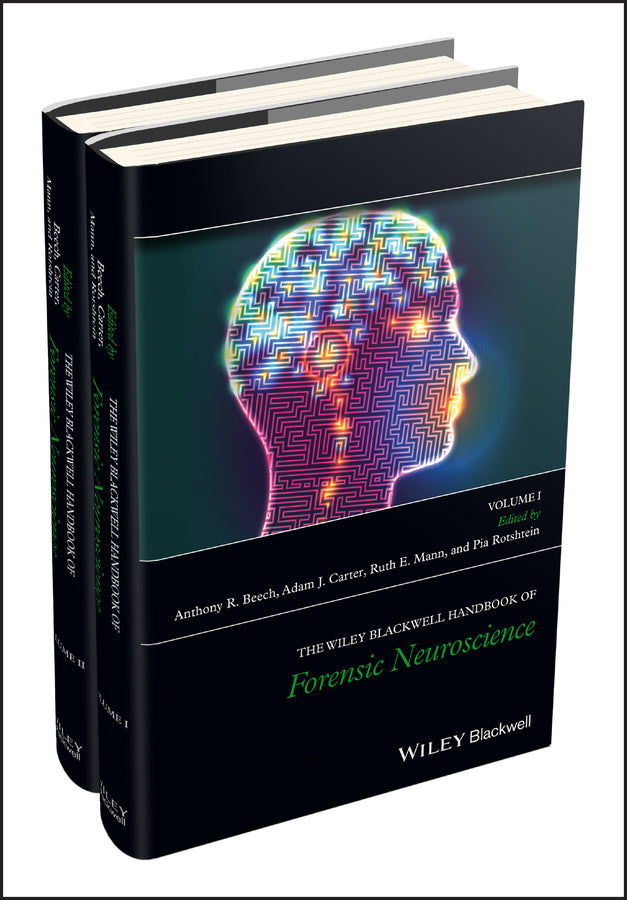
The Wiley Blackwell Handbook of Forensic Neuroscience, 2 Volume Set
2 Volume Set
"Taken together, this is not the multi-volume set that discourages reading through its sheer size. In fact, it draws the reader in and is hard to put down. In all, the editors clearly kept the brain in mind (to borrow a pun) when constructing this set. Having clearly learned the lessons of their own subject material, it is by far the most comprehensive yet user- friendly resource in this area to date." "Across the 2 volumes the editors have drawn together the broadest expertise in the field and produced what is in my view an accomplished and masterful exposition of the field of Forensic Neuroscience. In my view this book is long overdue in seeking to draw together the variety of strands that we will have all considered in our practice: albeit in an at times disparate fashion. Being able to make reference to a series of expert sources, across aspects of a presenting case in one place is of great benefit.... A must have for all on their 'pre order' Christmas list!" "The volume successfully combines the various authors' academic prowess and the years of practitioner and research experience that the accomplished editors bring with them. This means that the book charts out the origins of neuroscience in forensic settings right from the phrenology days to good old Phineas Gage and the 'social brain'. This handbook is, therefore, an essential text for anyone looking to know the current status of forensic research at the basic, intermediate and advanced level across multiple forensic settings. Something for everyone!"
—David S. Prescott, LICSW, Fellow and Past-president, The Association for the Treatment of Sexual Abusers
—Martin Fisher, CPsychol AFBPsS CSci Hon. MBPsS Europsych, Forensic Update, Co-Editor
—Aarohi Khare, Doctoral Researcher, University of Kent
Anthony R. Beech (Edited by), Adam J. Carter (Edited by), Ruth E. Mann (Edited by), Pia Rotshtein (Edited by)
9781119121190, Wiley
Paperback / softback, published 7 July 2022
1040 pages
24.1 x 17 x 5.3 cm, 1.86 kg
"This book serves as a reasonable reference and summary of the available literature in the neuroscience field as it relates to criminal behavior. This overview with its concise organization, while easy to reference, requires readers to seek the cited articles for specific and detailed information on a topic." (Doody's Review Service)
—Christopher J Graver, PhD, ABPP-CN, Madigan Healthcare System
Explores how the explosion of neuroscience-based evidence in recent years has led to a fundamental change in how forensic psychology can inform working with criminal populations. This book communicates knowledge and research findings in the neurobiological field to those who work with offenders and those who design policy for offender rehabilitation and criminal justice systems, so that practice and policy can be neurobiologically informed, and research can be enhanced. Starting with an introduction to the subject of neuroscience and forensic settings, The Wiley Blackwell Handbook of Forensic Neuroscience then offers in-depth and enlightening coverage of the neurobiology of sex and sexual attraction, aggressive behavior, and emotion regulation; the neurobiological bases to risk factors for offending such as genetics, developmental, alcohol and drugs, and mental disorders; and the neurobiology of offending, including psychopathy, antisocial personality disorders, and violent and sexual offending. The book also covers rehabilitation techniques such as brain scanning, brain-based therapy for adolescents, and compassion-focused therapy. The book itself: The Handbook of Forensic Neuroscience is a welcome book for all researchers, practitioners, and postgraduate students involved with forensic psychology, neuroscience, law, and criminology.
VOLUME 1 About the Editors xi List of Contributors xiii Part I Introduction 1 1 Neuroscience in Forensic Settings: Origins and Recent Developments 3 2 A Brief Introduction to Neuroscience 25 Part II General Neuroscience Research 59 3 The Neurobiology of Aggressive Behavior 61 4 The Neurobiology of Sexual Behavior and Sexual Attraction 83 5 Reward Sensitivity and Behavioral Control: Neuroimaging Evidence for Brain Systems Underlying Risk-Taking Behavior 105 6 The Neurobiology of Emotion Regulation 125 7 The Social Neuroscience of Empathy and its Relationship to Moral Behavior 145 8 The Neuroscience of Deception 171 Part III Neurobiology of Offending 189 9 The Neurobiological Underpinnings of Psychopathy 191 10 Antisocial Personality Disorder 229 11 Offenders with Autism Spectrum Disorder 273 12 The Neuroscience of Violent Offending 301 13 The Neuroscience of Sexual Offending 333 14 The Neuroscience of Acquisitive/Impulsive Offending 359 15 Neurobiology of Brain Injury and its Link with Violence and Extreme Single and Multiple Homicides 385 16 The Neurobiology of Offending Behavior in Adolescence 421 17 Alcohol-Related Aggression and Violence 455 VOLUME 2 About the Editors xi List of Contributors xiii Part IV Neurobiological Bases to Risk Factors for Offending 481 18 Genetic Contributions to the Development of Psychopathic Traits and Antisocial Behavior in Youths 483 19 Developmental Risk Factors 507 20 Mental Illness as a Putative Risk Factor for Violence and Aggression 531 21 Modifying Risk Factors: Building Strengths 553 Part V Rehabilitation 575 22 Engaging with Forensic Populations: A Biologically Informed Approach 577 23 Brain Scanning and Therapeutics: How Do You Know Unless You Look? Neuroimaging Guided Treatment in Forensic Settings 601 24 Therapy for Acquired Brain Injury 631 25 The Impact of Physical Exercise on Antisocial Behavior: A Neurocognitive Perspective 659 26 Treating Emotion Dysregulation in Antisocial Behavior: A Neuroscientific Perspective 677 27 The Pharmacological Treatment of Sex Offenders 703 28 Understanding and Using Compassion-Focused Therapy in Forensic Settings 725 29 The Neurobiology of Eye Movement Desensitization Reprocessing Therapy 755 30 Adjusting the Lens: A Developmental Perspective for Treating Youth with Sexual Behavior Problems 783 Part VI Ethical, Legal, and Political Implications 813 31 The Impact of Neglect, Trauma, and Maltreatment on Neurodevelopment: Implications for Juvenile Justice Practice, Programs, and Policy 815 32 Forensic Neuropsychology and Violence: Neuroscientific and Legal Implications 837 33 Forensic Neuropsychology in the Criminal Court: A Socio-legal Perspective 889 34 Forensic Neuropsychology: Social, Cultural, and Political Implications 917 Part VII Conclusions 937 35 Explanation in Forensic Neuroscience 939 36 Considerations for the Forensic Practitioner 947 Index 959
Anthony R. Beech and Dawn Fisher
Pia Rotshtein and Ian J. Mitchell
Jens Foell and Christopher J. Patrick
Anders Agmo
Renate L. E. P. Reniers, Ulrik R. Beierholm, and Stephen J. Wood
Catherine L. Sebastian and Saz P. Ahmed
Jean Decety and Jason M. Cowell
Jennifer M. C. Vendemia and James M. Nye
Stephane A. De Brito and Ian J. Mitchell
Sheilagh Hodgins, Dave Checknita, Philip Lindner, Boris Schiffer, and Stephane A. De Brito
Bjorn Hofvander
Heather L. McLernon, Jeremy A. Feiger, Gianni G. Geraci, Gabriel Marmolejo, Alexander J. Roberts, and Robert A. Schug
Andreas Mokros
Claire Nee and Stephanos Ioannou
Clare S. Allely
Graeme Fairchild and Areti Smaragdi
Stefan Gutwinski, Adrienne J. Heinz, and Andreas Heinz
Nathalie M. G. Fontaine, Eamon J. McCrory, and Essi Viding
Anthony R. Beech, Ben Nordstrom, and Adrian Raine
Ahmad Abu-Akel and Sune Bo
Corine de Ruiter
Fiona Williams and Adam J. Carter
Daniel G. Amen and Kristen Willeumier
Nick Alderman, Caroline Knight, Jennifer Brooks
Dylan B. Jackson and Kevin M. Beaver
Steven M. Gillespie and Anthony R. Beech
Don Grubin
Russell Kolts and Paul Gilbert
Derek Farrell
Kevin Creeden
Bruce D. Perry, Gene Griffin, George Davis, Jay A. Perry, and Robert D. Perry
John Matthew Fabian
Leon McRae
Jessica Pykett
Tony Ward and Carolyn E. Wilshire
Adam J. Carter and Ruth E. Mann
Subject Areas: Psychology [JM]