Freshly Printed - allow 10 days lead
Couldn't load pickup availability
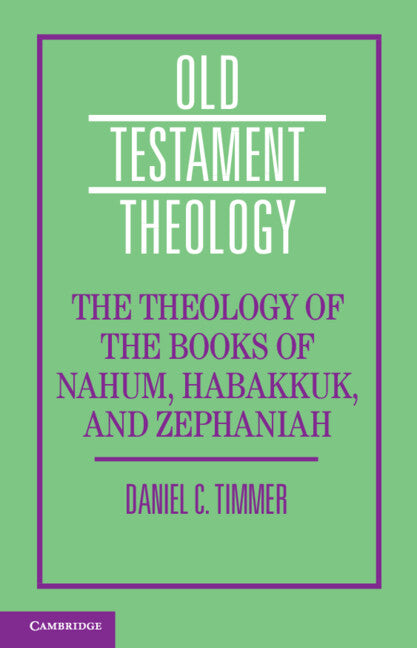
The Theology of the Books of Nahum, Habakkuk, and Zephaniah
Daniel C. Timmer's study explores how the books of Nahum, Habakkuk, and Zephaniah engaged with ancient Judah's sociopolitical landscape.
Daniel C. Timmer (Author)
9781108468695, Cambridge University Press
Paperback / softback, published 4 April 2024
306 pages
21.6 x 14.1 x 1.9 cm, 0.4 kg
'Most readers will heartily agree with the author's statement that 'the prophetic books of the Old Testament do not make for easy reading.' However, Timmer's work will certainly lighten the difficulty … My one wish for this work it that it might have appeared in the 1970s when I was first teaching the Minor Prophets!' Ellis R. Brotzman, Journal of the Evangelical Theological Society
The books of Nahum, Habakkuk, and Zephaniah address problems in and around ancient Judah in ways that are as incisive and critical as they are optimistic and constructive. Daniel C. Timmer's The Theology of the Books of Nahum, Habakkuk, and Zephaniah situates these books in their social and political contexts, examining the unique theology of each as it engages thorny problems in Judah and beyond. In dialogue with recent scholarship, this study focuses on these books' analysis and evaluation of the world as it is, focusing on both human beings and their actions, and God's commitment to purify, restore, and perfect the world. Timmer also surveys these books' later theological use and cultural reception. His study brings their theology into dialogue with concerns as varied as ecology, nationalism, and widespread injustice. It highlights the enduring significance of divine justice and grace for solid hope and effective service in our world.
1. Reading ancient Israelite prophetic books
2. The theology of the Book of Nahum
3. The theology of the Book of Habakkuk
4. The theology of the Book of Zephaniah
5. Conclusion: The prophetic message as paradigm for change.
Subject Areas: Theology [HRLB]