Freshly Printed - allow 10 days lead
Couldn't load pickup availability
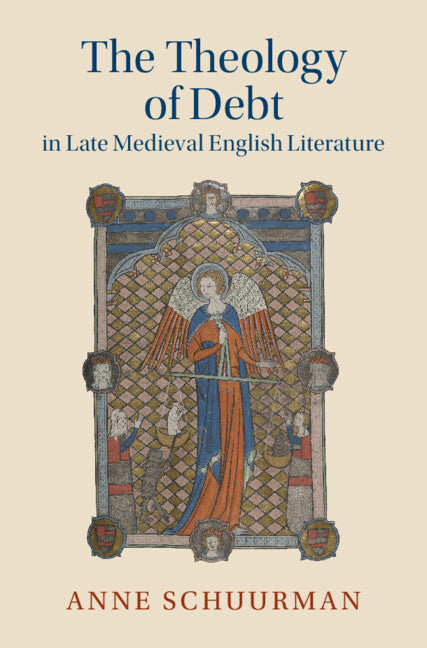
The Theology of Debt in Late Medieval English Literature
Anne Schuurman makes the striking argument that medieval literature engenders the spirit of capitalism by defining the sinner as debtor.
Anne Schuurman (Author)
9781009385954, Cambridge University Press
Hardback, published 18 January 2024
268 pages
23.5 x 15.5 x 1.8 cm, 0.558 kg
'Western theology tends to posit a deep cleavage between spirituality and economics; at most, economic practice might offer a metaphoric model for spiritual relations, but spirituality is fundamentally separate from business, and never the twain shall meet. This book gets off to a bracing start by taking issue with the 'separate spheres' thesis just articulated. … Thinking of this kind refreshes our understanding of both discourses - religious faith and economic credit - as intimately related and inherently beyond rational grasp. Theology is deeply economic and economic theory is irrational. Belief is the core of both.' James Simpson, The Yearbook of Langland Studies
Exploring debt's permutations in Middle English texts, Anne Schuurman makes the bold claim that the capitalist spirit has its roots in Christian penitential theology. Her argument challenges the longstanding belief that faith and theological doctrine in the Middle Ages were inimical to the development of market economies, showing that the same idea of debt is in fact intrinsic to both. The double penitential-financial meaning of debt, and the spiritual paradoxes it creates, is a linchpin of scholastic and vernacular theology, and of the imaginative literature of late medieval England. Focusing on the doubleness of debt, this book traces the dynamic by which the Christian ascetic ideal, in its rejection of material profit and wealth acquisition, ends up producing precisely what it condemns. This title is part of the Flip it Open Programme and may also be available Open Access. Check our website Cambridge Core for details.
Introduction: Middle English debt and the spirit of capitalism
1. Counterfeit money: Debt and form in the Middle English charter lyrics
2. Secret debts: Credit and faith in the spendthrift knight romances
3. Home economics: The marriage debt in The Wife of Bath's Prologue and Tale and The Merchant's Tale
4. 'What is ynogh to mene': Measuring debt in Langland's Piers Plowman
5. Piers Plowman and the inappropriable
Epilogue.
Subject Areas: Literary studies: classical, early & medieval [DSBB]