Freshly Printed - allow 8 days lead
Couldn't load pickup availability
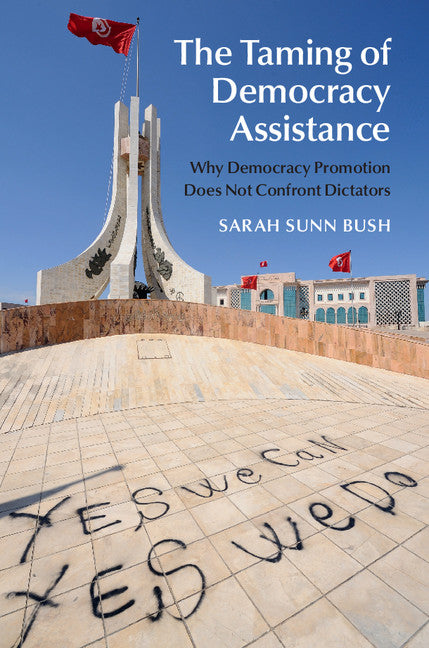
The Taming of Democracy Assistance
Why Democracy Promotion Does Not Confront Dictators
Most government programs seeking to aid democracy abroad do not directly confront dictators. This book explains how organizational politics 'tamed' democracy assistance.
Sarah Sunn Bush (Author)
9781107069640, Cambridge University Press
Hardback, published 30 April 2015
288 pages, 15 b/w illus. 9 tables
22.9 x 15.2 x 1.8 cm, 0.56 kg
'In The Taming of Democracy Assistance, Sarah Bush makes a novel contribution to this well-established field of donor-NGO research. Using a mix of statistical models and detailed case studies, Bush advances a scathing critique of the democracy promotion establishment by showing how the measurement revolution and the rising demand for evidence-based policies have distorted NGOs' core operations.' Andrew Heiss and Judith Kelley, The Journal of Politics
Few government programs that aid democracy abroad today seek to foster regime change. Technical programs that do not confront dictators are more common than the aid to dissidents and political parties that once dominated the field. What explains this 'taming' of democracy assistance? This book offers the first analysis of that puzzle. In contrast to previous research on democracy aid, it focuses on the survival instincts of the non-governmental organizations (NGOs) that design and implement democracy assistance. To survive, Sarah Bush argues that NGOs seek out tamer types of aid, especially as they become more professional. Diverse evidence - including three decades of new project-level data, case studies of democracy assistance in Jordan and Tunisia, and primary documents gathered from NGO archives - supports the argument. This book provides new understanding of foreign influence and moral actors in world politics, with policy implications for democracy in the Middle East.
Part I. Introduction and Argument: 1. Introduction
2. The argument: structure, agency, and democracy promotion
3. Tame democracy assistance: what it is and why it matters
Part II. Testing the Argument: 4. Delegation and the allocation of democracy assistance
5. Changes in American grant-making
6. Creating the democracy establishment
7. Jordan: aid in the shadow of geopolitics
8. Tunisia: reform after revolution
Part III. Conclusions: 9. Should democracy promoters be set free?
Part IV. Appendices and References: A. Descriptions of categories of democracy assistance
B. List of interviewee affiliations
C. Major organizations in the democracy establishment
D. Data appendix.
Subject Areas: International relations [JPS], Comparative politics [JPB], Sociology [JHB]