Freshly Printed - allow 10 days lead
Couldn't load pickup availability
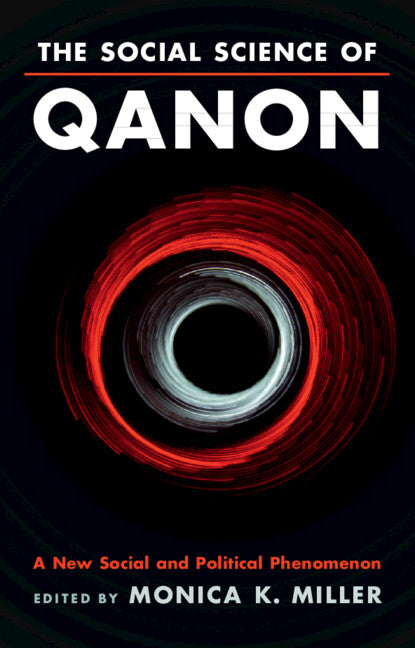
The Social Science of QAnon
A New Social and Political Phenomenon
Social science theory is used to explain the attraction and spread of the unique conspiracy group QAnon.
Monica K. Miller (Edited by)
9781316511534, Cambridge University Press
Hardback, published 28 September 2023
328 pages
23.5 x 15.8 x 2.3 cm, 0.62 kg
'Recommended.' S. Clerc, Choice
QAnon has emerged as the defining conspiracy group of our times, and its far-right conspiracies are extraordinary for their breadth and extremity. Bringing together scholars from psychology, sociology, communications, and political science, this cutting-edge volume uses social science theory to investigate aspects of QAnon. Following an introduction to the 'who, what, and why' of QAnon, Part I focuses on the psychological characteristics of QAnon followers and the group's methods for recruiting and maintaining these followers. Part II includes chapters at the intersection of QAnon and society, arguing that society has constructed QAnon as a threat and the social need to belong motivates its followers. Part III discusses the role of communication in promoting and limiting QAnon support, while Part IV concludes by considering the future of QAnon. The Social Science of QAnon is vital reading for scholars and students across the social sciences, and for legal and policy professionals.
Part I. Introduction to QAnon: 1. The 'who, what, and why' of QAnon Monica K. Miller
Part II. Recruiting and Maintaining Followers: 2. Down the conspiracy theory rabbit hole: how does one become a follower of QAnon? Joseph Pierre
3. Psychological motives of QAnon followers Ricky Green, Carolina Trella, Mikey Biddlestone, Karen M. Douglas, and Robbie M. Sutton
4. Cognitive processes, biases, and traits that fuel QAnon Arial R. Meyer and Monica K. Miller
5. The role of moral cognitions in the growth of QAnon M. Katie Cunius and Monica K. Miller
6. Emotions and the QAnon conspiracy theory Elena Bessarabova and John A. Banas
7. Recruitment to QAnon: ordinary persuasion and human agency or 'brainwashing'? James T. Richardson
Part III. QAnon and Society: 8. QAnon in the year 2020: the bigger social picture Charles P. Edwards
9. QAnon and the politics of 2020 Joseph Uscinski and Adam Enders
10. The QAnon conspiracy narrative: understanding the social construction of danger David G. Bromley and James T. Richardson
11. The need to belong: the appeal, benefits, and dangers of QAnon and similar groups Kelly-Ann Allen, Zoe Morris, Margaret L. Kern, Christopher Boyle, and Caomhan McGlinchey
Part IV. The Role of Communication in Promoting and Limiting QAnon Support: 12. QAnon and social media Tatyana Kaplan
13. Social network analysis techniques using NodeXL for analyzing disinformation related to QAnon Wasim Ahmed and Marc Smith
14. QAnon, folklore and conspiratorial consensus: a case study in the computational analysis of conspiracy theory narratives Timothy R. Tangherlini, Vwani Roychowdhury, and Shadi Shahsavari
15. Debunking and preventing conspiracies: special challenges of QAnon John Banas and Elena Bessarabova
Part V. The Future of QAnon: 16. Categorizing QAnon: is this a new religious movement? Amarnath Amarasingam, Marc-Andre Argentino, Dakota Johnston, and Sharday Mosurinjohn
17. The future of QAnon: emergent patterns of social movement adaptation and change Jared M. Wright and Stuart A. Wright.
Subject Areas: Social, group or collective psychology [JMH]