Special Order - allow 2+ weeks lead
Couldn't load pickup availability
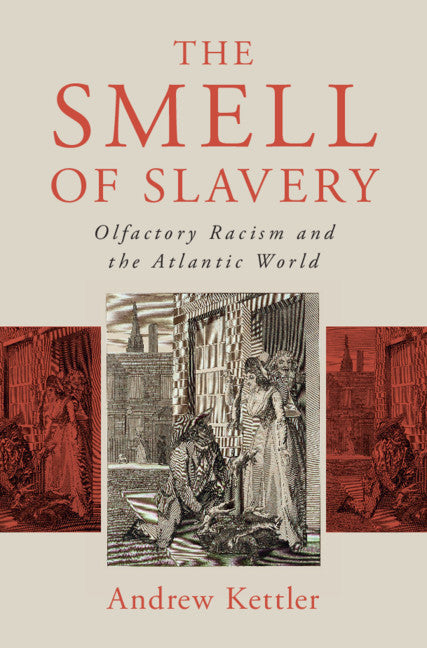
The Smell of Slavery
Olfactory Racism and the Atlantic World
Slavery, capitalism, and colonialism were understood as racially justified through false olfactory perceptions of African bodies throughout the Atlantic World.
Andrew Kettler (Author)
9781108490733, Cambridge University Press
Hardback, published 28 May 2020
254 pages
23.5 x 15.9 x 1.9 cm, 0.48 kg
'The book shifts throughout between deft synthesis of an impressive range of scholarship, close readings of a wide variety of print and archival sources, and a passionate, sometimes polemic, denunciation of racist sensory tropes … Scholars in sensory studies, a highly interdisciplinary field, will find this work a rewarding read.' William Tullett, H-Net
In the Atlantic World, different groups were aromatically classified in opposition to other ethnic, gendered, and class assemblies due to an economic necessity that needed certain bodies to be defined as excremental, which culminated in the creation of a progressive tautology that linked Africa and waste through a conceptual hendiadys born of capitalist licentiousness. The African subject was defined as a scented object, appropriated as filthy to create levels of ownership through discourse that marked African peoples as unable to access spaces of Western modernity. Embodied cultural knowledge was potent enough to alter the biological function of the five senses to create a European olfactory consciousness made to sense the African other as foul. Fascinating, informative, and deeply researched, The Smell of Slavery exposes that concerns with pungency within the Western self were emitted outward upon the freshly dug outhouse of the mass slave grave called the Atlantic World.
Introduction. Pecunia non olet
1. The primal scene: ethnographic wonder and aromatic discourse
2. Triangle trading on the pungency of race
3. Ephemeral Africa: essentialized odors and the slave ship
4. 'The sweet scent of vengeance': olfactory resistance in the Atlantic world
Conclusion. Race, nose, truth.
Subject Areas: Modern history to 20th century: c 1700 to c 1900 [HBLL], Early modern history: c 1450/1500 to c 1700 [HBLH], History of the Americas [HBJK]