Special Order - allow 2+ weeks lead
Couldn't load pickup availability
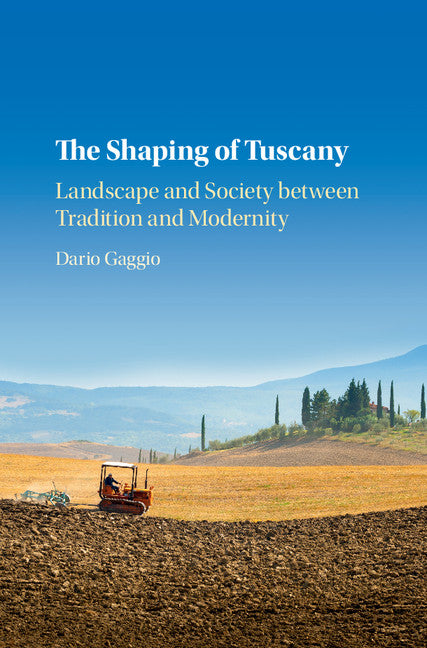
The Shaping of Tuscany
Landscape and Society between Tradition and Modernity
This book shows how the seemingly immutable Tuscan landscape was largely shaped by modern conflicts over economic resources and cultural meanings.
Dario Gaggio (Author)
9781107127777, Cambridge University Press
Hardback, published 28 November 2016
307 pages, 25 b/w illus. 1 map
23.5 x 15.8 x 1.9 cm, 0.63 kg
'Gaggio's book is a masterful analysis that shows how the beauty of Tuscany, rather than being a natural feature of its landscape, is a fragile product of history - or rather, the many histories of its peasants and land-lords, locals and travelers.' Angelo Matteo Caglioti, Journal of Interdisciplinary History
To its many tourists and visitors, the Tuscan landscape evokes a sense of timelessness and harmony. Yet, the upheavals of the twentieth century profoundly reshaped rural Tuscany. Uncovering the experiences of ordinary people, Professor Gaggio traces the history of Tuscany to show how the region's modern conflicts and aspirations have contributed to forging its modern-day beauty. He demonstrates how the rise of Fascism was particularly violent in rural Tuscany, and how struggles between Communist sharecroppers and their landlords raged long after the end of the dictatorship. The flight from the farms in the 1950s and 1960s disorientated many Tuscans, prompting ambitious development projects, and in more recent decades the emergence of the heritage industry has raised the spectre of commodification. This book tells the story of how many Tuscans themselves have become tourists in their own land – forced to adapt to rapid change and reinvent their landscape in the process.
Introduction
1. Race, nation, land: reclaiming Tuscany's hill country under Fascism
2. Newer beginnings: the landscape of social strife
3. Left behind: the rural exodus
4. The uses of emptiness: rural Tuscany after the exodus
5. The farmhouse and the museum: Tuscany as patrimony
6. Searching for the Bel Paesaggio: norming and litigating the landscape
Conclusion
Index.
Subject Areas: European history [HBJD], Regional & national history [HBJ]