Freshly Printed - allow 10 days lead
Couldn't load pickup availability
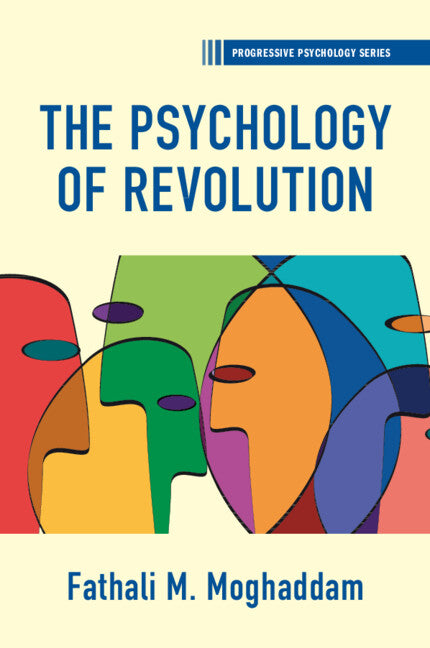
The Psychology of Revolution
Presents a compelling analysis of the psychology of revolution for the first time since 1894.
Fathali M. Moghaddam (Author)
9781009433228, Cambridge University Press
Paperback / softback, published 14 March 2024
250 pages
22.8 x 15.1 x 1.4 cm, 0.37 kg
Based on decades of psychological research and personal experience, Fathali M. Moghaddam presents a new and dynamic introduction to the psychology of revolution. He sets out to explain what does and does not change with revolution, using the concept of political plasticity or the malleability of political behavior. In turn, psychological theories of collective mobilization, the process of regime change, and explanations of what happens after regime change are discussed. This psychological analysis of the post-revolution period is pertinent because it explains why revolutions so often fail. General readers interested in learning more about the psychology of revolution, as well as students, researchers, and teachers in political psychology, political science, and collective action, will find this book accessible and beneficial.
Contents
Preface
Acknowledgments
1. A psychological perspective on the puzzle of revolution
Part I. Getting to Revolutionary Collective Action
2. Psychological theories and revolution: Material factors as drivers
3. Psychological theories and revolution: Subjective factors as drivers
Part II. Regime Change
4. The tipping-point in regime collapse: Power and authority in transition
5. Psychological processes underlying revolutionary regime change
6. Psychological stepping stones to revolution
Part III. What Happens After Regime Change
7. Behavioral continuity and attempts at perpetual revolution
8. Cultural carriers and the failure of revolutionaries to shape behavior
9. The role of personality in revolutions
Part IV. Reevaluating Revolutions
10. The Illusion-Motivation Model of Revolution
11. Does human nature doom revolutions?
Afterword: Revolutions as acts of collective creativity
References
Index.
Subject Areas: Psychology [JM]