Freshly Printed - allow 10 days lead
Couldn't load pickup availability
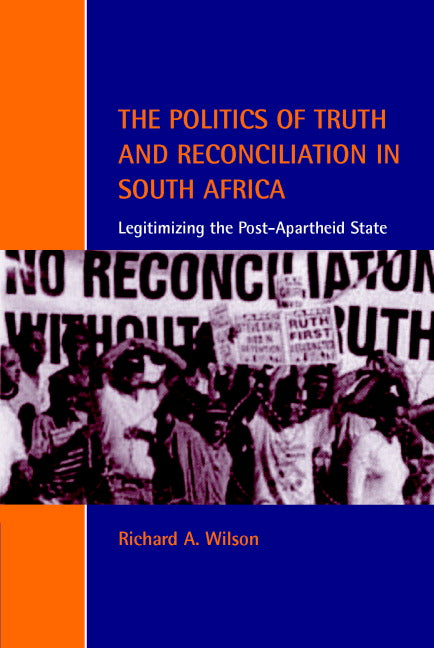
The Politics of Truth and Reconciliation in South Africa
Legitimizing the Post-Apartheid State
This book shows the impact of the TRC in urban African communities in Johannesburg.
Richard A. Wilson (Author)
9780521001946, Cambridge University Press
Paperback / softback, published 2 May 2001
296 pages, 3 maps
23 x 14.8 x 1.9 cm, 0.5 kg
'Wilson's study makes a strong and convincing argument.' Journal of Southern African Studies
The South African Truth and Reconciliation Commission (TRC) was set up to deal with the human rights violations of apartheid during the years 1960–1994. However, as Wilson shows, the TRC's restorative justice approach to healing the nation did not always serve the needs of communities at a local level. Based on extended anthropological fieldwork, this book illustrates the impact of the TRC in urban African communities in Johannesburg. While a religious constituency largely embraced the commission's religious-redemptive language of reconciliation, Wilson argues that the TRC had little effect on popular ideas of justice as retribution. This provocative study deepens our understanding of post-apartheid South Africa and the use of human rights discourse. It ends on a call for more cautious and realistic expectations about what human rights institutions can achieve in democratizing countries.
List of acronyms and glossary
Maps
Preface and acknowledgements
1. Human rights and nation-building
Part I. Human Rights and Truth: 2. Technologies of truth: the TRC's truth-making machine
3. The politics of truth and human rights
Part II. Reconciliation
Retribution and Revenge: 4. Reconciliation through truth?
5. Reconciliation in society: religious values and procedural pragmatism
6. Vengeance, revenge and retribution
7. Reconciliation with a vengeance
8. Conclusions: human rights, reconciliation and retribution
Notes
Bibliography
Index.
Subject Areas: International humanitarian law [LBBS], International relations [JPS], Social & cultural anthropology, ethnography [JHMC], Regional studies [GTB]