Freshly Printed - allow 10 days lead
Couldn't load pickup availability
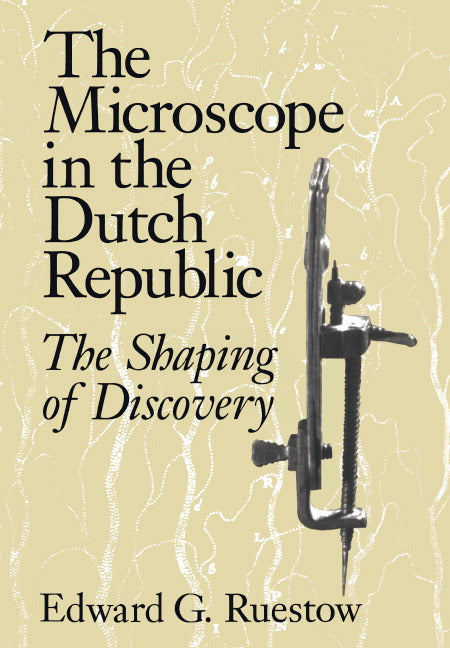
The Microscope in the Dutch Republic
The Shaping of Discovery
Ruestow examines the social unease that spurred the discoveries of the pioneers of microscopic research.
Edward G. Ruestow (Author)
9780521470780, Cambridge University Press
Hardback, published 13 July 1996
364 pages, 29 b/w illus.
23.4 x 16.1 x 2.8 cm, 0.649 kg
' … clearly and lucidly written …' Endeavour
Focusing on the two seventeenth-century pioneers of microscopic dicovery, the Dutchmen Jan Swammerdam and Antoni van Leewenhoek, Ruestow demonstrates that their uneasiness with their social circumstances spurred their discoveries. Though arguing that aspects of Dutch culture impeded serious research with the microscope, Ruestow also shows, however, that the culture of the period shaped how Swammerdam and Leewenhoek responded to what they saw through the lens. He concludes by emphasising how their early microscopic efforts differed from the institutionalised microscopic research that began in the nineteenth century.
Introduction
1. Of light, lenses and glass beads
2. Seeming invitations
3. Obstacles
4. Discovery preempted
5. Swammerdam
6. Leeuwenhoek I: A clever burgher
7. Leeuwenhoek II: Images and ideas
8. Generation I: Turning against a tradition
9. Generation II: The search for first beginnings
10. A new world
Conclusion.
Subject Areas: History of science [PDX]