Freshly Printed - allow 10 days lead
Couldn't load pickup availability
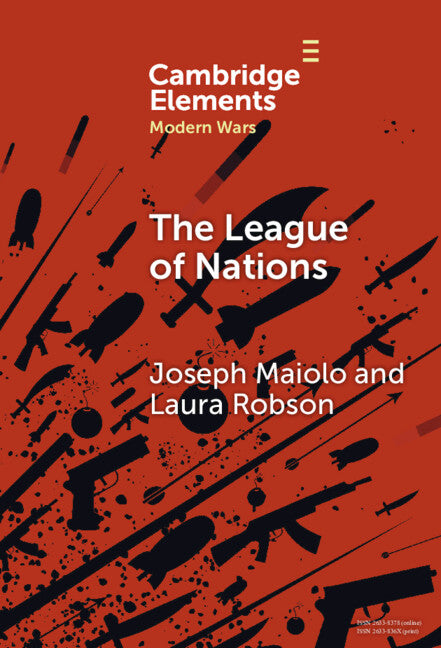
The League of Nations
This Element suggests that the League of Nations operated as a successful reconfiguration of empire.
Joseph Maiolo (Author), Laura Robson (Author)
9781009514156, Cambridge University Press
Hardback, published 20 February 2025
106 pages
23.5 x 15.9 x 1.1 cm, 0.3 kg
The Element challenges histories of the League of Nations that present it as a meaningful if flawed experiment in global governance. Such accounts have largely failed to admit its overriding purpose: not to work towards international cooperation among equally sovereign states, but to claim control over the globe's resources, weapons, and populations for its main showrunners (including the United States) – and not through the gentle arts of persuasion and negotiation but through the direct and indirect use of force and the monopolisation of global military and economic power. The League's advocates framed its innovations, from refugee aid to disarmament, as manifestations of its commitment to an obvious universal good and, often, as a series of technocratic, scientific solutions to the problems of global disorder. But its practices shored up the dominance of the western victors and preserved longstanding structures of international power and civilizational-racial hierarchy. This title is also available as Open Access on Cambridge Core.
Introduction: the idea of international order
1. Ordering people
2. Ordering wealth
3. Ordering war
Epilogue: the means and ends of the league of nations.
Subject Areas: Military history [HBW]