Freshly Printed - allow 10 days lead
Couldn't load pickup availability
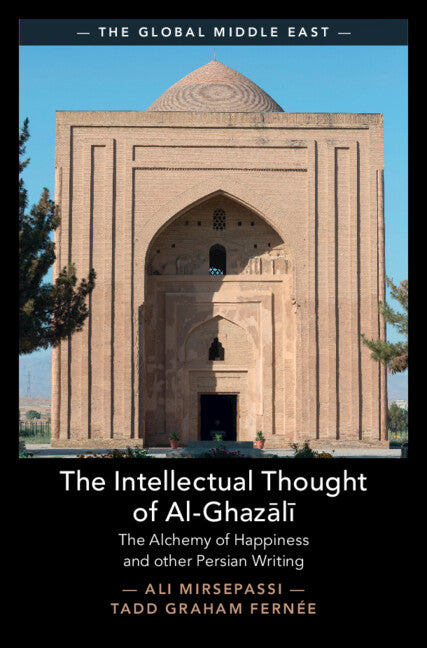
The Intellectual Thought of Al-Ghazālī
Investigates the intellectual legacy of Abu Hamid Muhammad al-Ghazālī (1058–1111), an influential thinker of the classical Islamic period.
Ali Mirsepassi (Author), Tadd Graham Fernée (Author)
9781009538169, Cambridge University Press
Hardback, published 19 December 2024
270 pages
2.4 x 15.9 x 1.9 cm, 0.53 kg
Abu Hamid Muhammad al-Ghazālī (1058–1111) was one of the most influential philosophers of the classical Islamic period, with his intellectual innovations spanning the fields of theology, logic, and law. Despite this, contemporary assessments of Ghazālī often present him as hostile to rationality, and a guardian of dogma and orthodoxy. This study provides an innovative reassessment of Ghazālī's legacy, offering a compelling depiction of a reformer in his own time with increasing relevance to the issues gripping multicultural and globalized societies today. Ali Mirsepassi and Tadd Graham Fernée closely study Ghazālī's major Persian-language text Kīmīyā-e saʿādat (The Alchemy of Happiness) and its scholarly reception, alongside his lesser-read works, arguing that Ghazālī shared a message of reform, and critique of Abbasid institutions. Ghazālī's critical stance is revealed as both pragmatic and cosmopolitan in its recognition of autonomy from religion in many aspects of life, and in the value placed upon scientific contribution.
Introduction
1. The time and life of Ghazālī
2. Reading Ghazālī in the West
3. The poetic imagination and the politics of ambiguity
4. The new orthodoxy in the academic study of Islam
5. A path to reform: escape from madrasa
6. A cosmopolitan reading of Ghazālī
7. Ghazālī's practical ethics
Bibliography
Index.
Subject Areas: Middle Eastern history [HBJF1]