Freshly Printed - allow 8 days lead
Couldn't load pickup availability
The Graphic Unconscious in Early Modern French Writing
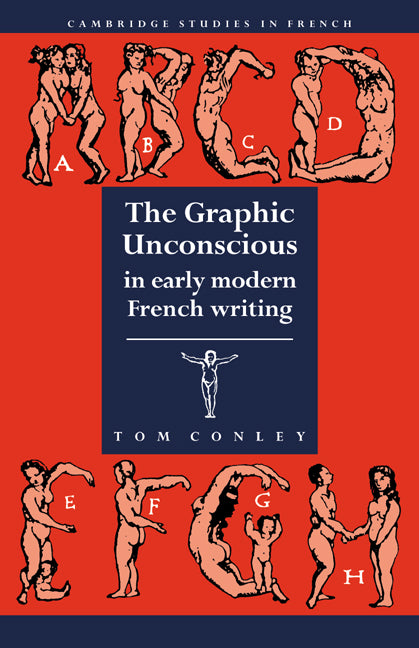
This 1992 book studies the importance of typographic shapes in French Renaissance literature in the context of psychoanalysis and of the history of printed writing.
Tom Conley (Author)
9780521032223, Cambridge University Press
Paperback / softback, published 14 December 2006
240 pages
21.5 x 13.9 x 0.9 cm, 0.318 kg
"...a unique and highly creative work, full of erudition, striking and persuasive interpretations, and daringly creative play with and through Renaissance texts. Many readers will be enthralled, some outraged, and none bored by Conley's willingness to follow the 'screen memories,'... Conley's willingness to take risks and his prodigious ability both to perceive the potential recombination of graphic material and to relate detail to large semantic units make The Graphic Unconscious a rewarding and refreshing book." John D. Lyons, Renaissance Quarterly
This 1992 book studies the importance of typographic shapes in French Renaissance literature in the context of psychoanalysis and of the history of printed writing. Focusing on the poetry of Clement Marot, Rabelais's Gargantua, Ronsard's sonnets and the Essais of Montaigne, it argues that printed characters can either supplement or betray what they appear to articulate, revealing compositional patterns that do not appear to be under authorial control. Professor Conley shows that graphic forms are crucial for the development of complex interactions of verbal and visual materials in the early years of print culture. Marot and Rabelais articulate a religious programme through the letter; Ronsard conflates the arts in poetry of the French court in the middle years of the sixteenth century; Montaigne stages the birth of the self in print and inscribes political dimensions in the relationship between the letter and meaning. This unconscious, proto-Freudian writing has complex historical relations with verbal and visual practices in the media of the twentieth century.
List of illustrations
Acknowledgements
Introduction
1. A secret space: Marot's Rondeaux
2. The Rabelaisian hieroglyph
3. Ronsard's sonnet-pictures
4. The turn of the letter: from Cassandre to Hélène
5. Montaigne's test of style: De l'exercitation
6. A colossal abyss: Des coches
Conclusion
Notes
Bibliography
Index.
Subject Areas: Literary studies: classical, early & medieval [DSBB]