Freshly Printed - allow 10 days lead
Couldn't load pickup availability
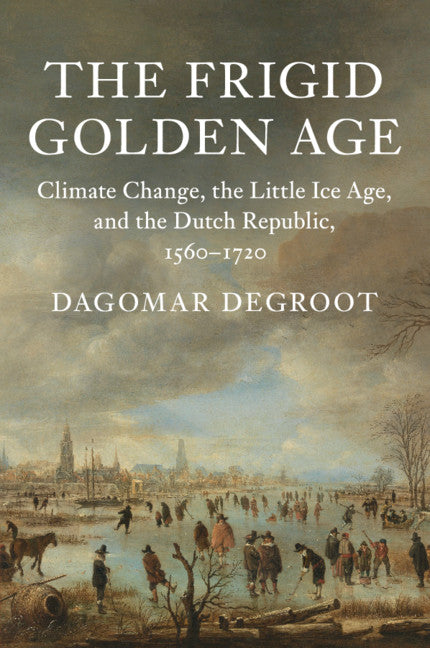
The Frigid Golden Age
Climate Change, the Little Ice Age, and the Dutch Republic, 1560–1720
Explores the resilience of the Dutch Republic in the face of preindustrial climate change during the Little Ice Age.
Dagomar Degroot (Author)
9781108410410, Cambridge University Press
Paperback / softback, published 28 February 2019
388 pages
22.8 x 15.1 x 2.2 cm, 0.5 kg
'Degroot brings considerable expertise to the study of climate and conducts research with a fine eye for historical sources that speak to studies of weather and climate. He also recounts events in gripping narrative form, enabling his book to serve as an approachable and dependable account of the early history of the republic.' Dagomar Degroot, Journal of Modern History
Dagomar Degroot offers the first detailed analysis of how a society thrived amid the Little Ice Age, a period of climatic cooling that reached its chilliest point between the sixteenth and eighteenth centuries. The precocious economy, unusual environment, and dynamic intellectual culture of the Dutch Republic in its seventeenth-century Golden Age allowed it to thrive as neighboring societies unraveled in the face of extremes in temperature and precipitation. By tracing the occasionally counterintuitive manifestations of climate change from global to local scales, Degroot finds that the Little Ice Age presented not only challenges for Dutch citizens but also opportunities that they aggressively exploited in conducting commerce, waging war, and creating culture. The overall success of their Republic in coping with climate change offers lessons that we would be wise to heed today, as we confront the growing crisis of global warming.
Introduction: crisis and opportunity in a changing climate
1. The Little Ice Age
Part I. Commerce and Climate Change: Part I. Preface
2. Reaching Asia in a stormy, chilly climate
3. Sailing, floating, riding, and skating through a cooler Europe
Part II. Conflict and Climate Change: Part II. Preface
4. Cooling, warming, and the wars of independence, 1564–1648
5. Gales, winds, and Anglo-Dutch antagonism, 1652–88
Part III. Culture and Climate Change: Part III. Preface
6. Tracing and painting the Little Ice Age
7. Texts, technologies, and climate change
Conclusion: lessons from ice and gold
Appendices.
Subject Areas: History of science [PDX]