Freshly Printed - allow 10 days lead
Couldn't load pickup availability
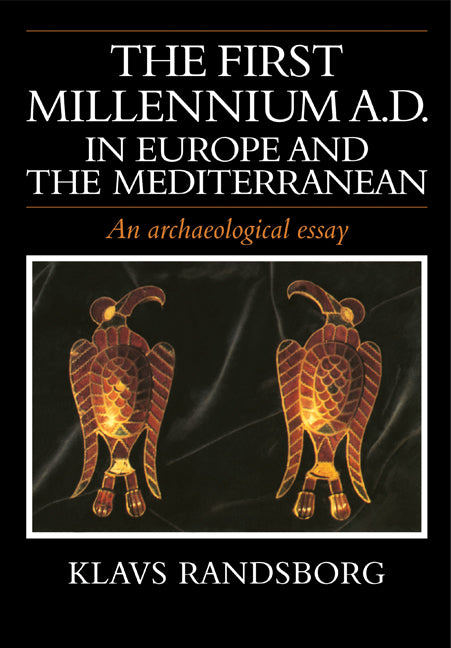
The First Millennium AD in Europe and the Mediterranean
An Archaeological Essay
This book deals with the rise of medieval western Europe as the Roman Empire crumbled, and the integration of barbarian societies into the new mainstream of European society.
Klavs Randsborg (Author)
9780521387873, Cambridge University Press
Paperback / softback, published 25 January 1991
260 pages, 92 b/w illus.
22.9 x 15.2 x 1.4 cm, 0.39 kg
'… an exhaustively researched and carefully presented account of the first millennium AD in Europe … a valuable reference work for archaeologists and historians alike.' American Anthropologist
Modern archaeology, with its huge methodological repertoire, its interdisciplinary orientation and its rapidly expanding basis in excavations, is beginning to rewrite history, and to reshape our views of the development of Europe prior to the present millennium. Archaeological evidence draws attention to processes on which the written record is silent, or which were not fully appreciated by contemporaries in the literate centres. This book deals with the rise of medieval western Europe as the Roman Empire crumbled, and the integration of hitherto barbarian societies into the new mainstream of European society. Archaeological material is the main focus, but information derived from written sources, especially those illuminating the economic and the associated social circumstances, is also taken into account.
1. Introduction
2. The historical framework
AD 0–200
AD 200–400
AD 400–600
AD 600–800
AD 800–1000
3. The physical setting
General physical conditions
Climatic change
Agriculture and erosion
Cultivated plants
Domestic animals
4. Rural settlement
Roman Italy
The Mediterranean in the Roman period
The Near East
Temperate Western Europe in the Roman period
The Danube area in the Roman period
Western Europe in the post-Roman period
Northern Europe
5. Towns and other centres
Classification
Size and distribution of Roman towns
Late Roman fortifications
Churches, mosaics, and inscriptions
Roman forts
6. Production and exchange
Development of water transport
Roman pottery
Coins
Exchange in Central and Northern Europe
7. Society, culture and mentality
Burial
Social inequality
The visible and the invisible
8. Archaeology and historiography
From the Roman Empire to the Middle Ages
In the shadow of the empire
Transformations
Epilogue and prologue
Appendices
References
Index.
Subject Areas: Prehistoric archaeology [HDDA]