Freshly Printed - allow 10 days lead
Couldn't load pickup availability
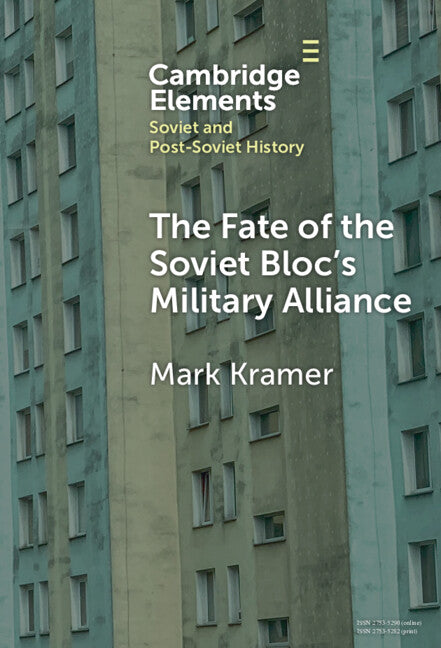
The Fate of the Soviet Bloc's Military Alliance
Reform, Adaptation, and Collapse of the Warsaw Pact, 1985–1991
This Element systematically explores the relative fundamentality and degrees of conviction for understanding our doxastic states.
Mark Kramer (Author)
9781009557207, Cambridge University Press
Hardback, published 13 February 2025
74 pages
23.5 x 15.8 x 0.9 cm, 0.26 kg
When Mikhail Gorbachev became the leader of the Soviet Union in 1985, the Warsaw Pact was a robust military alliance. It was capable of waging a large-scale war in Europe and was an instrument of Soviet hegemony in Eastern Europe, keeping orthodox Communist regimes in power. The alliance over the years had also become an effective mechanism of political coordination and consultation. In April 1985, the Warsaw Pact leaders met in Warsaw and renewed the Pact for another thirty years. Yet only six years later, the alliance was disbanded, having been rendered obsolete by the political transformation of Eastern Europe in 1989–1990. This monograph recounts what happened to the Warsaw Pact during its final years and explains why the organization ceased to exist in 1991.
Introduction
1. Early signs of continuity and change
2. The Warsaw pact's new military doctrine
3. Restructuring and reductions of forces
4. Reorientation of soviet policy
5. The secret reinterpretation of soviet obligations under the Warsaw pact
6. Dissolution of East European communism
7. Disbandment of the Warsaw pact
Conclusions
Bibliography.
Subject Areas: European history [HBJD]