Freshly Printed - allow 10 days lead
Couldn't load pickup availability
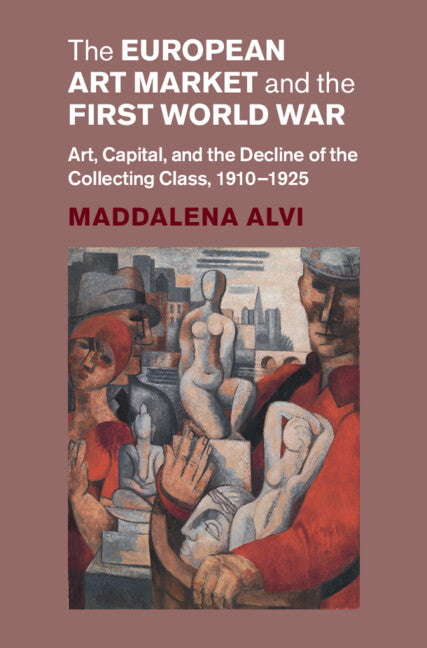
The European Art Market and the First World War
Art, Capital, and the Decline of the Collecting Class, 1910–1925
Utilising a diverse source base in six languages, Alvi demonstrates how the First World War transformed the European art market.
Maddalena Alvi (Author)
9781009600811, Cambridge University Press
Hardback, published 17 April 2025
285 pages, 27 b/w illus.
23.5 x 15.9 x 2.1 cm, 0.56 kg
'This is a unique study of the European art market reeling from the First World War. Alvi reconstructs a diverse artworld of collectors, dealers, and players fighting for their corners of the industry. The book powerfully demonstrates how the 'collecting classes' were irrevocably damaged by the conflict.' A. Carden-Coyne, Professor of History, University of Manchester
The outbreak of the First World War shattered the established European art market. Amidst fighting, looting, confiscations, expropriation fears and political and economic upheaval, an integrated marketplace shaped by upper-class patrons broke down entirely. In its place, Maddalena Alvi argues, can be found the origins of a recognisably modern market of nationalised spheres driven by capitalist investment and speculation, yet open to wider social strata. Delving into auction records, memoirs, newspaper articles, financial and legal documents in six languages, Alvi explores these cultural and socio-economic developments across the British, French, and German markets, as well as trade spheres such as Russia and Scandinavia. 1914 marked the end of the European art market and cemented the connection between art and finance.
Introduction
1. The European market before 1914
2. The great conflagration (1914–1918)
3. 'Wartime cultural changes' (1914–1918)
4. Post-war markets (1918–1925)
5. 'The challenges of new markets'
6. Cementing nationalisation (1918–1925)
Conclusion: the end of the European art market.
Subject Areas: European history [HBJD]