Freshly Printed - allow 10 days lead
Couldn't load pickup availability
The Enclosure of Knowledge
Books, Power and Agrarian Capitalism in Britain, 1660–1800
Challenges the dominant narrative of an agricultural 'enlightenment', showing how farming books appropriated traditional knowledge in pre-industrial Britain.
James D. Fisher (Author)
9781009048736, Cambridge University Press
Paperback / softback, published 23 May 2024
346 pages
22.9 x 15.2 x 1.8 cm, 0.501 kg
'… a splendid book rethinking the intellectual and cultural history of books and pamphlets about agriculture and the countryside in the long eighteenth century. It is written with great clarity and considerable verve, sweeping the reader through a fascinating story about the transformation of agricultural knowledge over time.' John Broad, Cultural and Social History
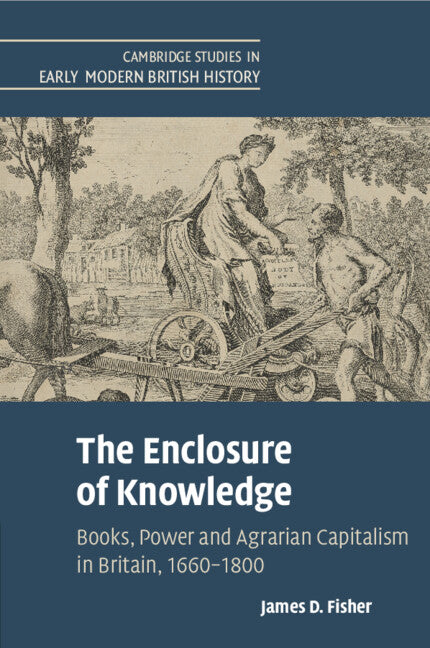
The rise of agrarian capitalism in Britain is usually told as a story about markets, land and wages. The Enclosure of Knowledge reveals that it was also about books, knowledge and expertise. It argues that during the early modern period, farming books were a key tool in the appropriation of the traditional art of husbandry possessed by farm workers of all kinds. It challenges the dominant narrative of an agricultural 'enlightenment', in which books merely spread useful knowledge, by showing how codified knowledge was used to assert greater managerial control over land and labour. The proliferation of printed books helped divide mental and manual labour to facilitate emerging social divisions between labourers, managers and landowners. The cumulative effect was the slow enclosure of customary knowledge. By synthesising diverse theoretical insights, this study opens up a new social history of agricultural knowledge and reinvigorates long-term histories of knowledge under capitalism.
Introduction: Pen over Plough
1. Rethinking Agricultural Books, Knowledge and Labour
2. Learning without Books: The Mystery of Husbandry
3. Standing on the Shoulders of Peasants: The Appropriation of the Art of Husbandry
4. Learning without Labour: Codification and Managerial Knowledge
5. Dividing Head & Hand: Gentleman Farmers, Agriculturists and Expertise
6. Monopolising Knowledge: Professionalisation, Education and Stewards
7. The Master Should Know More: Book-Farming, Power and Resistance
Conclusion: New Histories of Knowledge.
Subject Areas: Economic history [KCZ], Social & cultural history [HBTB], British & Irish history [HBJD1]