Freshly Printed - allow 8 days lead
Couldn't load pickup availability
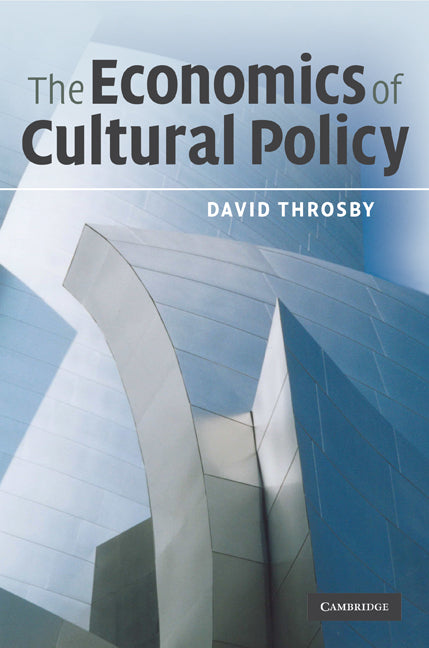
The Economics of Cultural Policy
Non-technical analysis of how cultural industries contribute to economic growth and the policies required to ensure cultural industries will flourish.
David Throsby (Author)
9780521868259, Cambridge University Press
Hardback, published 3 June 2010
294 pages
23.5 x 15.7 x 1.9 cm, 0.59 kg
'David Throsby promises to provide a comprehensive synopsis of all economic contributions to the analysis of cultural policy while extending the discussion beyond the usual questions, inviting non-economists and specialists alike to join the conversation … [He] identifies important aspects of cultural policy and argues that it can be enriched rather than debased by economic logic. He persuasively argues this by elaborating on various theories and their application to broader areas of cultural interest.' Lyudmila Petrova, Journal of Cultural Economics
Cultural policy is changing. Traditionally, cultural policies have been concerned with providing financial support for the arts, for cultural heritage and for institutions such as museums and galleries. In recent years, around the world, interest has grown in the creative industries as a source of innovation and economic dynamism. This book argues that an understanding of the nature of both the economic and the cultural value created by the cultural sector is essential to good policy-making. The book is the first comprehensive account of the application of economic theory and analysis to the broad field of cultural policy. It deals with general principles of policy-making in the cultural arena as seen from an economic point of view, and goes on to examine a range of specific cultural policy areas, including the arts, heritage, the cultural industries, urban development, tourism, education, trade, cultural diversity, economic development, intellectual property and cultural statistics.
List of abbreviations
Preface
Acknowledgements
1. Introduction
2. The scope of cultural policy
3. The policy process
4. Arts policy
5. Cultural industries
6. Cultural heritage
7. Culture in urban and regional development
8. Tourism
9. Culture in the international economy
10. Cultural diversity
11. Arts education
12. Culture in economic development
13. Intellectual property
14. Cultural statistics
15. Conclusions
References
Index.
Subject Areas: Economics [KC], Politics & government [JP], Society & culture: general [JF]