Freshly Printed - allow 10 days lead
Couldn't load pickup availability
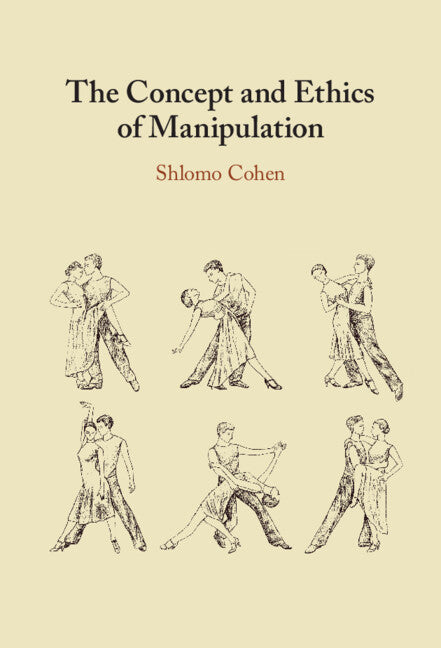
The Concept and Ethics of Manipulation
Which influences count as manipulations, and how should they be assessed morally? The first comprehensive philosophical and ethical theory of manipulation.
Shlomo Cohen (Author)
9781009443449, Cambridge University Press
Hardback, published 17 April 2025
254 pages
23.5 x 15.9 x 2 cm, 0.52 kg
'… one wonders, after reading Cohen, how often … decisions are themselves unconscious. Are we manipulated to be manipulators, by ourselves to ourselves? We must respect any book that leads to such questions. Cohen is quite mordant. His book is one for our time, a rough and tumble era without an aspirational character.' Christopher Giofreda, Thoughtfox
Everyone is exposed to manipulation daily, and everyone manipulates too. The impact of manipulations in personal, social, and political life is enormous. Is this tragic? Is it avoidable? Is it always morally bad or regrettable? To answer these questions, we need a theory of manipulation. This book is the first comprehensive philosophical theory of manipulation. Shlomo Cohen offers a new theory on what manipulation is, distinguishing it from other kinds of influence, and assesses the basic moral status of manipulation. In contrast to prevailing views, he argues that manipulation, though often morally bad, is not inherently morally bad, and that alongside its dangers, it has a central role as a 'lubricant' of social frictions which helps to regulate social and political relations. His analysis offers a window to better understanding the ethics of the interplay of reason and power in human relations.
1. An elusive concept
2. Manipulation as conceptual metaphor
3. Manipulation: the anatomy
4. The moral status of manipulation
5. Manipulation and respect for persons
6. On manipulation in politics
Bibliography
Index.
Subject Areas: Ethics & moral philosophy [HPQ]