Freshly Printed - allow 10 days lead
Couldn't load pickup availability
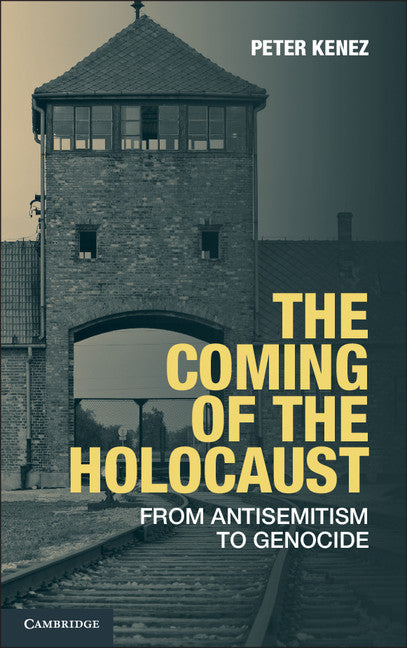
The Coming of the Holocaust
From Antisemitism to Genocide
The Coming of the Holocaust aims to help readers understand the circumstances that made the Holocaust possible.
Peter Kenez (Author)
9781107636842, Cambridge University Press
Paperback / softback, published 30 September 2013
313 pages
22.8 x 15.2 x 1.7 cm, 0.43 kg
'This work by a veteran historian is a helpful addition to the field of Holocaust studies.' The Russian Review
The Coming of the Holocaust aims to help readers understand the circumstances that made the Holocaust possible. Peter Kenez demonstrates that the occurrence of the Holocaust was not predetermined as a result of modern history but instead was the result of contingencies. He shows that three preconditions had to exist for the genocide to take place: modern anti-Semitism, meaning Jews had to become economically and culturally successful in the post-French Revolution world to arouse fear rather than contempt; an extremist group possessing a deeply held, irrational, and profoundly inhumane worldview had to take control of the machinery of a powerful modern state; and the context of a major war with mass killings. The book also discusses the correlations between social and historical differences in individual countries regarding the success of the Germans in their effort to exterminate Jews.
Introduction
Part I. Rise of Modern Anti-Semitism: 1. French Jews
2. Jews of the Russian empire and of the Soviet Union
3. Hungarian Jews
Part II. The National Socialists Take Control of the German State Machinery: 4. National socialism and Jews
5. Propaganda
6. What to do with the Jews?
Part III. War: 7. Ghettos in Poland, 1939–41
8. The Holocaust in the Soviet Union
9. The Romanian Holocaust
10. Germany, 1942
11. The Holocaust in Western Europe
12. The last island: Hungary
13. Extermination camps
14. Afterthoughts.
Subject Areas: Jewish studies [JFSR1], 20th century history: c 1900 to c 2000 [HBLW], European history [HBJD]