
Special Order - allow 2+ weeks lead
Couldn't load pickup availability
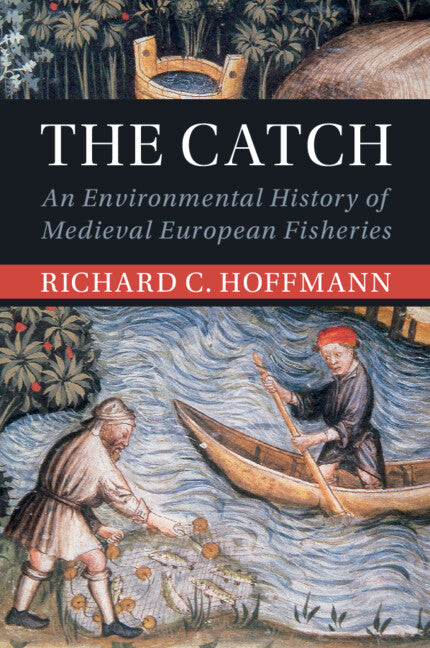
The Catch
An Environmental History of Medieval European Fisheries
Insightful analysis of relationships between human communities and aquatic ecosystems of Europe from c. 500 to 1500 CE.
Richard C. Hoffmann (Author)
9781108958202, Cambridge University Press
Paperback / softback, published 25 May 2023
584 pages
22.8 x 15.2 x 3.4 cm, 0.87 kg
'… an invaluable work … The Catch should expand the traditional focus of medieval studies, while also articulating the importance of multidisciplinarity … Environmental history is often a story of continuum. Within this book, it is a story of later medieval commercialized maritime fishing that developed out of early medieval artisanal practices. By the book's end, Hoffmann has achieved his goal of explaining environmental Europeanization across the continent, which he sees as a core step toward globalization. This critical element to our successful understanding of anthropogenic crisis cannot be stated too often.' Victoria L. McAlister, H-Environment
This definitive environmental history of medieval fish and fisheries provides a comprehensive examination of European engagement with aquatic systems between c. 500 and 1500 CE. Using textual, zooarchaeological, and natural records, Richard C. Hoffmann's unique study spans marine and freshwater fisheries across western Christendom, discusses effects of human-nature relations and presents a deeper understanding of evolving European aquatic ecosystems. Changing climates, landscapes, and fishing pressures affected local stocks enough to shift values of fish, fishing rights, and dietary expectations. Readers learn what the abbess Waldetrudis in seventh-century Hainault, King Ramiro II (d.1157) of Aragon, and thirteenth-century physician Aldebrandin of Siena shared with English antiquarian William Worcester (d. 1482), and the young Martin Luther growing up in Germany soon thereafter. Sturgeon and herring, carp, cod, and tuna played distinctive roles. Hoffmann highlights how encounters between medieval Europeans and fish had consequences for society and the environment - then and now.
Introduction
Considering fisheries: medieval Europe and its legacies
1. 'Natural' aquatic ecosystems around Late Holocene Europe
2. Protein, penance, and prestige: medieval demand for fish
3. Take and eat: subsistence fishing in and beyond the Early Middle Ages
4. Master artisans and local markets
5. Aquatic systems under stress, ca. 1000–1350
6. Cultural responses to scarcities of fish
7. Going beyond natural local ecosystems I: carp aquaculture as ecological revolution
8. Going beyond natural local ecosystems II: over the horizon toward abundance and 'tragedy'
9. Last casts: two perspectives on past environmental relations.
Subject Areas: Environmental factors [MBNH2], Early history: c 500 to c 1450/1500 [HBLC], European history [HBJD], History [HB]