Freshly Printed - allow 10 days lead
Couldn't load pickup availability
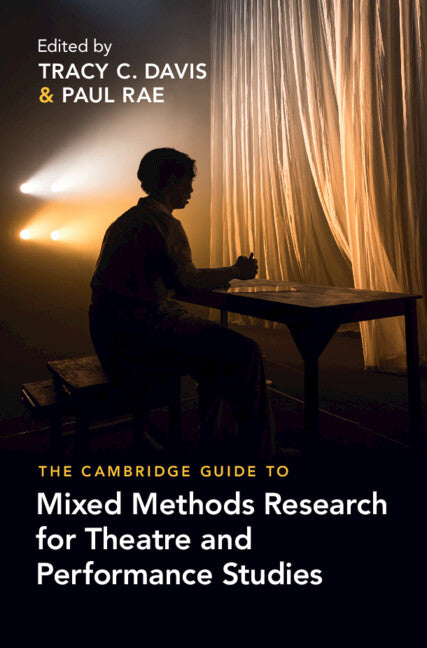
The Cambridge Guide to Mixed Methods Research for Theatre and Performance Studies
The first comprehensive guide to established and emergent approaches to theatre and performance research for advanced students and scholars.
Tracy C. Davis (Edited by), Paul Rae (Edited by)
9781009294881, Cambridge University Press
Hardback, published 8 February 2024
348 pages
23.5 x 15.9 x 2.3 cm, 0.65 kg
'A smart, rigorously conceived, and eminently readable collection that reveals how thinking about methods takes us right to the heart of what and how we research in theatre and performance studies. I expect this book will inspire scholarship and guide teaching for years to come.' Heike Roms, University of Exeter
We often know performance when we see it – but how should we investigate it? And how should we interpret what we find out? This book demonstrates why and how mixed methods research is necessary for investigating and explaining performance and advancing new critical agendas in cultural study. The wide range of aesthetic forms, cultural meanings, and social functions found in theatre and performance globally invites a corresponding variety of research approaches. The essays in this volume model reflective consideration of the means, processes, and choices for conducting performance research that is historical, ethnographic, aesthetic, or computational. An international set of contributors address what is meant by planning or designing a research project, doing research (locating and collecting primary sources or resources), and the ensuing work of interpreting and communicating insights. Providing illuminating and necessary guidance, this volume is an essential resource for scholars and students of theatre, performance, and dance.
List of figures
List of tables
List of contributors
Acknowledgements
Introduction: mix and stir Tracy C. Davis
Part I. Planning: 1. Difference Brandi Wilkins Catanese, Nicola Mārie Hyland and Ben Spatz
2. Planning a research project: early steps Maggie B. Gale
3. Interdisciplinary acts: learning about theatre from the social sciences Michael McKinnie
4. Mixing methods in a multi-sited, collaborative project: researching migration, working with variation Emine Fişek
5. Ethics Natalie Alvarez and Patrick Anderson
Part II. Doing: 6. You're already a digital humanist: why aren't you thinking like one? Derek Miller
7. Analyzing immersive performance through lived bricolage Julia M. Ritter
8. Talking theatre in an oral culture: audience research in Ghana Awo Mana Asiedu
9. Painful fieldwork? Radical empiricism and ritual performance in the Philippines Julius Bautista
10. Fieldwork as method in theatre and performance studies Jonas Tinius
Part III. Interpreting: 11. Archives and embodiments Adrian Curtin, Prarthana Purkayastha and meLê yamomo
12. Methods to research marginalized early-modern practices: Más Saber Baylar Anke Charton
13. Taking your time: research in learning-disabled theatre Tony McCaffrey
14. Not here for the disciplines: researching with and for the Pacific Katerina Teaiwa
15. Complexity Ruthie Abeliovich, Leo Cabranes-Grant and Soo Ryon Yoon
Conclusion: the aesthetics of performance research: appearance, conduct, design Paul Rae
Index.
Subject Areas: Theatre studies [AN]