Freshly Printed - allow 10 days lead
Couldn't load pickup availability
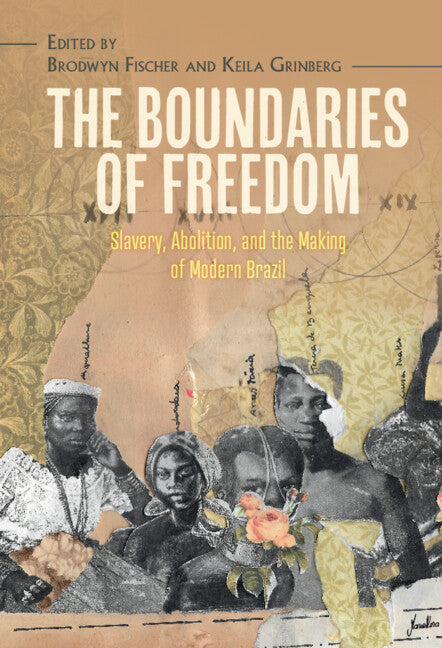
The Boundaries of Freedom
Slavery, Abolition, and the Making of Modern Brazil
This carefully curated collection of essays opens the vibrant field of Brazilian slavery and abolition studies to English-language readers.
Brodwyn Fischer (Edited by), Keila Grinberg (Edited by)
9781108831536, Cambridge University Press
Hardback, published 17 March 2022
504 pages
23.5 x 15.7 x 3.4 cm, 0.885 kg
'Throughout the nineteenth century, Brazil was simultaneously home to an economy still dependent on enslaved labor and the transatlantic slave trade, and a rapidly growing free population of African descent. These extraordinary circumstances are the basis for the complex and fascinating histories of struggle over questions of liberty, property, and identity that fill the pages of this exciting collection of essays.' Barbara Weinstein, New York University
The Boundaries of Freedom brings together, for the first time in English, key scholars writing on the social and cultural history of Brazilian slavery, emphasizing the centrality of slavery, abolition, and Black subjectivity in the forging of modern Brazil, the largest and most enduring slave society in the Americas. Nearly five million enslaved Africans were forced to Brazil's shores over four and a half centuries, making slavery integral to every aspect of its colonial and national history, stretching beyond temporal and geographical boundaries. This book introduces English-language readers to a paradigm-shifting renaissance in Brazilian scholarship that has taken place in the past several decades, upending longstanding assumptions on slavery's relation to law, property, sexuality and family; reconceiving understandings of slave economies; and engaging with issues of agency, autonomy, and freedom. These vibrant debates are explored in fifteen essays that place the Brazilian experience in dialogue with the afterlives of slavery worldwide.
Introduction: Slavery and Freedom in Nineteenth Century Brazil Brodwyn Fischer and Keila Grinberg
Part I. Law, Precarity, and Affective Economies during Brazil's Slave Empire
1. The Crime of Illegal Enslavement and the Precariousness of Freedom in Nineteenth-Century Brazil Keila Grinberg and Beatriz Mamigonian
2. “Hellish Nurseries:” Slave Smuggling, Child Trafficking, and Local Complicity in Nineteenth Century Pernambuco Marcus Carvalho
3. Agrarian Empires, Plantation Communities, and Slave Families in a Nineteenth Century Brazilian Coffee Zone Ricardo Salles and Mariana Muaze
4. Motherhood Silenced: Enslaved Wet Nurses in Nineteenth Century Brazil Mariana Muaze
5. The Abolition of Slavery and International Relations on the Southern Border of the Brazilian Empire, 1840–1865 Keila Grinberg
Part II. Bounded Emancipations
6. Body, Gender and Identity on the Threshold of Abolition: A Tale Doubly Told by Benedicta Maria da Ilha, a Free Woman and Ovídia, a Slave Maria Helena Pereira Machado
7. Slavery, Freedom and the Relational City in Abolition-era Recife Brodwyn Fischer
8. Migrações ao sul: Memories of Land and Work in Brazil's Slaveholding Southeast Robson Luis Machado Martins and Flávio Gomes
Part III. Racial Silence and Black Intellectual Subjectivities
9. Breaking the Silence: Racial Subjectivities, Abolitionism, and Public Life in mid-1870s Recife Celso Castilho and Rafaella Valença de Andrade Galvão
10. The Life and Times of a Free Black Man in Brazil's Era of Abolition: Teodoro Sampaio, 1855–1937 Wlamyra Albuquerque
11. Political Dissonance in the Name of Freedom: Brazil's Black Organizations in the Age of Abolition Ana Flavia Magalhães Pinto
12. The East River Reminds Me of the Paraná: Racism, Subjectivity and Transnational Political Action in the Life of André Rebouças Hebe Mattos
Part IV. Afterlives of Slavery, Afterwards of Abolition
13. The Past was Black: Modesto Brocos, The Redemption of Ham, and Brazilian Slavery Daryle Williams
14. From Crias de Casa to Filhos de Criação: Raising Illegitimate Children in the “Big House” in Post-Abolition Brazil Sueann Caulfield
15. Slave Songs and Racism in the post-Abolition Americas: Eduardo das Neves and Bert Williams in Comparative Perspective Martha Abreu
Bibliography
Index.
Subject Areas: Slavery & abolition of slavery [HBTS], History of the Americas [HBJK]