Freshly Printed - allow 8 days lead
Couldn't load pickup availability
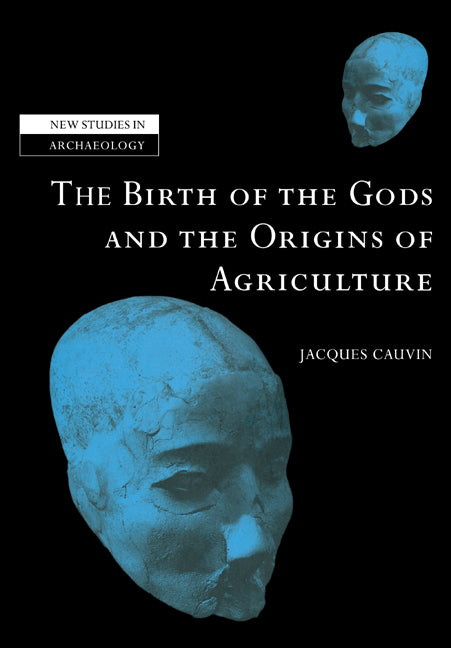
The Birth of the Gods and the Origins of Agriculture
A study of social and economic transformations in the Near East during Palaeolithic-Neolithic transition, first published in 2000.
Jacques Cauvin (Author), Trevor Watkins (Translated by)
9780521039086, Cambridge University Press
Paperback / softback, published 16 August 2007
288 pages, 69 b/w illus. 9 maps
24.2 x 16.7 x 1.6 cm, 0.46 kg
'This important book gives the best available overview of the evidence in this significant field … and it offers clearly and persuasively an entirely fresh insight into the Neolithic Revolution.' Colin Renfrew, on the original French edition
Jacques Cauvin has spent many years researching the beginnings of the Neolithic in the Near East, excavating key sites and developing new ideas to explain the hugely significant cultural, social and economic changes which transformed mobile hunter-gatherers into the first village societies and farmers in the world. In this book, first published in 2000, the synthesis of his mature understanding of the process beginning around 14,000 years ago challenges ecological and materialist interpretations, arguing for a quite different kind of understanding influenced by ideas of structuralist archaeologists and members of the French Annales school of historians. Defining the Neolithic Revolution as essentially a restructuring of the human mentality, expressed in terms of new religious ideas and symbols, the survey ends around nine thousand years ago, when the developed religious ideology, the social practice of village life and the economy of mixed farming had become established throughout the Near East and east Mediterranean, and spreading powerfully into Europe.
List of plates
List of figures
Translator's note
Foreword
Preface
Chronological table
Introduction
Part I. The Origins of Agriculture: 1. Natural environment and human cultures on the eve of the Neolithic
2. The first pre-agricultural villages: the Natufian
3. The Revolution in symbols and the origins of Neolithic religion
4. The first farmers: the socio-cultural context
5. The first farmers: strategies of subsistence
6. Agriculture, population, society: an assessment
7. The Neolithic Revolution: a transformation of the mind
Part II. The Beginnings of Neolithic Diffusion: 8. A geographical and chronological framework for the first stages of diffusion
9. The birth of a culture in the northern Levant and the neolithisation of Anatolia
10. Diffusion into the central and southern Levant
11. The evidence of symbolism in the southern Levant
12. The dynamics of a dominant culture
Part III. The Great Exodus: 13. The problem of diffusion in the Neolithic
14. The completion of the neolithic process in the 'Levantine nucleus'
15. The arrival of farmers on the Mediterranean littoral and in Cyprus
16. The sedentary peoples push east: the eastern Jezirah and the Syrian desert
17. Pastoral nomadism
18. Hypotheses for the spread of the Neolithic
Conclusion
Postscript
Notes
Bibliography
Index.
Subject Areas: Prehistoric archaeology [HDDA]