Freshly Printed - allow 10 days lead
Couldn't load pickup availability
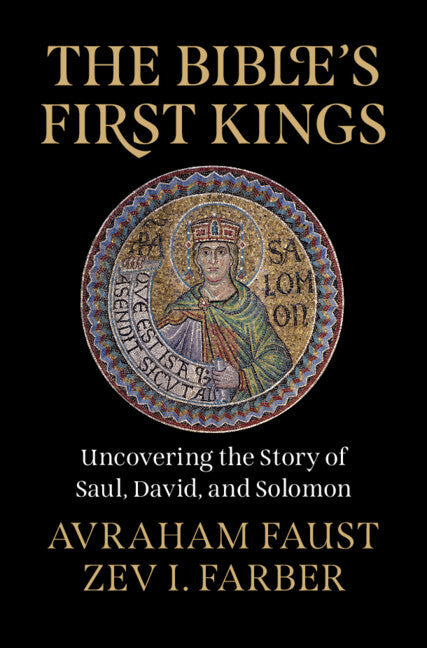
The Bible's First Kings
Uncovering the Story of Saul, David, and Solomon
Using archaeological finds, critical Bible analysis, and ethnographic data, the book reconstructs the formation of the Bible's United Monarchy.
Avraham Faust (Author), Zev I. Farber (Author)
9781009526333, Cambridge University Press
Hardback, published 20 February 2025
464 pages
23.5 x 16.3 x 3.1 cm, 0.84 kg
'Faust and Farber's impressive monograph is certain to become a very influential work about the origins, growth and collapse of this monarchy.' David Rodman, Israel Affairs
Saul, David, and Solomon are dominant figures in the Hebrew Bible, rulers of an expanding Israelite polity before it dissolved into two separate kingdoms. Saul's paranoid jealousy, David's killing the Philistine champion Goliath with a slingshot, and Solomon's meeting the Queen of Sheba are familiar stories to many people, but what is the truth behind the texts? While scholars long believed these three monarchs to have been historical personalities, over the past three decades many have questioned the historicity of this United Monarchy, some doubting even the existence of its founding fathers. Building on a vast amount of archaeological evidence, this book robustly argues that the Israelite kingdom of the Bible was a real mini-empire, and that Saul, David, and Solomon were kings of consequence – even if the biblical stories reimagine their lives to glorify and vilify them. Combining fresh archaeological evidence with astute readings of key texts, the authors offer a compelling reconstruction of this fascinating ancient polity which, though it lasted less than a hundred years, has bequeathed a remarkable religious and cultural legacy to the western world. Written in a clear and engaging style, this book will be of interest to scholars and general audiences alike.
Part A. The United Monarchy in the Bible and Contemporary Scholarship: 1. Israel's united monarchy: the biblical story
2. Untangling the threads of the biblical account with literary critical scholarship
3. Deconstructing (and reconstructing) the United Monarchy as historical: passing the baton to archaeology
Excursus 3.1. Biblical timeline, philistines, radiocarbon dating, and the united monarchy: the rise and fall of the low chronology
Part B. The Archaeology of the Tenth Century BCE: 4. Abandoned rural villages and the beginning of highlands fortifications
5. Ceramic repertoire and social change in Philistia and Israel
6. Resettling the Shephelah
Excursus 6.1. The architecture of power and the longitudinal four-space house
7. What happened to Philistia in the tenth century?
8. Building in the swamps of the Sharon plain
Excursus 8.1. Israelite expansion and the disappearance of temples
Excursus 8.2. On the dating of the Sharon sites
9. The Beersheba valley, the settlement of the Negev highlands, and the copper mines of Edom
10. Edom, Moab, Ammon and the Gilead: a brief overview of the Transjordan
Excursus 10.1. Israelites or not? The highland polity and the changing faces of identity
11. The cities and villages of the northern valleys
12. The Galilee and the Phoenicians
Excursus 12.1. The second wave of abandonment: The fingerprints of the highland polity
Part C. A New Paradigm
13. The (re)appearance of Solomon: the archaeology of the united monarchy
14. David's empire? The highland polity in historical and anthropological perspect
15. From tribe to empire to state: synthesis of archaeological, anthropological, and biblical data
16. Israel's highland polity: an attempt at history
Afterword.
Subject Areas: Biblical studies & exegesis [HRCG]