Freshly Printed - allow 10 days lead
Couldn't load pickup availability
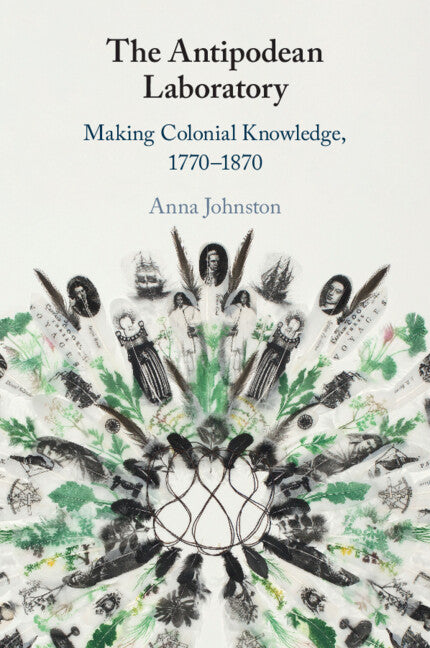
The Antipodean Laboratory
Making Colonial Knowledge, 1770–1870
A compelling account of how colonial knowledge from Australia influenced global thinking about religion, science, and society.
Anna Johnston (Author)
9781009186919, Cambridge University Press
Paperback / softback, published 20 March 2025
326 pages
22.9 x 15.2 x 1.7 cm, 0.473 kg
'Johnston's study is deftly written, deeply researched, and beautifully argued. The Antipodean Laboratory is a model of scholarship in that it connects fields of research in surprising and productive ways, allowing readers to perceive larger patterns of thinking - in particular the interconnectedness of the three seemingly distinct fields of study: humanitarianism, penal reform, and natural science. Johnston makes an important and compelling case for the Australian colonies as central to some of the most meaningful developments in nineteenth-century culture and history.' Jason Rudy, Victorian Studies
In this compelling study, Anna Johnston shows how colonial knowledge from Australia influenced global thinking about convicts, natural history and humanitarian concerns about Indigenous peoples. These were fascinating topics for British readers, and influenced government policies in fields such as prison reform, the history of science, and humanitarian and religious campaigns. Using a rich variety of sources including natural history and botanical illustrations, voyage accounts, language studies, Victorian literature and convict memoirs, this multi-disciplinary account charts how new ways of identifying, classifying, analysing and controlling ideas, populations, and environments were forged and circulated between colonies and through metropolitan centres. They were also underpinned by cultural exchanges between European and Indigenous interlocutors and knowledge systems. Johnston shows how colonial ideas were disseminated through a global network of correspondence and print culture.
Introduction: settler colonialism and its forms of knowledge
Part I. Imagining Settler Humanitarianism: 1. Morality, violence and sentiment: precarious lives on colonial frontiers, 1788–1797
2. Language, poetry and song: reading indigenous wordlists and grammars, 1770–1874
Part II. Regulating Settler Society: 3. 'Virtuous curiosity': penal practices and social theories, 1791–1843
4. Prison letters: reading and writing from Norfolk Island, 1834–1860
Part III. Inventing Settler Science: 5. Collecting practices: Botany, print culture and empire, 1768–1988
6. Creating colonial readers and imperial networks: the Tasmanian journal of natural science, 1841–1849
Conclusion: knowing the colony, knowing the world.
Subject Areas: Australasian & Pacific history [HBJM]