Freshly Printed - allow 8 days lead
Couldn't load pickup availability
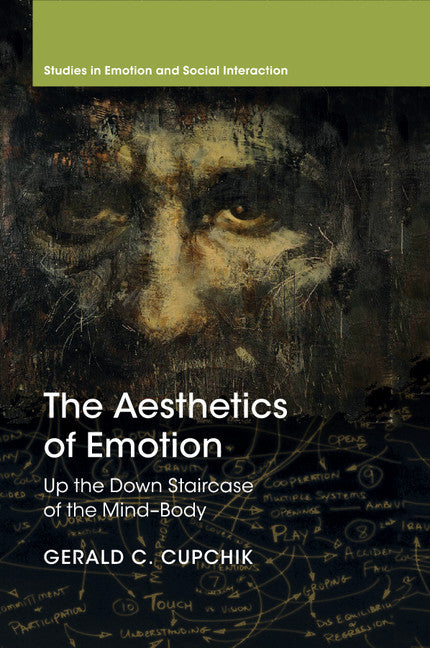
The Aesthetics of Emotion
Up the Down Staircase of the Mind-Body
Argues that relations between mind and body are analogous to those between subject matter and style in art.
Gerald C. Cupchik (Author)
9781108463935, Cambridge University Press
Paperback / softback, published 21 June 2018
414 pages, 35 b/w illus.
22.9 x 15.2 x 2.1 cm, 0.65 kg
'In addition to considering the abstract principles of aesthetics, Cupchik provides interesting real world examples of the artistic process as it is described by a number of contemporary artists, and as it is actualized by their work. The result is a scholarly analysis of the nature of human emotion informing us about the evaluative processes that we bring to any aesthetic appreciation.' Don M. Tucker, American Journal of Psychology
Gerald C. Cupchik builds a bridge between science and the humanities, arguing that interactions between mind and body in everyday life are analogous to relations between subject matter and style in art. According to emotional phase theory, emotional reactions emerge in a 'perfect storm' whereby meaningful situations evoke bodily memories that unconsciously shape and unify the experience. Similarly, in expressionist or impressionist painting, an evocative visual style can spontaneously colour the experience and interpretation of subject matter. Three basic situational themes encompass complementary pairs of primary emotions: attachment (happiness - sadness), assertion (fear - anger), and absorption (interest - disgust). Action episodes, in which a person adapts to challenges or seeks to realize goals, benefit from energizing bodily responses which focus attention on the situation while providing feedback, in the form of pleasure or pain, regarding success or failure. In high representational paintings, style is transparent, making it easier to fluently identify subject matter.
Prologue
1. Experiences in life and art
2. Thinking critically about emotion theories
3. The depth of affective processing
4. Emotional experiences as reactions
5. Antecedents of the motivational action models
6. Emotional phase theory
7. Neural underpinnings of emotional experiences and feeling-based actions
8. The aesthetic imagination
9. Affective processes and aesthetic reception
10. The 'aesthetics of emotion' as analogy and metaphor
11. Creative practices of contemporary artists
12. The cave artist's share
13. Studies in aesthetic reception
14. In search of a unified emotion theory
Epilogue.
Subject Areas: Social, group or collective psychology [JMH]