Freshly Printed - allow 7 days lead
Couldn't load pickup availability
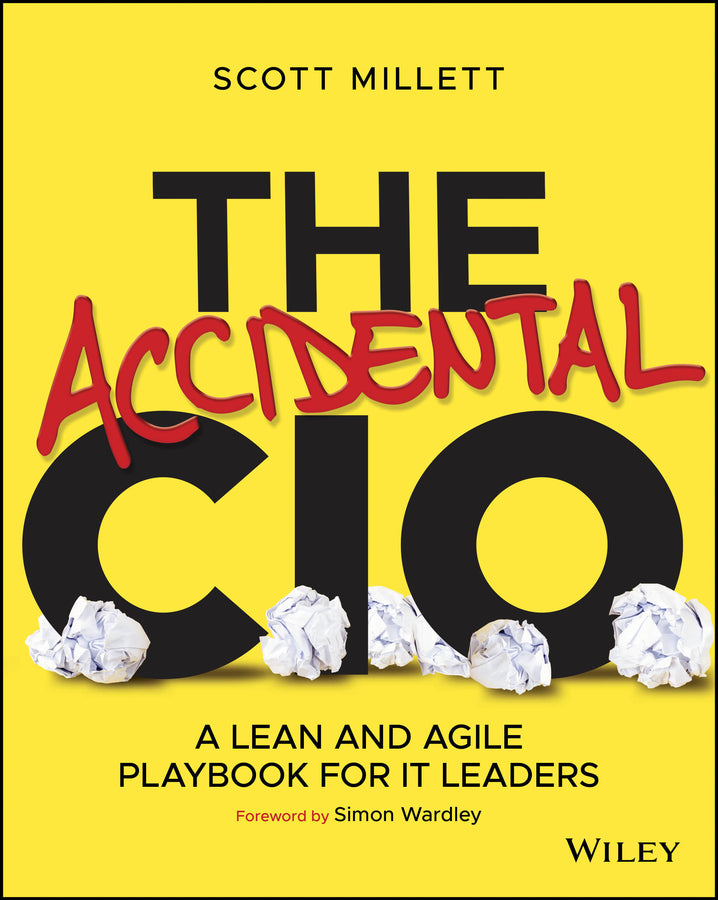
The Accidental CIO
A Lean and Agile Playbook for IT Leaders
Scott Millett (Author)
9781119612094, Wiley
Paperback / softback, published 2 May 2024
528 pages
23.1 x 18.5 x 3.1 cm, 0.726 kg
An indispensable guide showing IT leaders the way to balance the needs of innovation and exploration with exploitation and operational reliability Many books on modern IT leadership focus solely on supporting innovation and disruption. In practice these must be balanced with the need to support waste reduction in existing processes and capabilities while keeping the foundation operational, secure, compliant with regulations, and cost effective. In The Accidental CIO, veteran software developer-turned-executive Scott Millett delivers an essential playbook to becoming an impactful, strategic leader at any stage of your IT leadership journey from your earliest aspirations to long time incumbents in director and C-suite roles. You’ll find a wealth of hands-on advice for tackling the many challenges and paradoxes that face technology leaders, from creating an aligned IT strategy, defining a target architecture, designing a balanced operating model, and leading teams and executing strategy. After the foreword from Simon Wardley, The Accidental CIO will help you: With this knowledge you’ll be ready to create an empowered IT organization focused on solving customer problems and generating enterprise value. You’ll understand the science behind what motivates teams and changes behavior. And you’ll show your skills as a business leader thinking beyond IT outputs to impactful business outcomes.
Foreword xxv Introduction xxvii Part I A New System of Work 1 1 Why We Need to Change The System 3 The Age of Digital Disruption 4 Operating in a Volatile, Uncertain, Complex, and Ambiguous Business Environment 6 Leading IT in a Complex and Adaptive World 8 Summary 12 2 Philosophies for a New System 13 Philosophies vs. Methodologies 14 Discovering Value Using Design Thinking14 Eliminating Waste with Lean 17 Managing Complexity in Software Development with Agile 23 Strategic Decision-Making Using Wardley Mapping 28 Summary 34 3 How to Change the System 37 Being Agile vs. Doing Agile 38 Why Only Adopting the Practices of Agile Won’t Work 39 Use Systems Thinking to Change Behavior 41 Changing Leaders’ Mental Models 46 Instilling Drive through Purpose, Mastery, and Autonomy 50 Summary 52 Part II Designing An Adaptive Operating Model 55 4 The Anatomy of an Operating Model 57 The Anatomy of an Operating Model 58 The Themes of an Adaptable Operating Model 59 Summary 65 5 How We Are Organized 67 Organizational Structure 68 Understanding the Influence of Conway’s Law and the Cognitive Load Theory on Team Performance 76 Product-Centric Development Teams 80 Defining Product Team Boundaries 90 Evolving to Business and IT Fusion Teams 100 Managing Cross Team Dependency 102 Summary 103 6 How We Work 107 IT Management Frameworks 108 How to Solve Problems from Discovery to Delivery 110 Problem-Solving Methodologies 112 Discovery Tools for Understanding the Problem Space 118 Approaches to Manage the Solution Space 140 Summary 158 7 How We Govern 163 What Is Governance? 164 Alignment: Linking Work to Strategic Intent 167 Managing Demand: Visualizing Work 170 Prioritization: Focusing on the Things That Matter 183 Measurement: Defining and Cascading Value and Measures 196 Investment: Funding for Outcomes 209 Decision Rights: Empowering People 223 Summary 240 8 How We Source and Manage Talent 243 Sourcing Strategy 244 Recruiting 245 Developing 249 Retaining 253 Summary 257 9 How We Lead 259 Adopting New Leadership Behaviors 260 Embracing Servant Leadership 262 Instilling Intrinsic Motivation 265 Encouraging Growth and Development 269 Focusing on Improving the System 272 Summary 276 Part III Strategy to Execution 279 10 Understanding Your Business 281 Business Anatomy 282 Why IT Leaders Need to Understand the Anatomy of a Business 285 Purpose: Starting with Why and Understanding Your North Star 286 The Business Model: The System of Capturing Value 287 Operating Model: How We Do the Work 293 Business Context: Understanding What Can Impact Us 302 Summary 323 11 IT Strategic Contribution 325 Linking IT Execution to Business Strategy Using Enterprise Architecture 326 Creating an IT Strategy 333 Determining IT Contribution to Addressing BAU Challenges and Achieving the Strategic Objectives 337 Defining Principles to Guide Technical Solutions 349 Determining Strategic Actions for IT Capability Maturity Improvements351 Measuring Contribution in Terms of Business Outcomes 354 Communicating IT Strategic Contribution 357 Summary 371 12 Tactical Planning: Deploying Strategy 375 Planning Considerations 376 Following Hoshin Kanri to Deploy Strategy 380 Creating a Tactical Plan 384 Clarify the Business Needs: Where Do We Need to Focus Our Investment? 391 Review the Technology Landscape: What Do We Need to Optimize? 393 Review the IT Operating Model: What Do We Need to Change? 405 How Wardley Maps Can Help Inform Target Architecture and Operating Model Choices 407 Defining and Prioritizing the IT Initiatives 420 Communicating the IT Tactical Investment Road Map 427 Summary 435 13 Operational Planning: Execution, Learning and Adapting 437 Operational Considerations 438 Operational Planning 442 Feedback, Learning, and Adapting 449 Creating a Clear Line of Sight from Strategy to Execution 458 A Worked Example: From Strategy to Tactics to Operational Execution 459 Summary 477 Index 479
Subject Areas: Business & management [KJ]