Freshly Printed - allow 7 days lead
Couldn't load pickup availability
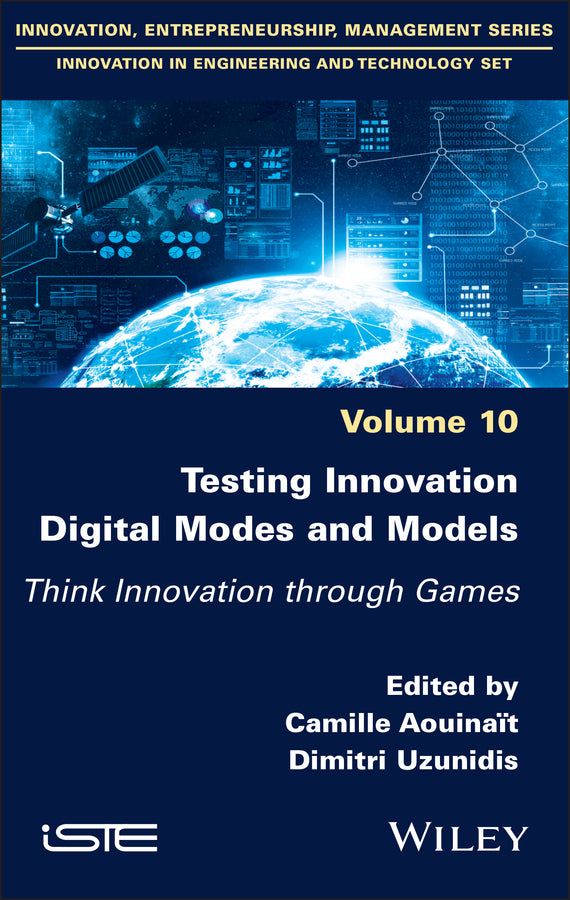
Testing Innovation Digital Modes and Models
Think Innovation through Games
Camille Aouinait (Edited by), C Aouinaït (Author), Dimitri Uzunidis (Edited by)
9781836690825, Wiley
Hardback, published 12 June 2026
528 pages
23.5 x 15.6 x 3.2 cm, 0.896 kg
In the digital age, information and communication technologies and – more recently – artificial intelligence (AI) are profoundly changing contemporary societies. These transformations, which are part of an unprecedented technological acceleration, are simultaneously affecting the economic, social, cultural and political spheres. By changing the ways individuals and enterprises produce, consume, exchange, and even think, digital technologies are at the center of the challenges facing today’s economy. In this shifting context, it is essential to adopt a critical and multidisciplinary approach to understand the effects of these technologies on business, work, leisure, communication, decision, regulation and innovation. Testing Innovation Digital Modes and Models explores these issues in depth, using specific facts to highlight the dynamics at work and possible future prospects. Understanding these changes requires not only technical expertise, but also reflection on social models, institutions and collective values.
Author Biographies xvii Introduction xxv Part 1. The Importance of Information, Digital Technology and Innovation 1 Chapter 1. Information Inflation and Digital Transformation: A Strategic Perspective 3 1.1. Introduction 3 Chapter 2. Connectivity and Competitiveness: The Stakes of 5G for Organizations 33 2.1. Introduction 33 Chapter 3. Challenges and Prospects for the Development of Quantum Technologies 69 3.1. Introduction 69 Chapter 4. QuAI: Cognitive AI for Trust, Consensus, Sustainability and Security 91 4.1. Introduction 91 Chapter 5. The Hackathon: A Catalyst for Collaborative Creativity to Innovate 139 5.1. Introduction 139 Chapter 6. Kolòn-Inspired Platform for Making and Innovation in Communities of Practice 167 6.1. Introduction 167 Chapter 7. Wargame: A Classic Serious Game, Vector of Innovation 187 7.1. (Recent) history of wargaming and professional wargames 187 Chapter 8. Generative AI: From Disruptive Innovation to Disruptive Risks 217 8.1. Introduction 217 Part 2. Real-World Applications: Achievements and Perspectives 247 Chapter 9. Cultivating Trust and Innovation in New Ways of Working 249 9.1. Introduction 249 Chapter 10. A Framework for Understanding Multiple Dimensions of Agility and Resilience in Industry 5.0 277 10.1. Introduction 277 Chapter 11. Pandemic-Driven Pharma Transformation Through Open Innovation Dynamics 301 11.1. Introduction 301 Chapter 12. AI and Defense Innovations: Theoretical Propositions and Illustrations 327 12.1. Introduction 327 Chapter 13. Performativity and Science Fiction According to the French Army 347 13.1. Introduction 347 Chapter 14. New Space: The Force Awakens 373 14.1. Introduction 373 Chapter 15. The Imaginary of Space Capitalism in Science Fiction 391 15.1. Introduction 391 Chapter 16. Digitalization in Agriculture: Toward an Agroecological Transformation? 409 16.1. Introduction 409 Chapter 17. AI for Technological Innovation in Agriculture? A Revolution! 429 17.1. Introduction 429 List of Authors 451
Camille AOUINAÏT and Dimitri UZUNIDIS
Jean-Louis MONINO
1.2. Inflation and digital technologies: the DIKW model for understanding and analysis 9
1.3. Understanding information inflation 15
1.4. Digital strategies against information inflation 19
1.5. Case studies 22
1.6. Conclusion 25
1.7. References 28
Jean-Louis MONINO
2.2. From analog to mobile Internet 35
2.3. The deployment of 5G 39
2.4. The diffusion of 5G and its potential for change 44
2.5. 5G: a global affair!. 48
2.6. 5G in France 54
2.7. 5G: meeting the challenges 55
2.8. Conclusion 62
2.9. List of websites 66
Laurent ADATTO
3.2. Analysis of the core elements of quantum physics in quantum technologies 70
3.3. Structural differences between classical computers and quantum computers 72
3.4. Study of issues related to quantum investments 76
3.5. Conclusion 87
3.6. References 88Contents ix
Florin PAUN, Ingrid VAILEANU-PAUN, Crenguta LEAUA, Thomas O'NEAL, Alex JASO and Laurent CHAUDRON
4.2. How was the QuAI conceptualized as a response to Condorcet's paradox and Arrow's incompleteness theorem 95
4.3. Open qualification models and tools in alignment with the evolution of economic models: the example of the deeptech start-up Xvaluator, the first QuAI tool and its clients and personalized functionalities 115
4.4. Perceived impacts at the micro-, meso- and macro-economic levels of using QuAI approaches. Extra-financial value and the economic impact multiplier 121
4.5. Conclusion 130
4.6. References 133
Dave MOBHE BOKOKO
5.2. Creativity in the service of innovation 141
5.3. Hackathon and collaborative creativity 149
5.4. Critical discussion on Hackathon in practice 157
5.5. Conclusion 160
5.6. References 161
Valérie PAYEN JEAN BAPTISTE, Kalliopi BENETOS, Pierre SCHALLUM, Diane-Gabrielle TREMBLAY, Laurent MOCCOZET, Valéry PSYCHÉ, Jocelyne KISS and Giulia ORTOLEVA
6.2. Methodological approaches. 171
6.3. Application of the results in the design of the digital platform 173
6.4. Alignment of results with the kolòn model and its contribution to innovation 177
6.5. Limitations and perspectives 181
6.6. Conclusion 182
6.7. References 183
Stéphane GORIA
7.2. Definitions and current implementations of wargames 201
7.3. Qualification criteria, current uses and the future of wargames 210
7.4. References 211
Vipin MOGHA and Arvind ASHTA
8.2. Literature review: innovation and risk 219
8.3. Case study: the risks introduced by AI 220
8.4. New risks introduced by GenAI 231
8.5. Copyright ambiguity 234
8.6. Energy and computational costs 234
8.7. Dynamic system vulnerabilities 234
8.8. Discussion 235
8.9. Conclusion 237
8.10. References 238
Sandrine VIRGILI, Frédéric BORNAREL and Hélène DELACOUR
9.2. Organizational distrust and RTO 251
9.3. Remote work and the destruction of innovation potential 257
9.4. A new collaborative model for remote work – a new form of trust? 264
9.5. Conclusion 270
9.6. References 271
Marcos LIMA, Patricia BAUDIER, Marie HAIKEL-ELSABEH and Michel DALMAS
10.2. Theoretical background 280
10.3. Methodology 285
10.4. Results and discussion 290
10.5. Conclusions 292
10.6. Acknowledgments 295
10.7. References 296
Laurent ADATTO, Camille AOUINAÏT, Son Thi Kim LE and Michelle MONGO-DESAGE
11.2. Theoretical analyses of open innovation: concepts, typology, and drivers in Covid-19 vaccine development 303
11.3. Open innovation in the pharmaceutical industry 306
11.4. Discussion 314
11.5. Conclusion 321
11.6. References 322
Pierre BARBAROUX
12.2. AI-based innovation in aerospace and defense industries: dimensions and propositions 330
12.3. Research methodology and interpretive case studies 334
12.4. Results and empirical validity of the innovation model 339
12.5. Conclusion and future research 342
12.6. References 343
Thomas MICHAUD
13.2. The public scenarios of the Red Team 349
13.3. Institutional science fiction, between utopia and dystopia 353
13.4. A speculative and strategic imaginary 358
13.5. The ideology of science fiction and prophetism 360
13.6. Dysperformative fictions 360
13.7. Innovism: a pragmatic imaginary in the service of innovation 362
13.8. Dysperformativity of the diegesis and performativity of the novum 365
13.9. Conclusion: the Red Team, a group of paradoxical prophets? 367
13.10. References 369
Christophe BÉNAROYA and Victor DOS SANTOS PAULINO
14.2. Characterization of New Space 375
14.3. The six constitutive disruptions of New Space 376
14.4. From New Space disruptions to new challenges 385
14.5. Conclusion 386
14.6. Acknowledgments 387
14.7. References 387
Thomas MICHAUD
15.2. New Space in science fiction 392
15.3. Space Truckers (1996) and the interplanetary transport sector 396
15.4. Space Sweepers (2021) and the myth of the capitalist heavenly city 397
15.5. Venom (2018) and the myth of the post-humanist capitalist enterprise 399
15.6. Darius Tanz, New Space billionaire of the series Salvation 402
15.7. Spatial science fiction, an element of soft power 403
15.8. The imaginary in space capitalism 406
15.9. References 407
Eléonore SCHNEBELIN
16.2. What is digital agriculture? 411
16.3. Conceptual and methodological approach 413
16.4. Uses of digital technology in farming systems 416
16.5. Perceptions of digital technology and projects of sector organizations 421
16.6. Digital technology and the agroecological transition 422
16.7. Conclusion 425
16.8. References 426
Didier LEBERT
17.2. Structural models of technological diffusion 430
17.3. Data and results 436
17.4. Conclusion 446
17.5. References 448
Index 455
Subject Areas: Business & management [KJ]