Freshly Printed - allow 7 days lead
Couldn't load pickup availability
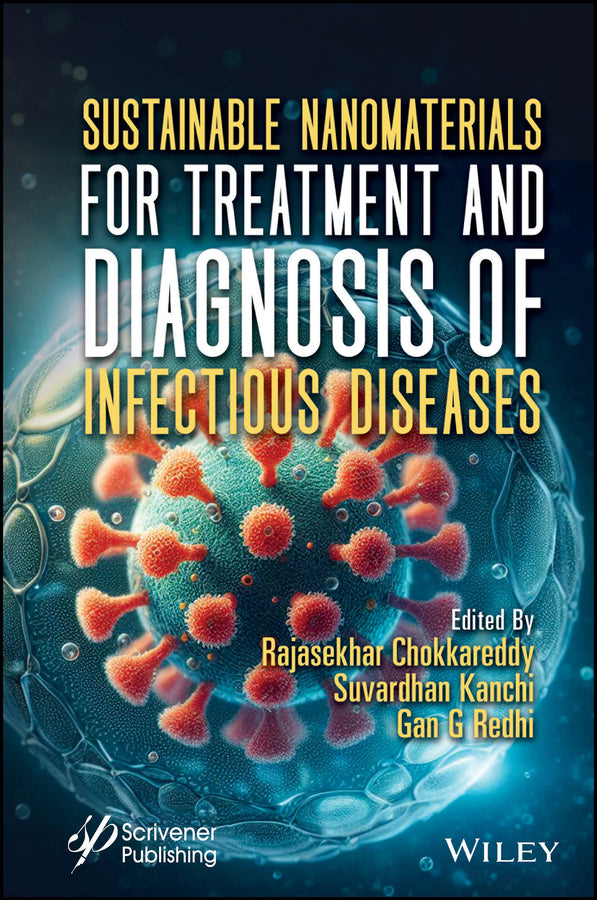
Sustainable Nanomaterials for Treatment and Diagno sis of Infectious Diseases
Chokkareddy (Author)
9781394200016, Wiley
Hardback, published 28 January 2025
464 pages
22.9 x 15.2 x 2.8 cm, 0.721 kg
The book focuses on the design and novel synthetic routes of sustainable nanomaterials in diagnosing and treating infectious diseases offering potential benefits in terms of efficiency, biocompatibility, and environmental impact. The fifteen chapters in this book provide a comprehensive exploration of how sustainable nanotechnology can revolutionize infectious disease management and bridge the gap between the fundamental principles of nanotechnology and their practical applications in combating infectious diseases. Subjects covered include: the rise of multidrug-resistant pathogens and the limitations of existing therapies; the challenges of infectious disease management including the rise of multidrug-resistant pathogens and the limitations of existing therapies; nano-pharmacology and pharmacotherapeutics in the treatment of infectious diseases; the advancements in nanomaterial-based drug delivery systems, vaccines, and diagnostic tools, and the future of personalized medicine; nanotheranostic mechanisms outlining how nanomaterials can be engineered to simultaneously diagnose and treat infections; nano drug delivery systems that contribute to enhancing the efficacy and precision of treatment modalities; biocompatibility and toxicity of nanomaterials in the diagnosis and treatment of infectious diseases; regulatory perspectives of nanomaterials ensuring they meet safety and efficacy standards; green synthesis of reduced graphene oxide, carbon dots, and its composites for infectious diseases and biosurfactants; nanomaterials of polymeric design underscoring their potential to create more effective and sustainable therapeutic options; how nanomaterials can be engineered to simultaneously diagnose and treat infections. Audience The book targets nanotechnology researchers, scientists, and healthcare professionals interested in understanding nanotechnology’s critical role in sustainable healthcare solutions.
Preface xvii 1 Introduction of Sustainable Nanotechnology and Its Potentiality 1 1.1 Introduction 2 1.2 Principles of Sustainable Nanotechnology 3 1.3 Applications of Sustainable Nanotechnology 6 1.4 Conclusion 17 2 A Review on Infectious Disease Management and Their Challenges 23 2.1 Infectious Diseases 23 2.2 Types of Infectious Illnesses 24 2.3 Epidemics Diseases in 19th Century 26 2.4 Disease Epidemics in the 20th Century 29 2.5 Epidemics Diseases in 21st Century 30 2.6 Vaccination for Humans 30 2.7 Results and Discussion 31 2.8 Challenges Faced by People Due to Sudden Microbial Outbreaks 35 2.9 Recommendations for the Global Community 38 2.10 Measures for Prevention of Infectious Diseases Threats 42 2.11 Authors Contributions 42 2.12 Acknowledgements 43 2.13 Conclusions 43 3 Challenges in Infectious Disease Management 51 3.1 Introduction 52 3.2 Challenges Faced to Control Infectious Disease 52 3.3 Global Warming and Its Impact on the Management of Infectious Diseases 60 3.4 Antibiotic Resistance 61 3.5 Demographic Shift and Aging Population 65 3.6 Modern Food Technology as a Threat 65 3.7 Key to Overcome the Challenges 67 3.8 Conclusion 70 4 Nanopharmacology and Pharmacotherapeutics 81 Abbreviations 82 4.1 Introduction 83 4.2 Method of Synthesis 84 4.3 Different Classes of Nanoparticles 87 4.4 Fundamental Concepts of Pharmacology 90 4.5 Route of Administration 94 4.6 Interaction Within the Body Pharmacotherapeutic of the Nanoparticles 95 4.7 Potential Drug Delivery System 99 4.8 Toxicity of Nanoparticles 101 4.9 Conclusion 104 5 Vaccines, Diagnosis, and Treatment of Infectious Diseases 113 5.1 Introduction 114 5.2 Contemporary Methods for Combating Infectious Disease 115 5.3 Focusing and Implementing Specialized Assistance for Infection Control 115 5.4 Prominence of Prompt Discrepancy Diagnosis in Infection Control 116 5.5 The Immune System 130 5.6 Conclusion 136 6 Society Strategies in Infectious Diseases 139 6.1 Introduction 140 6.2 Combating Emerging Infections of COVID-19--Strategies and Response Capacities 142 6.3 Candida albicans 145 6.4 Black Fungus 146 6.5 Typhoid 147 6.6 Tuberculosis (TB) 148 6.7 Conclusion 150 7 Nanotheranostic Mechanism against Infectious Diseases 155 7.1 Introduction 156 7.2 Nanomaterials as an Emerging Promising Tool 157 7.3 Nanotheranostics 158 7.4 Infectious Diseases 158 7.5 Drug Delivery Challenges in Infectious Diseases 160 7.6 Nanotheranostic Applications for Treating Infectious Diseases 162 7.7 Diagnostic Imaging Contrast Agents 164 7.8 Advantages of Nanotheranostics for Infectious Diseases 167 7.9 Challenges and Limitations of Nanotheranostics 172 7.10 Conclusion 173 8 Trends in Nano Drug Delivery System for Infectious Diseases 181 8.1 Background of Infectious Diseases 182 8.2 Current Treatments for Infectious Diseases 183 8.3 Drawbacks of Current Treatments 185 8.4 Nanotechnology 187 8.5 Application of Nanotechnology in Treating Infectious Diseases 189 8.6 Future Prospects and Challenges 195 8.7 Conclusion 202 9 Sustainable Nanotechnology and Multidrug Resistance toward the Pathogens of Infectious Diseases 207 9.1 Introduction 208 9.2 Causes and Concerns of MDR 209 9.3 Mechanism of MDR in Pathogens 211 9.4 Nanomaterials Exhibiting Antimicrobial Properties 216 9.5 Nanocarrier-Based Approach to Combat MDR 229 9.6 Conclusion 239 10 Trends in Development of Multidrug Resistance Toward to the Pathogens of Infectious Diseases by Sustainable Nanotechnology 251 10.1 Introduction 252 10.2 Current Threats in Clinics due to Multidrug Resistance 252 10.3 Mechanism of Drug Resistance in Bacteria 254 10.4 Nanoparticles and Their Antimicrobial Action 257 10.5 Properties of Nanoparticles which Effect Bacterial Growth 259 10.6 Commonly Utilized Metal Nanoparticles 260 10.7 Nanoparticles as Carriers of Antibiotics 261 10.8 Novel Nano Drug Delivery Systems 262 10.9 Challenges and Future Prospects in Using Nanoparticles as Antimicrobials 264 11 Exploration of Biocompatibility and Toxicity of Nanomaterials in Diagnosis and Treatment of Infectious Diseases 269 11.1 Introduction 270 11.2 Organic Nanoparticles 270 11.3 Inorganic Nanoparticles 277 11.4 Sustained Systemic Delivery of Anti-Infectives 281 11.5 Nanomaterials Role in Infection Diseases 284 11.6 Treatment for Arthritis Inflammation 295 11.7 Other Viruses 296 11.8 Nanovaccines 298 11.9 Nanoparticles Biodegradation and Elimination 299 11.10 Toxicity 300 11.11 Limitations of Nanoparticles as Therapeutics 301 12 Regulatory Perspectives of Nanomaterials in the Treatment and Diagnosis of Infectious Dental Diseases 311 12.1 Introduction 312 12.2 Nanoparticles Used in Dentistry 313 12.3 Nanotechnology Used for Diagnosis 316 12.4 Nanoparticles in the Treatment of Infectious Diseases 317 12.5 Conclusion 322 13 Green Synthesis of Reduced Graphene Oxide, Carbon Dots, and Its Composites for Infectious Diseases 327 13.1 Introduction 328 13.2 Green Synthesis of Reduced Graphene Oxide and Graphene Oxide Nanocomposites 329 13.3 Antibacterial Activity 330 13.4 Green Synthesis of Carbon Dots 338 13.5 Antibacterial Activity of CDs 341 13.6 Antifungal Activity of CDs 347 13.7 Antiviral Activity of CDs 349 13.8 Conclusions and Future Perspectives 352 14 Biosurfactants: Production Methods, Properties and Their Applications in Food Industry 365 14.1 Introduction 366 14.2 Classification of Biosurfactants 367 14.3 Method of Production of Biosurfactants from Microorganisms 369 14.4 Mechanism of Action 369 14.5 Economics in Production of Biosurfactants 372 14.6 Use of Yeast Over Bacteria 373 14.7 Properties of Biosurfactants Used in the Food Industry 377 14.8 Application of Biosurfactant in the Food Industry 379 14.9 Conclusions 383 15 Nanomaterials of Polymeric Design for the Treatment of Infectious Diseases 393 15.1 Introduction 394 15.2 Malaria 396 15.3 Tuberculosis 399 15.4 Cholera 402 15.5 Polymeric Nanomaterial to Treat Pulmonary Infections 404 15.6 Nanoparticles Coated with Polymers to Treat Urinary Tract Infections 405 15.7 HIV 409 15.8 Hepatitis B 411 15.9 COVID-19 413 15.10 Zika Virus 416 15.11 Influenza 419 15.12 Polymeric Nanoparticles for Neuro-Infections 421 15.13 Conclusion and Future Trends 424 References 425 Index 437
Sandeep Yadav, Prashant Singh, Pallavi Jain, Kamlesh Kumari, Bakusele Kabane, Lebogang Maureen Katata-Seru and Indra Bahadur
Dasari Sravani
Aishwarya Rathore, Sheelu Sharma and Manu Sharma
Sulochana G., Rajeshkumar S. and Prabhu Manickam Natarajan
K. Ganesh Kadiyala, Kommuru Goutham, Naresh Kumar Katari and Yamini Vanipenta
Anirudh Pratap Singh Raman, Prashant Singh, Pallavi Jain, Kamlesh Kumari, Bakusele Kabane and Indra Bahadur
Tharani M. and Rajeshkumar S.
Rutuja Shah, Sameer Nadaf, Durgacharan Bhagwat and Shailendra Gurav
Eswara Rao Puppala and Vaskuri G. S. Sainaga Jyothi
Mridula Sreedharan, Sushma Narayanan, Sabu Thomas, Yves Grohens and Nandakumar Kalarikkal
Puvvada Nagaprasad, Basavaiah Chandu and Pravas Kumar Panigrahi
Harmesh Lal Chouhan, Sakshi Joshi, Shikha Dogra, Rini Chacko, Parika Vaid and Arunima Guru
Gangaraju Gedda, Ganesh Gollavelli and Sarojani Kommoju
Manu Sharma, Aishwarya Rathore, Sheelu Sharma, Veera Sadhu and Kakarla Raghava Reddy
K. Ganesh Kadiyala, Kommuru Goutham, Naresh Kumar Katari and Yamini Vanipenta
Subject Areas: Clinical & internal medicine [MJ]