Freshly Printed - allow 7 days lead
Couldn't load pickup availability
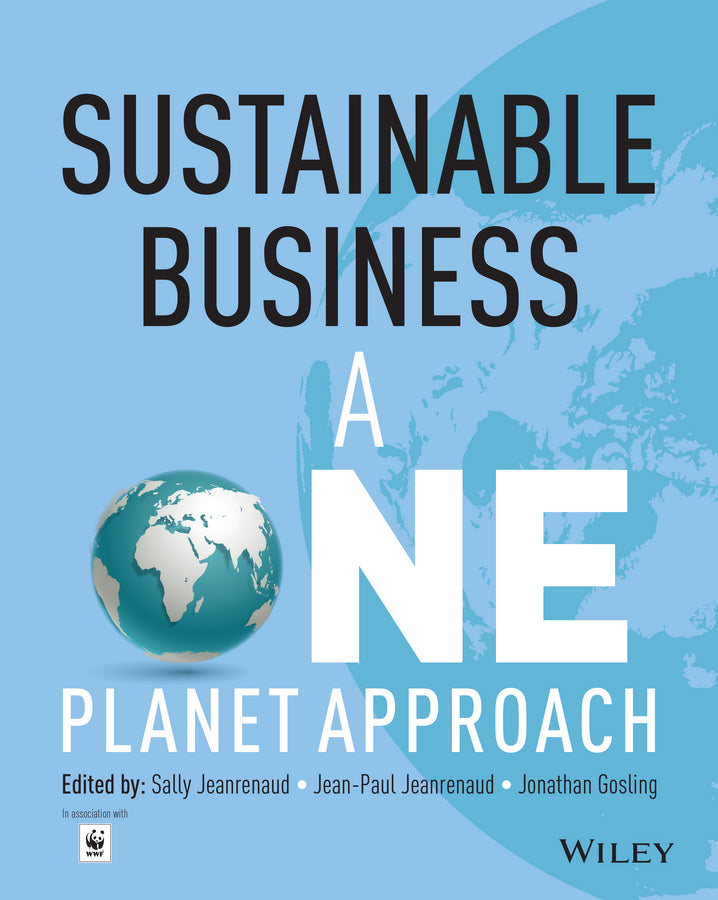
Sustainable Business
A One Planet Approach
The beauty of the book is that it is a collaborative work by multiple thought leaders who bring phenomenal insights in a comprehensive way. The well-researched and connected topics show how to build institutions for the 21st century rather than just business-as-usual. We need a new generation of business leaders willing to take responsibility for solving the problems of climate change and poverty. And we need bold new programmes and partnerships in business management education to support these leaders. A sustainable company can be more successful than one that pursues profits alone. Sustainable Business: A One Planet Approach makes a valuable contribution to redefining what it means to be a successful company, and the kind of curricula we need to shape it. Sustainability has gone from a nice-to-do to a must do. Tomorrow’s business leaders need to transform their business models in to ones that create value for their customers and society within the limits of the planet. In a world challenged by climate change, scarce resources and inequality there is no room for half measures. A One Planet Approach will help MBA students develop the background and the thinking to help lead this transformation. Businesses with a higher purpose are discovering that there are better, and often unexpected ways, of doing business that can alleviate poverty, address environmental challenges, and still be profitable. Sustainable Business: A One Planet Approach argues for new business models that will help regenerate our economy in ways that are pro-poor, pro-planet and pro-prosperity. 9 billion people living well on a healthy planet can only be achieved by the greatest wave of entrepreneurial innovation ever seen. One Planet thinking does something unique – it acknowledges physical limits but uses them to inspire global action. This book rightly encourages business to be at the forefront of this change. In 3M we have proved that reducing waste can save companies billions of dollars over the years. But we also know that sustainability can be a driver of good leadership, innovation and success over the longer term – beyond eco-efficiency arguments. We need a new generation of business leaders who know how to integrate sustainability issues into their business DNA in smart and strategic ways. This new textbook helps point the way. Business in the 21st Century is vastly different from that of even the late 20th Century. This book is for managers who want to lead organizations and transform how business is conducted in this networking, information age, with its different dynamics, challenges and rapid changes. These challenges are why we at Texas A&M Univ. – Central Texas are making innovative changes to incorporate the concepts of sustainability and socially responsible management deep into our curriculum to bring about these much needed innovations in business education - this book provides many of the core concepts and techniques we need. Sustainability is no longer simply about complying with environmental regulations or CSR, it is becoming central to way business is done. It is shaping strategy, innovation, operations, finance and accounting. The One Planet MBA, co-founded with WWF, offers global perspectives on the sustainability challenges facing us all, and the business opportunities that are generated by embracing change for good. This important new textbook highlights the urgent need to develop new economic and business models that will contribute to achieving the UN Sustainable Development Goals. These address the 3 major challenges facing humanity - eradicating poverty, sharing prosperity, and safeguarding the environment. Business has a crucial role to play in delivering these goals, and as this book reveals, progressive businesses are already leading way. Business people need to think about a more sustainable society from a new and different point of view, namely a One Planet Approach. This book shows what this means for each of the main functions of a business - a most valuable guide. Sustainable Business: A One Planet Approach is a holistic approach to life and leadership, which invites us to lead internally and externally, to realize that we live in a deeply interconnected world, and above all, to make a meaningful difference to self, the community and the planet. A must read for all. This is a new generation business textbook, that makes the case for a transition to radically different economic and business models - ones that address social inequality and environmental degradation, and promotes new understandings of prosperity. Business leaders and students need access to new ideas and fresh perspectives if business is to become a force for public good, rather than private gain. You just have to do it! How often have we heard it said, and how often have we said it ourselves: that doing business in more human, more environmentally sustainable ways is the great adventure of our times. Here is a textbook that assumes a new normal. Start with the assumption that we have just one beautiful planet, and business suddenly becomes sane again. I recommend this book to all who want to do proper, value-adding business When leading minds get together to challenge established ways of thinking about the purpose of business in today's world, it is a sign that existing systems boundaries are being pushed and redrawn. This urgently needed book brings to the surface comprehensive and game-changing approaches that will enable business leaders to steer their organisations with care, responsibility, value and success through rapidly changing societal and environmental complexities. Most importantly though, the authors courageously address the most difficult barrier we face in creating change for a sustainable future – the role that our own mindsets, values and behaviours play. This is the textbook for business and management educators who want to be on the right side of history.
—Arun Jain, Executive Chairman, Intellect Design
—Paul Polman, CEO Unilever
—Steve Howard, Chief Sustainability Officer, IKEA
—Miriam Turner, AVP Co-Innovation, Interface
—Oliver Greenfield, Convenor, Green Economy Coalition
—Pip Frankish, Corporate Communications Manager, 3M Europe
—Larry Garner, Ph.D., Dean, College of Business Administration, Texas A&M Univ. –
—Fuji Kimura, Global Insights Manager at Google, and One Planet MBA alumna
—Sheng Fulai, Head, Economic Research Unit, United Nations Environment Programme (UNEP)
—Kentaro Iijima, Senior Advisor, former Corporate Senior Vice President, Fujitsu Marketing.
—V R Ferose, Senior Vice President, SAP SE and Co-author of ‘Gifted’
—Mark Goldring, Chief Executive, Oxfam GB
—Jan van Betten, Founder, Nudge.nl
—Isabel Sebastian, Senior Research Consultant, Institute of Sustainable Futures, University of Technology Sydney, Australia
Sally Jeanrenaud (Edited by), Jean-Paul Jeanrenaud (Edited by), Jonathan Gosling (Edited by)
9781118522424, Wiley
Paperback / softback, published 23 December 2016
464 pages
24.6 x 18.9 x 1.7 cm, 0.765 kg
What is a ‘one planet’ approach to sustainable business? Why is it important? What are businesses doing to achieve sustainability? What do business leaders need to learn? Sustainable Business: A One Planet Approach is a textbook for contemporary business. Recognizing the realities of global sustainability challenges, this book covers the knowledge, frameworks and techniques that will underpin emerging solutions to those challenges. Published in association with WWF (The World Wide Fund for Nature) Sustainable Business is an ideal basis for students at both undergraduate and postgraduate level looking to master an understanding of the relationship between sustainability and business. Edited by three influential figures from sustainable business education, and co-authored by several leading academics, this book offers a wealth of insight and interpretation into new ways of doing business that have a positive impact on people, planet and prosperity. In addition to the many case studies and real-life examples included throughout the book, lecturer slides and recommended web links will be available.
Foreword xiii Preface xv About the Authors xxiii 1 Challenging 1 1.0 Stories about the Future 2 2.0 Planet 7 3.0 People 18 4.0 Profit 28 5.0 Power 35 6.0 Conclusion: The Case for Change 42 References 46 2 Changing 53 2.0 Changing from the Outside‐In and the Inside‐Out 53 2.1 Business 54 2.2 Economy 56 2.3 Self 57 2.4 Transformations 59 2.5 Conclusion: Metamorphosis 81 References 83 3 Leading 87 Introduction 87 3.0 Sustainability and Leadership 89 3.1 What is Leadership? 90 3.2 Some Nagging Questions about Leadership 100 3.3 Bringing it All Home: How to Conduct Yourself in Leadership 111 Summary 115 References 116 4 Valuing 119 Introduction 120 4.0 The Limits to GDP and GNP as Measures of Value 122 4.1 The Range of Alternative Measures and Current Practice 130 4.2 Rethinking Growth 143 Summary 146 References 147 5 Collaborating 149 Introduction 150 5.0 Images of Working Together 150 5.1 Choosing Collaboration 157 5.2 The Theory and Practice of Collaboration 162 5.3 Managing Collaborative (Dis)Agreement 169 Summary 174 References 175 6 Strategizing 177 Introduction 177 6.0 Oil, Water, and a Touch of Hurricane Katrina: The New Business Reality 178 6.1 Searching for a Disappeared Resource? Check your landfill 181 6.2 The Strategic Challenge of Sustainability: Stakeholders are calling 182 6.3 Strategic Responses: What Strategies Have Businesses Adopted? What More Can They Do? 190 Summary 201 References 201 7 Organizing 205 Introduction 205 7.0 Organizations and Sustainability 206 7.1 Motivating People 208 7.2 Organizational Culture 215 7.3 Requisite Knowledge 218 7.4 The Employer Brand 220 Summary 221 References 223 8 Investing 225 Introduction 225 8.0 Mechanics of Influence: How do Investors Influence Companies? 227 8.1 What is Responsible Investment? 228 8.2 So What Can Responsible Investment Deliver? 235 8.3 Conclusion 240 Summary 240 References 241 9 Innovating 243 Introduction 243 9.0 Innovation Strategy 245 9.1 How Can We Innovate? Innovation as a Management Process 255 Summary 261 References 262 10 Operating 265 Introduction 265 10.0 Transition to the Triple Bottom Line 266 10.1 Industrial Ecology and Closing the Loop 268 10.2 Sustainability Standards, Certification and Measures 271 10.3 Stakeholder Management 278 Summary 291 References 292 11 Marketing 293 Introduction 294 From 20th to 21st Century Marketing 295 11.0 Sustainability and Marketing: An Evolving Relationship 296 11.1 Sustainability Marketing: Marketing for the 21st Century 298 11.2 From Products to Customer Solutions 305 11.3 From Price to Consumer Cost 307 11.4 From Place to Convenience 309 11.5 From Promotion to Communication 311 11.6 Sustainability Marketing as a Transformational Force 314 11.7 Conclusion 315 Summary 317 References 318 12 Accounting 319 Introduction 319 12.0 Accounting and Sustainability 320 12.1 Financial Accounting 326 12.2 Management Accounting 335 12.3 Conclusion: Addressing the meta- and sub-questions 341 Summary 343 References 344 13 Entrepreneurship 347 Introduction 347 13.0 The ‘Cult’ of Entrepreneurship? 348 13.1 A Brief History of Entrepreneurship Theory 350 13.2 Towards One Planet Entrepreneurship 357 Summary 377 References 378 14 Transitioning 381 Introduction 381 14.0 Sustainable Business and Sustainable Development: The Big Disconnect 382 14.1 Understanding Our Global Sustainability Challenges 385 14.2 Different Approaches to Framing Business Sustainability 387 14.3 Introducing a Typology for Business Sustainability 391 14.4 Managing Business Sustainability: Organizational Characteristics 400 14.5 Conclusion 401 Summary 404 References 405 15 Conclusion 409 15.0 The Challenges: The One Planet Predicament 409 15.1 Sustainable Business: A One Planet Approach 411 15.2 Change for Good 414 15.3 Transforming Business Management Education 416 References 419 Index 421
Sally Jeanrenaud & Jean-Paul Jeanrenaud
Sally Jeanrenaud & Jean-Paul Jeanrenaud
Jonathan Gosling & Prasad Kaipa
Catherine Cameron
Ward Crawford
Nadya Zhexembayeva & Judith Jordan
Morgen Witzel
Rory Sullivan
John Bessant & Palie Smart
Mickey Howard, Fu Jia & Zhaohui Wu
Ken Peattie and Frank-Martin Belz
Stephen Jollands
Tony Cooke
Thomas Dyllick & Katrin Muff
Sally Jeanrenaud, Jean-Paul Jeanrenaud & Jonathan Gosling
Subject Areas: Business & management [KJ]