Freshly Printed - allow 7 days lead
Couldn't load pickup availability
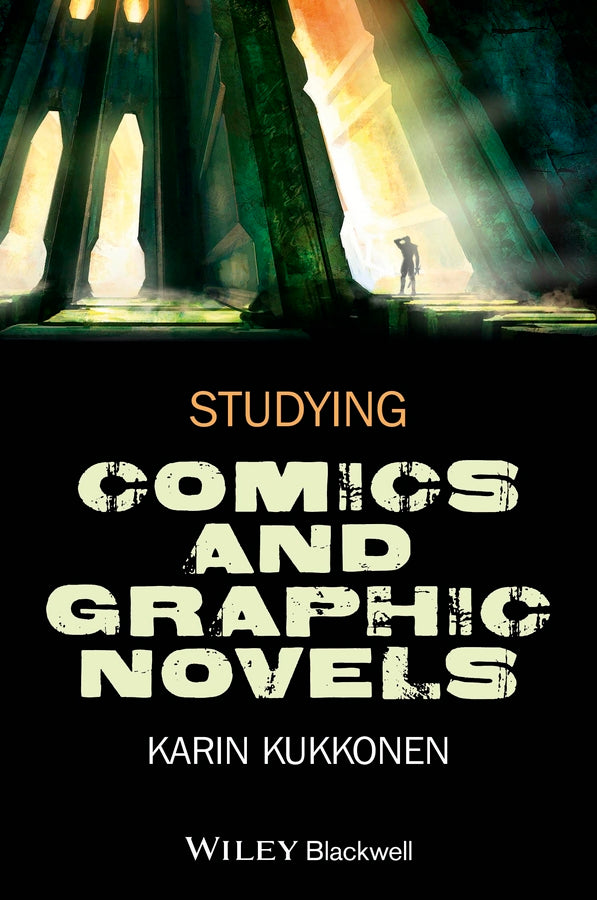
Studying Comics and Graphic Novels
“A much-needed textbook that provides an analytical toolkit to bring to bear on the complexities of comics as narrative art and cultural practice. It is both rigorous and reader-friendly: the case-study approach encourages an active application of the conceptual framework that is carefully built up. This book is a real asset for all students of comics.” —Ann Miller, University of Leicester “Karin Kukkonen's Studying Comics provides the reader with the tools necessary to transform themselves quickly from a comics reader to a comics scholar, capable of engaging graphic narratives from a broad range of approaches and ready to engage in this dynamic and emerging field of study. This is a smart introduction that takes both its readers and its comics very seriously indeed, while always remaining lively and accessible.” —Jared Gardner, Ohio State University
Karin Kukkonen (Author)
9781118499924, Wiley
Paperback / softback, published 30 August 2013
192 pages
22.4 x 14.7 x 1.5 cm, 0.272 kg
This introduction to studying comics and graphic novels is a structured guide to a popular topic. It deploys new cognitive methods of textual analysis and features activities and exercises throughout.
Acknowledgments vii Introduction: How to Use This Book 1 What This Book Holds 2 Working Definitions 4 1 What's in a Page: Close-Reading Comics 7 Cognitive Processes and Critical Terms 7 Navigating the Comics Page 16 Entering the Storyworld and Meeting its Participants 19 Comics Analysis – A Basic Checklist 26 2 The Way Comics Tell it: Narration and Narrators 31 Showing and Telling 31 Story, Discourse, and Plot 34 The Narrator 39 Narration, Focalization, and Point of View 44 Narrative as Meaning-Making 48 Graphic Narrative – A Basic Checklist 49 3 Narrating Minds and Bodies: Autobiographical Comics 55 Style and Subjectivity 55 Autographic Agents 57 Embodiment 60 Self-Reflexivity 61 Time, Story, and History 65 Alternative Agendas and Authenticity 68 4 Novels and Graphic Novels: Adaptations 73 Transporting Stories 74 Media Affordances and Adaptation Strategies 75 Fidelity in Adaptation 80 Literary Complexity 85 The Page Revisited 90 5 Comics and Their History 99 The Beginnings of Comics History 99 Precursors in Emergent Mass Culture 102 Newspaper Comics (1900s–1930s) 103 The Comic Book (1930–54) 106 Comics Censorship (1954) 110 Comics as Popular Culture 113 Breaking the Code 1: Pop Art and Underground Comix 117 Breaking the Code 2: The British Invasion 118 6 The Study and Criticism of Comics 123 Resources for Studying Comics 123 Access to Comics Texts 123 Critical Work on Comics 124 Critical Approaches to Comics 125 Comics Semiotics 126 Comics Narratology 128 Cognitive Approaches to Comics 129 Historical and Auteurist Approaches 131 Cultural Studies and Gender Studies 133 Psychoanalysis 134 How to Write Your Essay on Comics 139 The Crime Scene 142 The Witnesses 142 Making Your Case 144 End Credits 146 Conclusion: Comics as Literature 149 Appendix: More Comics and Graphic Novels to Read 155 Glossary 167 Index 179
Subject Areas: Literature: history & criticism [DS]