Freshly Printed - allow 7 days lead
Couldn't load pickup availability
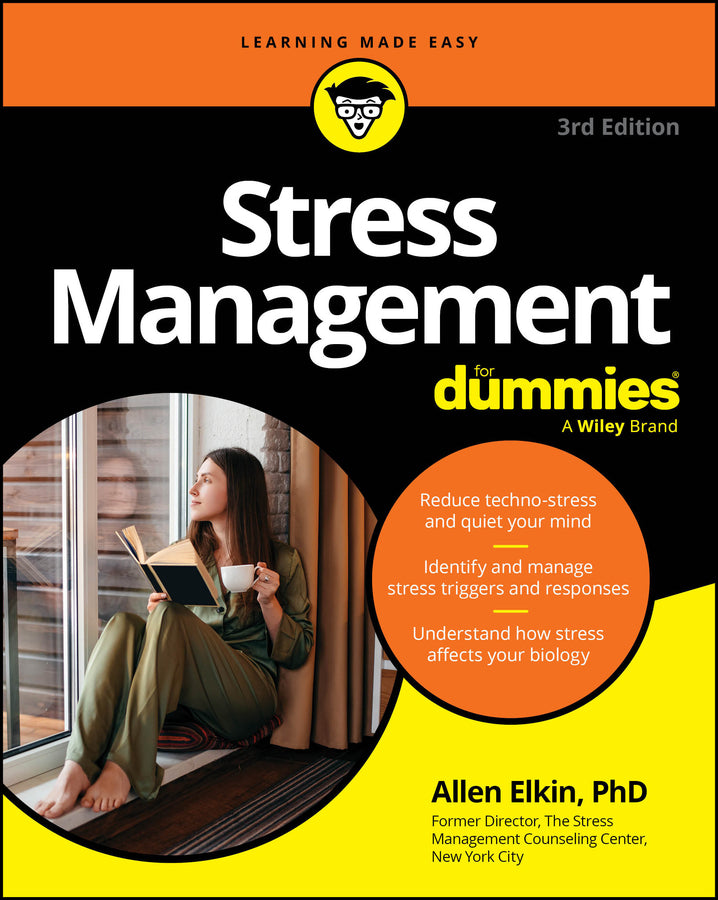
Stress Management For Dummies
Allen Elkin (Author)
9781394350223, Wiley
Paperback / softback, published 1 December 2025
384 pages
22.9 x 18.5 x 2.3 cm, 0.522 kg
Lower stress and anxiety with accessible tips you can use today Whether related to love, work, family, or other parts of everyday life, Stress Management For Dummies, 3rd Edition is dedicated to helping you stock up your wellness toolbox. This new edition will help you identify your stress triggers and ways to manage them, practice mindfulness and meditation, understand the mind-body connection and how this applies to you and your experience, apply quieting rumination, and more. With straightforward advice incorporating scientific research on the relationship between stress and health, Stress Management For Dummies, 3rd Edition provides practical tips on how to use key techniques, including the power of gratitude and perspective, to transform your mindset and improve your resilience toward stress. Inside: Stress Management For Dummies, 3rd Edition is a trustable, calming handbook that helps you reduce stress and build the life you want.
Introduction 1 About This Book 1 Conventions Used in This Book 2 Foolish Assumptions 3 Icons Used in This Book 3 Beyond the Book 4 Where to Go from Here 4 Part 1: Stress Management: Where to Start 5 Chapter 1: Stressed Out? Welcome to the Club! 7 Experiencing a Stress Epidemic? 7 Individual or personal stressors 8 Shared or collective stressors 9 Understanding Where All This Stress Is Coming From 10 The lingering pandemic 10 A nation under stress 11 The political divide 11 Struggling in a struggling economy 12 Getting frazzled at work 12 The gender divide 13 Feeling frazzled at home 14 Dealing with daily hassles 15 Looking at the Signs and Symptoms of Stress 17 Understanding How Stress Can Make You Sick 18 Understanding how stress can be a pain in the neck (and other places) 18 Taking stress to heart 19 Hitting below the belt 20 Compromising your immune system 20 The cold facts: Connecting stress and the sniffles 21 Stressing Out Your Friends and Family 22 Your relationships 22 Your libido 22 Your kids 22 Can Stress Be Good? 23 Chapter 2: Stress Explained (in Surprisingly Few Pages) 25 So What Is Stress Anyhow? 25 Defining stress 26 Stress causes stress? 27 How This Whole Stress Thing Got Started 27 Imagining you’re a cave person 28 Surviving the modern jungle 28 Understanding the Signs of Stress 29 Your body reacts 29 Your feelings and behavior change 31 Understanding Stress Is as Simple as ABC 33 Managing Stress: A Three-Pronged Approach 34 Managing your stressors 34 Changing your thoughts 35 Managing your stress responses 36 Tuning Your Strings: Finding the Right Balance 36 Chapter 3: Identifying Your Stress Triggers and Responses 37 How Stressed Are You? Finding Ways to Measure Your Stress Level 38 Starting with a simple gut check 38 Using a stress gauge 38 Measuring your stress in other ways 39 Monitoring Your Stress with a Stress Journal 43 Knowing how to record your stress 44 Knowing when to record your stress 47 Facing Roadblocks 47 Taking it a step at a time 48 Giving it a try 48 Accepting your different strokes 48 Practicing for the Long Haul 49 Finding a quiet place 49 Linking up 49 Getting a stress buddy 49 Being patient with the process 50 Chapter 4: Reducing Your Technostress 51 Living in a Technological World 52 Benefiting from all of this technology 52 Stressing about all of this technology 53 Worrying about Cybersecurity 54 Outsmarting the scammers 55 Feeling romantic? 56 Stressing Out with Social Media 57 Tuning in so you can tune out 57 Reducing social media stress 59 Managing Your Tech Diet 60 Minimizing your digital overload 60 Creating a work-life balance 62 Part 2: Mastering the Basics 63 Chapter 5: Relaxing Your Body 65 Stress Can Be a Pain in the Neck (And That’s Just for Starters) 66 Funny, I don’t feel tense 67 Invasion of the body scan 67 Breathing Away Your Tension 68 Your breath is fine It’s your breathing that’s bad 69 “Why change now? I’ve been breathing for years.” 69 Evaluating your breathing 70 Cutting yourself some slack 71 Changing the way you breathe, changing the way you feel 71 The yawn that refreshes 74 Tensing Your Way to Relaxation 75 Exploring how progressive muscle relaxation works 75 Scrunching up like a pretzel 78 Using the Power of Suggestion 79 Stretching Away Your Stress 81 Massage? Ah, There’s the Rub! 82 Massaging yourself 83 Becoming the massage-er or massage-ee 85 Taking a Three-Minute Energy Burst 86 Experimenting with More Ways to Relax 86 Chapter 6: Quieting Your Mind 89 Where Do All These Thoughts Come From!? 90 Sorting out your thoughts 91 Thinking automatically 91 Turning Off Your Mind 92 Stopping your unwanted thoughts 92 Snapping out of it 94 Distracting Yourself 94 Using Your Imagination 95 What, Me Worry? 98 Scheduling your worries 98 Blowing up your worries 98 Striking up the band (or better yet, the string quartet) 99 Visiting the rainforest 100 Using some common scents 100 Doing Nothing: Meditation Is Good for You 102 East comes West 102 How meditation helps 103 It’s harder than it looks 103 Preparing to meditate 103 Practicing meditative breathing 105 Meditating with a mantra 106 Finding time for mini-meditations 107 Hypnotizing Yourself 107 No, you won’t turn into a clucking chicken 108 Surprise! You’ve already been hypnotized 108 Considering the power of a trance 108 Inducing a light trance 109 Going a little deeper 110 Returning to the world 110 Going Digital 111 Chapter 7: Cultivating Mindfulness 113 Understanding Mindfulness 113 Defining mindfulness 114 Dispelling myths about mindfulness 115 Figuring out whether mindfulness is right for you 116 Recognizing Mindlessness 116 Going on autopilot: The good, the bad, and the really bad 117 Mindless multitasking 118 Understanding How Mindfulness Can Help Reduce Your Stress 120 Developing the Skills of Mindfulness 123 Staying in the present 123 Meditating mindfully 123 Revisiting your daily routines 124 Learning how to detach 126 Controlling your attention 127 Reframing Stressful Thoughts and Emotions 129 Chapter 8: Developing Stress-Reducing Organizational Skills 131 Figuring Out Why Your Life Is So Disorganized 132 Are you organizationally challenged? 132 Identifying your personal disorganization 133 Clearing Away the Clutter 134 Eliminating those clutter excuses 134 Getting motivated 137 Drawing yourself a clutter roadmap 137 Getting your feet wet 138 Stop kidding yourself 138 Avoiding discouragement 139 Getting down to the nitty-gritty 140 Organizing Your Space 142 Organizing Information 144 Losing the paper trail 144 Organizing the papers you do need to keep 145 Organizing electronically 149 Managing your email 151 Keeping Your Life Organized 152 Being proactive 152 Buying less 152 Chapter 9: Finding More Time 155 Determining Whether You Struggle with Time Management 156 Becoming Mindful of Your Time 156 Knowing where your time goes 157 Figuring out what you want more time for 158 Knowing what you want to spend less time doing 159 Minding your time with cues and prompts 159 Questioning your choices and changing behaviors 160 Becoming a List Maker 161 Prioritizing and minimizing overload 162 Creating a do-today list 163 Having a do-later list 164 Keeping some tips in mind as you make your lists 165 Minimizing Your Distractions and Interruptions 167 Managing electronic interruptions 167 Losing the visitors 167 Lowering the volume 168 Limiting your breaks 168 Shifting your time 169 Managing interruptions 169 Using your screen time wisely 169 Winning the waiting game 170 Crashing Through Time Management Roadblocks 171 Getting over the desire to be perfect 171 Overcoming procrastination 172 Discovering the Benefits of Delegating 174 The fine art of delegating 174 Delegating begins at home 175 Buying Time 176 Chapter 10: Eating, Exercising, and Getting Your Zzzs 177 Stress-Reducing Eating 178 Understanding the food-mood connection 178 Choosing low-stress foods 178 Avoiding high-stress foods 181 Stopping the stress-eating cycle 182 Eating mindfully 186 Mastering the art of anti-stress snacking 187 Eating out healthily 187 Incorporating Stress-Reducing Exercise and Activity 189 Calming your brain naturally 189 Thinking activity, not exercise 190 Doing the gym thing 192 Sweating at home 192 Staying motivated 193 Getting a Good Night’s Sleep 194 Checking for medical problems 195 Recognizing the signs and symptoms of insomnia 195 Keeping a sleep journal 196 Hitting the sheets earlier 197 Adopting other sleep hygiene practices 197 Staying asleep 202 Part 3: the Secrets of Resilience 207 Chapter 11: Understanding How Your Thinking Stresses You Out 209 Creating Your Own Stress 209 Stress at 30,000 feet: Flight and fright 210 The presentation from hell 210 Remembering Your ABCs 211 It’s not exactly a new idea 212 It’s the thought that counts 212 Separating Thoughts from Feelings 214 Understanding Your Stress-Producing Thinking 215 Figuring out whether your thinking is the problem 215 Understanding your automatic thoughts 216 Uncovering your hidden thoughts 216 Identifying Your Thinking Errors 217 Catastrophizing and awfulizing 217 Fortune telling 218 Can’t-stand-it-itis 218 What-if-ing 219 Overgeneralizing 220 Mind reading and conclusion-jumping 221 Comparativitis 222 Over-personalizing 223 Emotional reasoning 224 Filtering 225 Magnifying and minimizing 225 Shoulding and musting 226 Self-rating 228 Using Coping Self-talk 230 Talking like an air-traffic controller 231 Putting it all together 232 Taking time to make it work 234 Chapter 12: Worrying Less 235 Do You Worry Too Much? 236 Don’t Worry, Be Happy Yeah, Right! 236 Identifying Your Worries 237 Creating a worry list 237 Spotting your hidden worries 238 Understanding Your Worries 240 Worrying versus ruminating 240 Comparing productive and unproductive worry 241 Discovering why you worry unproductively 242 Controlling and Stopping Your Worrying 243 Writing about your worries 243 Scheduling your worries 244 Having a place to worry 244 Thinking Straighter and Worrying Less 245 Remembering that feelings and thoughts aren’t facts 245 Stop feeding your worries 246 Understanding the role of acceptance 246 Correcting Your Thinking Errors 247 Minimizing your “what-ifs” 247 Assessing the odds 247 Realizing that Murphy’s Law is wrong 248 Cutting out your catastrophizing and awfulizing 249 Getting perspective 249 Watching out for conclusion-jumping 250 Coping with uncertainty and lack of control 251 Watching out for self-rating 252 Going to yourself for advice 252 Becoming a problem solver (rather than a worrier) 252 Using your coping self-talk 253 Escaping Your Worries 254 Getting distracted 255 Going for a walk 255 Working up a sweat 255 Talking about it 256 Humoring yourself 256 Relaxing your body and calming your mind 257 Trying some positive imagery 257 In a pinch, try this stop technique 258 Chapter 13: Overcoming Your Anger 259 Figuring Out Just How Mad You Are 259 Considering the Pros and Cons of Anger 260 Looking at the positives of anger 260 Examining the downsides of anger 261 Understanding when and why anger is appropriate 263 Tempering Your Temper 263 Keeping an anger log 264 Checking your stress balance 264 Becoming Mindful of Your Anger 265 Breathing mindfully 265 Mindfully detaching 265 Modifying Your Mindset 266 Thinking about your thinking 266 Finding and fixing your thinking errors 267 Expecting the expected 267 Lengthening your fuse 268 Using your coping self-talk 269 To vent or not to vent? That is the question 270 Rehearsing your anger 271 Doing an emotional replay 272 Becoming an actor 272 Being discreet and choosing your moment 273 Breathing your anger away 273 Looking for the funny part 274 Chapter 14: Reducing Interpersonal Stress 277 Identifying Your Interpersonal Stressors 278 Developing Stress-Reducing Communication Skills 279 Listening roadblocks 279 Conflicting communication styles and issues 280 Using “I” statements when you talk 282 Becoming a Better Listener 283 Being in the moment, mindfully 284 Looking like you are listening 284 Practicing listening 284 Being an active listener 284 Understanding the importance of validation 286 Turning Tension into Connection 288 Avoiding hurtful criticism 288 Becoming more empathetic 288 Minding your “shoulds” 289 Bringing your stress home 291 Practicing damage control 291 Looking for patterns 292 Reducing your stress levels 292 Discovering What It Means to Be Assertive 293 How assertive are you? 293 Not too hot, not too cold — just right 295 Examples of assertive behavior 296 What assertive behavior is not 296 Becoming More Assertive 297 Watching how you say things 298 Saying “no” (oh, so nicely) 299 Starting nice and working your way up to nasty 300 Talking like a broken record 301 Trying a little “fogging” 301 Coping with Difficult People 303 Staying calm 303 Focusing on the issue 303 Avoiding kitchen-sinking 304 Avoiding labels 304 Hitting above the belt 305 Stopping the over-personalizing 305 Trying a dress rehearsal 306 Using the “stoplight” technique 307 Losing the Battle but Winning the War 308 Chapter 15: Adopting Stress-Resistant Values, Goals, and Attitudes 309 Recognizing the Value of Your Values 309 Clarifying Your Values and Goals 310 The tombstone test 311 Five-ish years to live 311 The rating game 311 Things you love to do 313 Some other intriguing questions to ponder 313 Confronting Your Happiness Myths 313 Thinking you should feel happy all the time 314 Thinking you’ll be happy after something specific happens 314 Actualizing Your Values, Reaching Your Goals 315 Staying on track 316 Making the time 317 Harnessing the Power of Acceptance 317 Introducing ACT 318 Dropping anchor 319 Expressing Gratitude 321 Understanding how gratitude reduces your stress 321 Maintaining a feeling of gratitude 322 Remembering to express your gratitude 323 Cultivating Optimism 323 Recognizing your thinking errors that hinder optimism 324 Arguing with yourself 325 Constructing an optimistic future 325 Finding Your Sense of Humor 326 People who laugh, last 326 Some humorous suggestions 327 Blowing things up 328 Doing Something Good for Someone Else 328 How helping helps 328 Getting started 329 Offering random acts of kindness 330 Adding a Spiritual Dimension 331 Understanding how faith helps you cope with stress 331 Appreciating the power of belief 332 Gathering a Little Wisdom 333 Part 4: the Part of Tens 335 Chapter 16: Ten Habits of Highly Effective Stress Managers 337 Learn How to Relax 337 Eat Right and Exercise Often 338 Get Enough Sleep 338 Let Unimportant Stuff Go 339 Practice Acceptance and Express Gratitude 340 Get Organized 340 Manage Your Time Efficiently 340 Develop a Strong Support System 341 Live According to Your Values 341 Have a Sense of Humor 341 Chapter 17: Ten Events That Trigger Stress 343 Losing a Loved One 343 Experiencing a Major Illness or Injury 344 Divorcing or Separating 344 Having Serious Financial Difficulties 344 Losing a Job 345 Getting Married 345 Moving 345 Fighting with a Close Friend 346 Having a Child 346 Retiring 346 Chapter 18: Ten Apps That Can Reduce Your Stress 347 Calm 347 Headspace 348 Breethe 348 Insight Timer 348 Happier 348 MindShift CBT 349 CBT-i Coach 349 Moodnotes 349 Sanvello 350 Oak 350 Chapter 19: Ten Self-Help Books That Reduce Your Stress 351 Meditation For Dummies 351 Mindfulness For Dummies 352 The Worry Cure 352 The Cognitive Behavioral Workbook for Anger 352 Goodnight Mind 353 The Mindfulness & Acceptance Workbook for Stress Reduction 353 The Myths of Happiness 354 Couple Skills: Making Your Relationship Work 354 The Seven Principles for Making Marriage Work 354 Don’t Sweat the Small Stuff 355 Index 357
Subject Areas: Self-help & personal development [VS]