Freshly Printed - allow 10 days lead
Couldn't load pickup availability
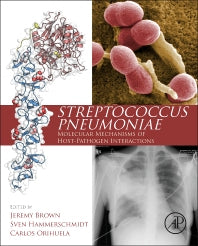
Streptococcus Pneumoniae
Molecular Mechanisms of Host-Pathogen Interactions
Provides comprehensive overviews with a heavy focus on the molecular basis for S. pneumoniae infections, also including information on the areas of research that are important for future insights into a bacteria that has seen dramatic increases in antibiotic resistance
Jeremy Brown (Edited by), Sven Hammerschmidt (Edited by), Carlos Orihuela (Edited by)
9780124105300
Hardback, published 11 May 2015
470 pages
23.4 x 19 x 2.9 cm, 1.19 kg
"The authors are experts and have provided a roadmap for future pathways for investigation, something that other authors should do...this book is most appropriate for basic science researchers. Score: 94 - 4 Stars" --Doody's
Streptococcus Pneumoniae: Molecular Mechanisms of Host-Pathogen Interactions provides a comprehensive overview of our existing knowledge on Streptococcus pneumoniae antibiotic resistance, dissemination, and pathogenesis, including immunology. It presents a state-of-the-art overview of the implications of existing data, along with the areas of research that are important for future insights into the molecular mechanisms of pneumococcal infections and how to combat these infections. Users will find a timely update on the topic, as the dramatic increase in antibiotic resistance pneumoniae cases and limitations of the currently available pneumoniae vaccines are creating new concerns on these gram-positive bacteria that are endowed with a high virulence potential, and are the most common etiologic agent of respiratory and life-threatening invasive diseases.
Section A: Streptococcus pneumoniae Epidemiology and Vaccines 1. Pneumococcal molecular epidemiology 2. Antibiotic resistance of pneuomocci 3. Pneumococcal vaccination and consequences 4. Protein based vaccines Section B: Genetics and Functional Genomics of Streptococcus pneumoniae 5. Genomics, genetic variation and regions of differences 6. Functional Genomics of pneumococci (Transcriptional regulation) 7. Pneumococcal genetic recombination during colonization and biofilm formation 8. The pneumococcal cell wall 9. Capsule structure, synthesis and regulation 10. Pneumococcal ABC transporters and their role in physiology and multidrug resistance Section C: Streptococcus pneumoniae Biology 11. Structure and functions of surface protein/choline binding proteins 12. Pneumococcal non-adhesive surface proteins 13. Biofilm formation under in vitro conditions 14. Pneumolysin Section D: Pneumococcal Interactions with the Host 15. Nasopharyngeal colonization 16. Otitis media and biofilms 17. Pneumococcal pili and adhesins 18. Exploitation of host signal transduction pathways induced by S. pneuomoniae 19. Mechanisms of predisposition to pneumonia: infants, the elderly, and viral infections 20. Mechanisms causing the inflammatory response to Streptococcus pneumoniae 21. Immune evasion mechanisms of pneumococci 22. Cell mediated adaptive immunity to pneumococci 23. Pneumococcal invasion
Subject Areas: Bacteriology [non-medical PSGD], Microbiology [non-medical PSG]