Freshly Printed - allow 7 days lead
Couldn't load pickup availability
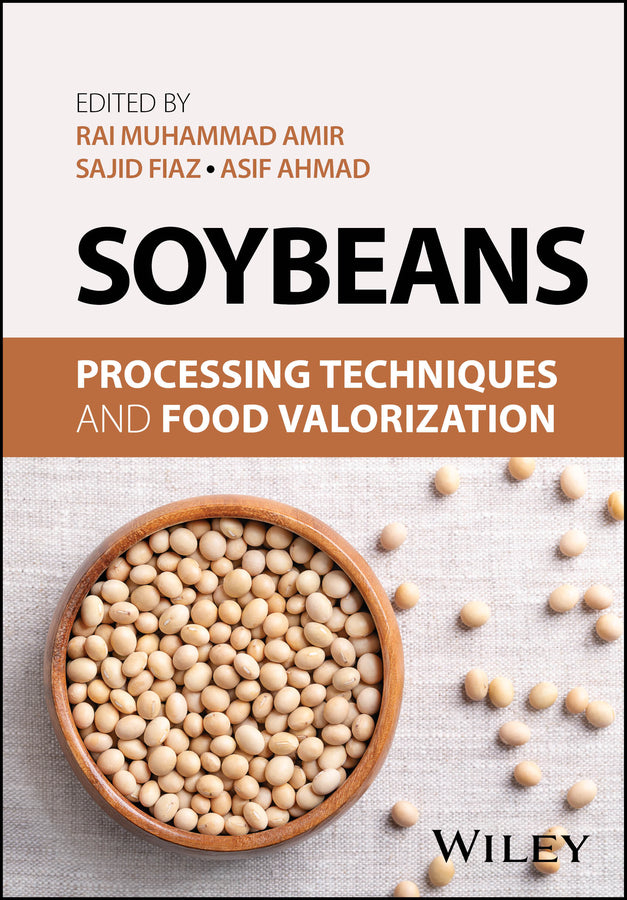
Soybeans
Processing Techniques and Food Valorization
Rai Muhammad Amir (Edited by), Sajid Fiaz (Edited by), Asif Ahmad (Edited by)
9781394320356, Wiley
Hardback, published 16 April 2026
576 pages
24.4 x 17 x 3.4 cm, 1.021 kg
Comprehensive examination of the practical aspects of soybean processing techniques and utilization strategies, highlighting the importance of soybeans across industries Soybeans: Processing Techniques and Food Valorization presents a thorough examination of soybean science and technology. It starts with a detailed look at the historical significance, cultivation methods, and global impact of soybeans, setting the groundwork for an in-depth analysis of sustainable farming. The book emphasizes environmental and social factors, providing insights into enhancing soybean production while conserving resources and benefiting communities. Beyond growth practices, the book looks at the nutritional aspects of soybeans, emphasizing their health advantages and importance in diets. It discusses bioactive elements, highlighting the functional and medicinal benefits of soybeans, and leads into a comprehensive exploration of processing techniques. The journey from harvest to final product is outlined, covering the complexities of soybean processing, including the extraction, refinement, and application of soybean oil and protein. The book reviews marketing strategies for soybean value-added products, consumer trends and preferences in soybean consumption, and global trade dynamics of soybean products. Case studies of successful soybean value addition ventures are included in their own dedicated chapter. Soybeans also discusses: Soybeans: Processing Techniques and Food Valorization serves as an all-encompassing guide for professionals and researchers aiming to explore the extensive possibilities of soybeans for a healthier and sustainable future.
List of Contributorsxxvii Preface xxxiii 1 The Role of Soybeans in Sustainable Agriculture 1 1.1 Introduction 1 1.2 Current Global Status of Soybean Production 3 1.3 Environmental Benefits of Soybeans 4 1.4 Nutritional Benefits of Soybeans 8 1.5 Economic Benefits of Soybeans 14 1.6 Global Constraints to Soybean Production 18 1.7 The Future of Soybean 22 1.8 Conclusion 23 References 23 2 Soybean Meal: Production, Uses, and Applications 31 2.1 Introduction 31 2.2 History and Origin 32 2.3 Soybean Meal Production Process 33 2.4 Nutritional Profile of Soybean Meal 36 2.5 Uses in Animal Feed 38 2.6 Applications in Food and Industrial Products 41 2.7 Global Market Trends and Trade Dynamics 44 2.8 Sustainability and Environmental Impact 45 References 46 3 Introduction to Soybean: History, Cultivation, and Importance 51 3.1 Introduction 51 3.2 History of Soybean 53 3.3 Botany and Classification 55 3.4 Cultivation Practices 58 3.5 Importance of Soybean 62 3.6 Challenges and Future Perspectives 64 3.7 Conclusion 65 References 65 4 The Soybean Harvest: Techniques and Best Practices 77 4.1 Introduction 77 4.2 Basic Agronomical Practices 79 4.3 Harvesting and Post- Harvesting Techniques 82 4.4 Soybean Refining 82 4.5 Limitations and Some Anti- Nutritional Factors of Soybeans/Their Meal and the Processing Methods 87 4.6 Impact of Improper Harvesting on Soybean 88 4.7 Impact of Harvesting Stages on Soybean Seed Quality 89 4.8 Effect of Threshing Methods on Seed Quality of Soybean 90 4.9 The Advent of Mechanization: AI Approaches of Harvesting Soybean 91 4.10 The Soybean Harvest: Techniques and Best Practices in Pakistan 93 4.11 Challenges and Recommendations 94 4.12 Conclusion 95 References 95 5 Sustainable Intensification and Value Addition in the Soybean Supply Chain 103 5.1 Introduction 103 5.2 Cultivation and Harvesting 105 5.3 Climatic Requirements for Soybean Cultivation 105 5.4 Crop Management 107 5.5 Soybean Processing and Utilization 108 5.6 Value- Added Products from Soybeans 110 5.7 Nutritional Composition of Soybean: From Farm to Freezer 113 5.8 Industrial Applications 114 5.9 Global Soybean Market 115 5.10 Potential Demand of Soybeans in Pakistan 116 5.11 Challenges in Domestic Soybean Production 116 5.12 Future Prospects and Market Growth 118 5.13 Shelf Life of Soybean 119 5.14 From Farm to Fork: The Consumer Experience 120 References 121 6 Advanced Soybean Cultivation, Genetics, and Sustainable Practices: A Plant Scientist’s Perspective 125 6.1 Introduction 125 6.2 Advanced Soybean Cultivation Techniques using Big Data, AI, VRT, and Other Tools 126 6.3 Advances in Soybean Genetics and Breeding— Understanding Soybean Genetics 128 6.4 Sustainable Practices for Soybean Production 134 6.5 Future Trends in Soybean Research and Cultivation 137 6.6 Conclusion 139 References 140 7 Soybean Bioactive Compounds and Their Role in Functional Foods and Nutraceuticals 145 7.1 Introduction 145 7.2 Bioactive Compounds in Soybeans 146 7.3 Health and Nutritional Benefits 152 7.4 Oncoprotective Properties 153 7.5 Effect on Women’s Health 153 7.6 Bone Health 154 7.7 Anticancer and Antioxidant Effects 154 7.8 Hypocholesterolemic Effects 154 7.9 Soy- Based Functional Foods 155 7.10 Future Innovations in Soy- Based Functional Foods 156 7.11 Conclusion 158 References 158 8 The Soybean Solution: Adding Value from Farm to Fork 165 8.1 The History and Global Economic Impact of Soybean Cultivation 165 8.2 Importance of Soybean 166 8.3 Cultivation 169 8.4 Harvest and Afterwards Soybean 171 8.5 Soybean Processing 171 8.6 Assessing Soybean Technology Adoption: A Data- Driven Perspective 173 8.7 Issues 175 8.8 Soybean Composition 177 8.9 Macronutrients 177 8.10 Micronutrients 178 8.11 Harvesting 179 8.12 Drying 179 8.13 Storage 181 8.14 Heating Processing 182 8.15 Irradiation 183 8.16 Soybean in Industry 184 8.17 Soy Product 185 8.18 Soy Foods 185 8.19 Global Soybean Market 187 8.20 Supply Chain 188 8.21 Food Safety Systems of the Future 188 References 189 9 Soybean Bioactive Compounds and Their Role in Functional Foods and Nutraceuticals 199 9.1 Introduction 199 9.2 Major Classes of Soybean Bioactive Compounds 201 9.3 Bioavailability and Metabolism of Soybean Bioactive Compounds 207 9.4 Applications of Soybean Bioactive Compounds in Functional Foods and Nutraceuticals 212 9.5 Soybean Bioactive Compounds and Chronic Disease Prevention 218 9.6 Future Perspectives and Emerging Trends 224 9.7 Conclusion 228 References 229 10 Understanding Soybean Quality Parameters 245 10.1 Introduction 245 10.2 Nutritional Quality Parameters 246 10.3 Comparison of Nutritional Parameters Across Soybean Varieties 251 10.4 Physical Quality Parameters 251 10.5 Processing Quality Parameters 254 10.6 Genetic and Environmental Influences on Soybean Quality 255 10.7 Innovative Techniques for Soybean Quality Analysis 256 10.8 Challenges 259 10.9 Conclusion 259 10.10 Future Directions 260 References 261 11 Soybean Storage and Preservation Methods 267 11.1 Introduction 267 11.2 Conventional Storage and Preservation of Soybean 268 11.3 Use of Gunny Bags (GB) and Polyethylene Sheets 268 11.4 Bamboo Bins with Neem or Ash Treatment 269 11.5 Mud or Brick Silos 270 11.6 Modern Storage Technologies 271 11.7 Emerging Innovative Techniques for Soybean Storage 274 11.8 Effect on Germination 275 11.9 Effect on Vigor 277 11.10 Effect of Moisture Content 278 11.11 Effect of Mycoflora 280 11.12 Effective Techniques and Strategies for Drying and Preserving Soybeans 282 11.13 Mechanical Dryer Systems for Uniform Drying of Crops 283 11.14 Pest and Mold Control Strategies 283 11.15 Conclusion 285 References 286 12 Valorizing Soybean By- Products: Strategies for Effective Utilization and Sustainability 291 12.1 Introduction 291 12.2 Soybean By- Products 292 12.3 Methods of Soybean By- Product Valorization 295 12.4 Zero- Waste System for the Soybean Processing Industry 300 12.5 Health Benefits 301 12.6 Conclusion 306 Conflict of Interest 306 References 307 13 Soybean Protein Isolates and Concentrates 315 13.1 Introducing Importance of Soybean Proteins 315 13.2 Soy Concentrate and Isolate 316 13.3 Soybean Protein Concentrates: Definition, Composition, and Production 322 13.4 Functional Properties of Soybean Proteins 325 13.5 Factors Influencing Functionality 330 13.6 Applications in the Food Industry 331 13.7 Soybean Protein in the Development of Packaging Materials 337 13.8 Conclusion 339 References 339 14 Soy- Based Snacks and Convenience Foods 347 14.1 Introduction 347 14.2 Soy- Based Snacks and Their Types 347 14.3 Soy- based Types of Convenience Foods 358 References 362 15 Soybean Packaging and Labelling Regulation 367 15.1 Introduction 367 15.2 Consumer Information and Transparency 368 15.3 Marketing and Branding 368 15.4 Regulatory Bodies Governing Packaging and Labeling 368 15.5 Packaging Requirements for Soybeans 371 15.6 Storage and Shelf- Life Considerations 372 15.7 Packaging and Pest Management 372 15.8 Environmental Impact and Sustainability of Packaging 372 15.9 Packaging Design and Functionality 373 15.10 Labeling Requirements for Soybeans 373 15.11 Sources of Guidance 375 15.12 Disease Claims 375 15.13 Packaging Materials for Soybeans 376 References 379 16 Soy Foods: Types and Nutritional Value 381 16.1 Introduction 381 16.2 Chemical Composition of Soybean 381 16.3 Soy Foods 382 16.4 Types of Soy Foods 384 16.5 Future Trends 393 References 393 17 Soybean in Animal Feed: Benefits and Considerations 399 17.1 Introduction 399 17.2 Soybean Grain in Pakistan 400 17.3 Soybean Grain Processing to Soybean Meal 401 17.4 Import of Soybean: Pakistan and International Soybean Statistics 402 17.5 Quality Profile of Soybean and Soybean Meal 404 17.6 Laboratory Tests for Soybean and Soybean Meal: Procedures and Protocols 404 17.7 Usage of Soybean Meal in Animal Feed (Poultry, Aqua, Ruminant), Inclusion, Anti- Nutritional Factors, and Their Impacts 406 17.8 Soybean Processing and Technology: Extrusion, Expelling, and Nutritional Impacts 407 17.9 Major Anti- Nutritional Factors in Soybean 410 17.10 Factors Causing Variation in the Anti- Nutritional Factors 413 17.11 Strategies to Minimize the Impact of Anti- nutritional Factors 414 17.12 Emerging Trends in Soybean Utilization 417 17.13 Environmental Impact of Soybean Production 419 17.14 Conclusion 420 References 421 18 Soy- Based Foods: Tofu, Tempeh, and Beyond 427 18.1 Introduction: The Versatility of Soy- Based Foods 427 18.2 Nutritional Composition of Soy- Based Foods 429 18.3 Benefits of Tempe Due to Fermentation 431 18.4 Production Processes: From Soybean to Tofu and Tempeh 432 18.5 Physical and Chemical Properties of Tofu 434 18.6 Emerging Innovations: Expanding Beyond Tofu and Tempeh 441 18.7 Future Challenges and Opportunities 445 18.8 Conclusion 446 References 446 19 Soy Milk and Dairy Alternatives 451 19.1 Introduction 451 19.2 Rising Demand for Lactose- Free and Vegan Products 452 19.3 Nutritional Profile of Soy Milk 453 19.4 Vitamins and Minerals in Soy Milk 454 19.5 Comparison with Cow’s Milk 455 19.6 Production and Processing of Soy Milk 457 19.7 Soy Milk Production Methods 459 19.8 Fortification and Flavoring Processes 460 19.9 Health Benefits of Soy Milk 461 19.10 Heart Health and Cholesterol Reduction 463 19.11 Impact on Bone Health and Osteoporosis 464 19.12 Other Plant- Based Dairy Alternatives 465 19.13 Nutritional Comparison of Dairy Alternatives 466 19.14 Vitamins and Minerals in Plant- Based Milks 467 19.15 Allergen Considerations 469 19.16 Coconut Milk: Rarely Allergenic but May Cause Digestive Issues 469 19.17 Rice Milk: A Hypoallergenic Alternative with a High Glycemic Index 470 19.18 Hemp Milk: A Nutrient- Dense Option with Minimal Allergen Risk 470 19.19 Environmental Impact of Dairy Alternatives 470 19.20 Water Usage and Agricultural Sustainability 473 19.21 Challenges and Future Prospects for Dairy Alternatives 474 19.22 Sensory Qualities: Taste, Texture, and Color 474 19.23 Processing Challenges and Product Shelf Life 475 19.24 Innovations and Customization in Dairy- Free Products 476 19.25 Conclusion 477 References 478 20 Global Trade Dynamics of Soybean Products 483 20.1 Introduction to Global Soybean Trade 483 20.2 Patterns of Production and Consumption on a Global Scale 486 20.3 Key Players in the Global Soybean Market 490 20.4 Trade Flows and Market Dynamics 493 20.5 International Trade Policies and Agreements 495 20.6 Sustainability and Environmental Concerns 497 20.7 Future Trends and Challenges 498 20.8 Summary of Key Findings 498 References 500 21 Soybean Research and Innovation Trends 505 21.1 Introduction 505 21.2 Current Trends in Soybean Research 507 21.3 New Products Related to Soybean: Food Industry 512 21.4 Mitigating the Environmental Impact 517 21.5 Climate- Smart Soybeans Potential 520 21.6 Changes in Soybean Processing 521 21.7 Conclusion 522 References 523 Index 527
Mushtaq Ahmad Khan, Abid Khan, Raheem Shahzad, Abdul Basir, Monsif Ur Rehman, Muhammad Adnan, Tian Shilin, Hayssam M. Ali, Hafiz Samra Younis, Muhammad Salman Ghaffar, Muhammad Sajid Qureshi, Fazal Jalal, and Sahar Mumtaz
Muhammad Sibt- e- Abbas, Rimsha Umar, Maria Tahir, Nishwa Latif, and Tamseela Malik
Nitish Joshi, Romandeep Kaur, Marya Bibi, Bibek Adhikari, Shah Fahad, and Taufiq Nawaz
Iqra Malik, Kamran Ashraf, Zeki Erden, Çagdas Can Topark, Hakki Akdeniz, and Qamar uz Zaman
Abdul Ahid Rashid, Nayab Altaf, and Salman Saeed
Narkhede Gopal Wasudeo, Gollangi Harish Kumar, and Manchikatla Arun Kumar
Sadaf Shakoor, Adnan Mukhtar, Muhammad Asif, and Mariam Munir
Sadia Zafar, Muhammad Mutie- Un- Nabi, Rizwan Rasheed, Muhammad Arslan Ashraf, Maria Bilal, Javed Iqbal, and Banzeer Ahsan Abbasi
Bancha Yingngam
Muhammad Sibt- e- Abbas, Rimsha Umar, Tamseela Malik, Maria Tahir, and Nishwa Latif
Iqra Malik, Kamran Ashraf, and Qamar uz Zaman
Anam Aman
Asif Ahmad, Rai Muhammad Amir, and Sajid Fiaz
Saira Ishaq
Rashida Perveen, Farrukh Sardar, Mavra Ameen, Muhammad Riaz, and Muhammad Naveed Babur
Saima Rafiq, Maria Latif, and Sheraz Hussain
Syeda Maryam Hussain, Muhammad Jehanzaib Arsalan, and Tanveer Ahmad
Waqas Ahmed and Anam Saeed
Abdullah Ahmed Butt and Zahra Ahmed
Adeeba Khan and Imtiaz Hussain
Farah Javed, Rashida Perveen, Iftikhar Younis Mallhi, and Muhammad Naveed Babur
Subject Areas: Agriculture & farming [TV]