In Stock - dispatch within 48 hours
Couldn't load pickup availability
South Africa, Greece, Rome
Classical Confrontations
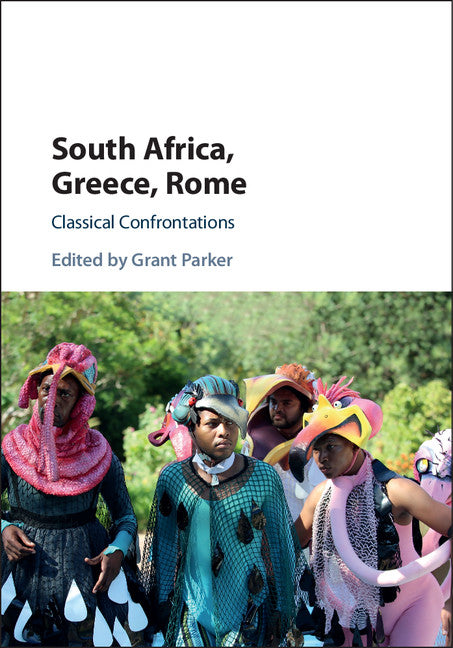
This book explores how since colonial times South Africa has created its own vernacular classicism, both in creative media and everyday life.
Grant Parker (Edited by)
9781107100817, Cambridge University Press
Hardback, published 31 August 2017
566 pages, 162 b/w illus. 3 tables
25.2 x 18 x 3 cm, 1.31 kg
'Grant Parker's edited volume, South Africa, Greece, Rome: Classical Confrontations, is the most substantial work to date on the interaction of the ancient world of Classical antiquity with the southern tip of the African continent. While not exhaustive, the work is the most comprehensive and varied so far, offering, in Parker's words, a 'collage' (491-495) of different images, voices, and vying perspectives on engagement with the Classics that are all as contradictory and confrontational as the country of South Africa often is.' Bryn Mawr Classical Review
How have ancient Greece and Rome intersected with South African histories? This book canvasses architecture, literature, visual arts and historical memory. Some of the most telling manifestations of classical reception in South Africa have been indirect, for example neo-classical architecture or retellings of mythical stories. Far from being the mere handmaiden of colonialism (and later apartheid), classical antiquity has enabled challenges to the South African establishment, and provided a template for making sense of cross-cultural encounters. Though access to classical education has been limited, many South Africans, black and white, have used classical frames of reference and drawn inspiration from the ancient Greeks and Romans. While classical antiquity may seem antithetical to post-apartheid notions of heritage, it deserves to be seen in this light. Museums, historical sites and artworks, up to the present day, reveal juxtapositions in which classical themes are integrated into South African pasts.
1. The Azanian Muse: classicism in unexpected places Grant Parker
Part I. Conceiving Empire: 2. 'Poetry in pidgin': notes on the persistence of classicism in the architecture of Johannesburg Federico Freschi
3. Cecil John Rhodes, the classics, and imperialism John Hilton
4. The 'Mediterranean' Cape: reconstructing an ethos Peter Merrington
Part II. Conceiving the Nation: 5. 'Copy nothing': classical ideals and Afrikaner ideologies at the Voortrekker Monument Elizabeth Rankin and Rolf Michael Schneider
6. Greeks, Romans, and Volks-education in the Afrikaner Kinderensiklopedie Philip R. Bosman
Part III. Law, Virtue and Truth-Telling: 7. A competing discourse on empire Jonathan Allen
8. After Cicero: legal thought from antiquity to the New Constitution Deon H. van Zyl
Part IV. Cultures of Collecting: 9. Museum space and displacement: collecting classical antiquities in South Africa Samantha Masters
10. Antique casts for a colonial gallery: the Beit bequest of classical statuary to Cape Town Anna Tietze
11. Cecil Rhodes as a reader of the classics: the Groote Schuur collection David Wardle
Part V. Boundary Crossers: 12. 'You are people like these Romans were!': D. D. T. Jabavu of Fort Hare Jo-Marie Claassen
13. Benjamin Farrington and the science of the swerve John Atkinson
14. Athens and apartheid: Mary Renault and classics in South Africa Nikolai Endres
15. Antiquity's undertone: classical resonances in the poetry of Douglas Livingstone Kathleen M. Coleman
Part VI. After Apartheid: 16. Bacchus at Kirstenbosch: reflections of a play director Roy Sargeant
17. The reception of the Electra myth in Yaël Farber's Molora Elke Steinmeyer
18. Classical heritage? By the way of an afterword Grant Parker.
Subject Areas: Social & cultural history [HBTB], Classical history / classical civilisation [HBLA1], African history [HBJH]