Freshly Printed - allow 7 days lead
Couldn't load pickup availability
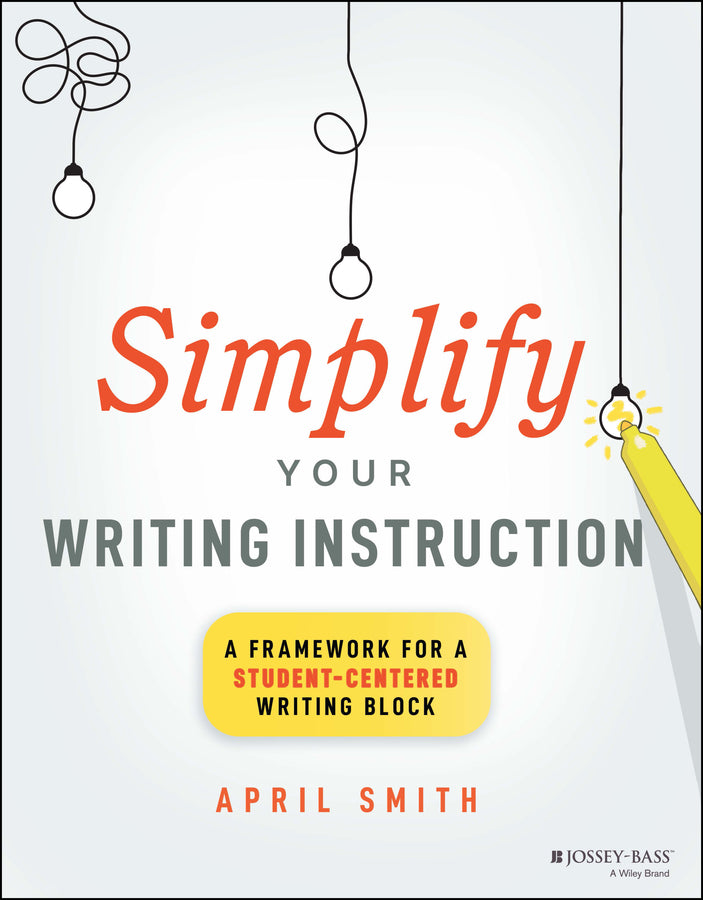
Simplify Your Writing Instruction
A Framework For A Student-Centered Writing Block
“I cannot think of a better title for this book because Simplify Your Writing Instruction is the roadmap to do just that! April has thought of everything. This book is grounded in research, and it goes beyond the ‘why’ and digs into the ‘HOW!’ Every page has spectacular insights, useful ideas, and nuggets of knowledge to help simplify writing instruction. The practical tips and FAQs provided for each section make implementing April's ideas easy. This book is a lifeline for new teachers but equally beneficial to any teacher looking to improve and simplify their writing instruction!” —Deedee Wills, Instructional Coach and Literary Consultant
April Smith (Author)
9781394171576, Wiley
Paperback / softback, published 26 October 2023
256 pages
27.4 x 21.3 x 1.8 cm, 0.499 kg
Set up your writing block quickly and easily with a simple, research-based framework Schools need their writing instruction simplified. Most classrooms share writing time with another subject, making it difficult for students to receive the direct writing instruction they need. Between the lack of time, increased gaps in writing skills, and inconsistent writing curriculum, teachers are struggling to bring their students up to grade level. Simplify Your Writing Instruction provides you with a classroom-tested framework that helps you set up your writing block within the limited time and resources you have. Step by step, this practical guide shows you how to amplify your students’ writing skills, employ simple feedback opportunities and interventions, streamline your lessons, use simple differentiation techniques to help reach students of all ability levels, and more. Author April Smith is a former teacher who has trained more than 50,000 K-12 educators on best practices for writing instruction. While in the classroom, she learned that having simple and consistent systems in place is critical. Accordingly, none of the tasks and strategies will require you to create or prep anything complicated or time-consuming. In Simplify Your Writing Instruction, you will find easy-to-use checklists, implementation tasks, customizable templates, student writing samples, helpful tables and charts, and a simple spreadsheet that you can use to plan your lessons and modify your teaching to meet the needs of each writer. Be confident and supported in your writing instruction. Simplify Your Writing Instruction will teach you how to: Packed with expert advice and easy-to-follow strategies, Simplify Your Writing Instruction: A Framework for a Better Writing Block is a must-have resource for all K-12 educators and teachers in training.
Introduction xi Part One The Fundamentals 1 One Common Struggles 3 Time 5 Varying Student Ability Levels 6 Lack of Training and Curriculum 6 Addressing These Struggles 7 Two What Really Matters 9 Having Simple Systems in Place 11 Utilizing Data 11 Uncomplicated “Bite-Sized” Lessons 11 Filling in Gaps Using Differentiation 12 Providing Feedback and Support 12 Three Make Writing a Priority 13 My Story 15 What I Learned 15 What This Means for You 16 Part Two The First Three Weeks 19 Four The Power of Informal Pre-Assessment 23 Why Pre-Assess at All If Time Is an Issue? 25 What Pre-Assessment Should Look Like 25 The Purpose behind Using Multiple Prompts 27 Five Make Observations and Record Important Data 31 What Is Actionable Data? 33 The Recording Process 34 Recording Important Whole Group Skills 35 “Big Picture” Skills: Interest and Writing Stamina 36 Sentence and Paragraph Writing 37 Complexity of Ideas 38 Technology Knowledge 39 Other Whole Group Categories 40 What This Means for My Whole Group Instruction 40 Whole Group Grammar Knock-Out List 41 The Order Matters 41 Recording Individual Skills 42 Setting Goals and Recording Success 43 Six Build a Foundation 47 Interest and Attitude 51 Addressing Your Own Writing Baggage 51 Cultivating a Positive Classroom Environment 53 Writing Stamina 54 Days 3–5: Practice, Practice, Practice 56 Sentence and Paragraph Writing 56 Paragraph Writing Intervention 60 Idea Generation 63 Final Thoughts 66 Seven Use Pre-Assessment Data to Modify Future Lessons 69 Modify Expectations 71 Frontload or Reteach 71 Use Tools 72 Banishing Feelings of Being Overwhelmed 72 Part Three A Simple Framework for Your Writing Instruction 73 Eight Prepare Your Classroom 77 Writing Block Schedule 79 Whole Group Mini-Lesson 79 Independent Student Writing Time 79 Closure 79 Meeting Place and Student Work Areas 80 Classroom Procedures 81 Nine Start Your First Writing Unit with Efficient Mini-Lessons 85 Planning Mini-Lessons 87 The Importance of “Bite-Sized” Mini-Lessons 87 Bird’s-Eye View Planning 88 Daily Planning 89 Unit: Personal Narrative Writing – Day 3 EXAMPLE LESSON PLAN 90 The Secret Sauce: A Well-Planned Teacher Model 92 Implementing Mini-Lessons 93 Independent Writing Time 95 Transitioning from Mini-Lesson to Independent Writing Time 96 Reinforcing Skills during Independent Writing Time 97 Ten Prepare for Early Finishers and Students Who Are Stuck 101 Resources for Students Who Are Stuck 104 Students Falling Behind 109 Eleven Incorporate Grammar 111 Choosing Which Grammar Concepts to Teach 113 Incorporating Grammar Skills into a Lesson 114 Utilizing Direct Grammar Instruction 117 What Direct Grammar Instruction Looks Like 120 Ways to Apply Newly Acquired Grammar Skills in Context 123 What to Do If Students Still Don’t Get It 124 Other Ways to Fit in Grammar Practice 124 Part Four Meeting Individual Needs 129 Twelve Support Students through Small Group Instruction 133 Planning Small Group Instruction 135 Setting Goals and Recording Growth 143 Thirteen Provide Individualized Feedback through Writing Conferences 149 A Process that Works 151 Fourteen Integrate Peer Feedback Systems 161 Opportunities for Peer Feedback 164 Teaching Students How to Conduct Peer Feedback Sessions 165 Fifteen Support Students with Learning Disabilities 171 How Learning Disabilities Affect Writing Ability 173 Sixteen Support English Language Learners 177 Sentence Frames 180 Vocabulary Tools 181 Seventeen Grade with a Student-Centered Approach 183 Mastery-Based Grading 185 Standards-Based Grading 186 Grading Tools 187 Scoring with Rubrics 187 Appendix: Reproducible Pages 191 About the Author 215 Acknowledgments 217 How to Access the Downloadable Resources 219 Works Cited 221 Index 223
Subject Areas: Education [JN]