Freshly Printed - allow 10 days lead
Couldn't load pickup availability
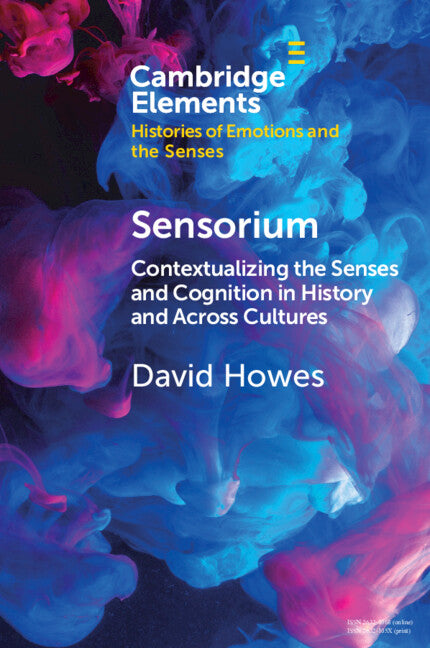
Sensorium
Contextualizing the Senses and Cognition in History and Across Cultures
This Element can yield many insights into the construction of the cosmos, social relations, artistic creation, and mental life.
David Howes (Author)
9781009329682, Cambridge University Press
Paperback / softback, published 23 May 2024
86 pages
22.8 x 15.1 x 0.5 cm, 0.14 kg
Do the senses have a history? How many might there be? Are the senses so many independent channels, or do they interact with and modulate each other? If so, how might we cultivate the capacity to see feelingly or hear colours? What makes smell 'the affective sense'? These are among the questions to be addressed in this Element. It pries the senses and perception loose from the psychology laboratory to focus on how they have been constructed and lived differently in different historical periods and across cultures. Many of its findings are surprising because they run counter to our common-sense assumptions about the sensorium. They make uncommon sense. Plus the reader will meet some fascinating historical characters like the prolific 17th century natural philosopher Margaret Cavendish (also author of the play The Convent of Pleasure) and the late 19th century artist James McNeill Whistler, who infused his paintings with music.
Contents
Prologue: Sensory openings
Part I. Explorations
1. Making senses: on how the sensorium gets divided
2. Acoustemology: techniques of listening
3. Osmology: ways of smelling
4. Sensology: how to see feelingly
Part II. Études Sensorielles: 5. Doing science with Margaret Lucas Cavendish: for a sensuous epistemology
6. Painting with James McNeill Whistler: a sensory biography of the artist's works and life
Epilogue: Ways of sensing
References.
Subject Areas: History of ideas [JFCX]